
Hand-Foot-and-Mouth Disease (HFMD) is a common childhood illness that often worries parents. This viral infection mainly affects young kids. Understanding HFMD can help you handle it confidently12.
Kids are most at risk from infancy to early school years. HFMD spreads quickly in daycares and schools. It’s contagious, but most cases are mild1.
The disease usually clears up within 7-10 days. Knowing about HFMD can help you manage your child’s symptoms better12.
There’s no specific cure for HFMD. However, home care can provide relief and comfort during recovery1.
Key Takeaways
- HFMD primarily affects children under 7 years old
- Symptoms typically last 7-10 days
- Highly contagious in group settings
- No specific vaccine is available
- Home care can effectively manage symptoms
Overview of Hand-Foot-and-Mouth Disease
Hand-foot-and-mouth disease (HFMD) is a common viral infection affecting young children. It spreads quickly through close contact. Parents and caregivers should be aware of this contagious condition3.
Primary Symptoms to Recognize
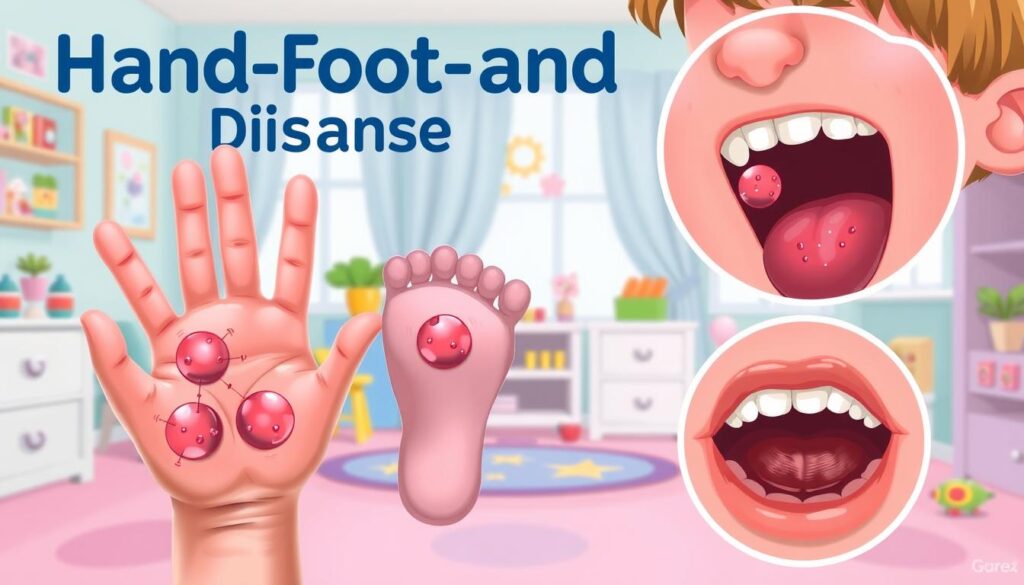
HFMD has several distinct symptoms. These include fever, painful mouth sores, and a rash on hands and feet.
- Fever symptoms that can range from mild to moderate
- Painful oral lesions inside the mouth
- Body rash appearing on hands and feet
- Small, red blisters or sores
Coxsackievirus and Enterovirus usually cause HFMD. The most common culprits are Coxsackievirus A16 and Enterovirus 714.
Transmission and Spread Mechanisms
HFMD spreads through various routes. These include direct contact with saliva, respiratory droplets, and blister fluid.
- Direct contact with infected person’s saliva
- Respiratory droplets
- Blister fluid
- Contaminated surfaces
“Prevention is always better than cure when dealing with viral infections like HFMD.”
Age Groups Most Vulnerable
Children under 5 are most at risk for HFMD. About 95% of cases occur in toddlers within this age group5.
The infection usually takes 3-7 days to show symptoms. Most cases clear up within a week to ten days3.
| Age Group | Infection Risk | Severity |
|---|---|---|
| 0-2 years | High | Most vulnerable |
| 3-5 years | Moderate | Significant risk |
| 6-10 years | Low | Mild symptoms |
Understanding these details can help parents recognize and manage HFMD effectively.
Preventative Measures for Your Child
Protecting your child from a contagious rash requires proactive prevention tips. Understanding how to shield your little ones from hand-foot-and-mouth disease (HFMD) can keep your family healthy.
Mastering Hand Hygiene
Hand hygiene is crucial in preventing HFMD spread. Teach kids to wash hands with soap and water often. This is especially important after bathroom use and before meals.
- After using the bathroom
- Before eating meals
- After changing diapers
- When returning home from public spaces
Maintaining a Clean Environment
Keep your home and child’s surroundings clean. Regularly disinfect frequently touched surfaces like doorknobs, toys, and shared items. The virus can spread easily through contaminated objects6.
Limiting Close Contact
HFMD is highly contagious, so limit your child’s exposure to infected individuals. Most outbreaks happen during summer and fall. Be extra careful during these seasons76.
“Prevention is always better than cure.” – Pediatric Health Experts
Kids can spread the virus before symptoms show and for days after7. If your child is sick, keep them home from school or daycare.
This helps prevent transmission to others6. Taking these steps can significantly reduce the risk of HFMD spread.
Additional Prevention Strategies
- Avoid sharing personal items like utensils or towels
- Teach children to cover their mouth when coughing
- Use hand sanitizers when soap isn’t available
Note: There is currently no vaccine for hand-foot-and-mouth disease in the United States6.
Treatment Options and Home Care
Hand-foot-and-mouth disease needs a gentle approach for comfort and recovery. This viral infection has no specific cure. You can support your child through healing effectively8.
When to Consult a Doctor
Most cases resolve within 7 to 10 days. Contact your healthcare provider if you notice these signs:
- Persistent high fever symptoms
- Signs of dehydration
- Severe oral lesions that prevent eating or drinking
- Symptoms that worsen or do not improve
Home Remedies for Relief
Try these strategies to manage your child’s discomfort:
- Use topical oral anesthetics to alleviate mouth sore pain8
- Administer over-the-counter pain medications like acetaminophen or ibuprofen8
- Offer cold, soft foods that are easy to swallow
- Provide plenty of fluids to prevent dehydration
Cold treats like popsicles can help numb painful mouth sores and provide temporary relief.
Managing Discomfort
Your child’s comfort is crucial during recovery. Try these self-care practices:
- Avoiding acidic foods and drinks
- Rinsing mouth with warm salt water multiple times daily8
- Ensuring adequate rest
- Keeping the skin rash clean and uncovered
Patience and gentle care are key to helping your child recover from hand-foot-and-mouth disease.
When to Seek Medical Attention
Knowing when to get help is key for managing Hand-Foot-and-Mouth Disease. Most cases heal on their own. But some symptoms need quick medical care9.
Quick action can stop problems from this virus10. Your child’s health is the top concern.
Recognizing Severe Symptoms
Look out for signs that need a doctor’s help. Call your doctor if your child has a high fever, confusion, or feels very weak9.
Dehydration is the main serious issue. It may need IV fluids10. Rarely, the virus can cause viral meningitis. Stay alert for these signs10.
Follow-Up Care Recommendations
Hand-Foot-and-Mouth Disease symptoms often last up to 10 days9. See a doctor if symptoms don’t get better after 7-10 days. Or if they suddenly get worse9.
Your doctor can give personal advice. They’ll make sure your child fully recovers from this viral infection.
Support Resources for Parents
This illness can be scary, but most kids get better. Talk to your child’s doctor or local health office for more help.
Use trusted medical websites too. Stay informed and keep your child comfy while they heal9.
FAQ
What is Hand-Foot-and-Mouth Disease (HFMD)?
HFMD is a common viral infection caused by the Coxsackievirus. It mainly affects young children. Symptoms include fever, painful mouth sores, and a rash on hands, feet, and diaper area.
How does HFMD spread?
The virus spreads through contact with infected bodily fluids. It’s highly contagious and can spread before symptoms appear. Outbreaks often occur in childcare settings, schools, and summer camps.
Who is most likely to get HFMD?
Children under 5 are most likely to get HFMD. Kids in daycare are at higher risk due to close contact. Older children and adults can also get infected.
What are the main symptoms of HFMD?
Main symptoms include fever, sore throat, and painful mouth sores. A red rash may appear on hands, feet, and buttocks. Eating and drinking may be uncomfortable.
How can I prevent HFMD?
Wash hands often, especially after diaper changes and before meals. Clean and disinfect frequently touched surfaces. Avoid close contact with infected people.
Teach children proper hand washing habits. This can greatly reduce the spread of the virus.
How can I treat HFMD at home?
Use over-the-counter pain relievers like acetaminophen or ibuprofen. Offer cold soft foods and plenty of fluids. Cold treats like ice cream can help numb mouth pain.
Keep skin rashes clean and uncovered. This helps prevent further irritation and promotes healing.
When should I see a doctor?
Seek medical help if your child shows signs of dehydration. Also, if fever lasts more than three days or pain is severe. Consult a doctor if symptoms worsen or you’re worried about your child’s condition.
Is there a vaccine for HFMD?
There’s no vaccine for Hand-Foot-and-Mouth Disease in the United States. Good hygiene and avoiding contact with infected people are the best prevention methods.
Can adults get HFMD?
Yes, adults can get HFMD, but it’s less common. Symptoms are usually milder in adults. They may still experience fever, mouth sores, and rash.
Adults should take the same precautions as children to prevent spreading the virus. This includes practicing good hygiene and avoiding close contact with infected individuals.
Source Links
- Hand, Foot, and Mouth Disease (for Parents) – https://kidshealth.org/en/parents/hfm.html
- About Hand, Foot, and Mouth Disease – https://www.cdc.gov/hand-foot-mouth/about/index.html
- Hand, Foot & Mouth Disease – https://wwwnc.cdc.gov/travel/yellowbook/2024/infections-diseases/hand-foot-and-mouth-disease
- Hand-Foot-and-Mouth Disease: Rapid Evidence Review – https://www.aafp.org/pubs/afp/issues/2019/1001/p408.html
- Hand, Foot, and Mouth disease (HFMD): Enteroviral vesicular stomatitis – DermNet – https://dermnetnz.org/topics/hand-foot-and-mouth-disease
- Hand, Foot and Mouth Disease (HFMD): Symptoms, Treatment and Prevention – https://www.nationwidechildrens.org/conditions/hand-foot-mouth-disease
- What to Do if Your Child Has Hand, Foot and Mouth Disease – https://www.chop.edu/news/health-tip/hand-foot-and-mouth-disease-what-you-need-know
- Hand-foot-and-mouth disease-Hand-foot-and-mouth disease – Diagnosis & treatment – Mayo Clinic – https://www.mayoclinic.org/diseases-conditions/hand-foot-and-mouth-disease/diagnosis-treatment/drc-20353041
- Hand, foot and mouth disease – https://www.nhsinform.scot/illnesses-and-conditions/infections-and-poisoning/hand-foot-and-mouth-disease/
- Hand-foot-and-mouth disease-Hand-foot-and-mouth disease – Symptoms & causes – Mayo Clinic – https://www.mayoclinic.org/diseases-conditions/hand-foot-and-mouth-disease/symptoms-causes/syc-20353035

