
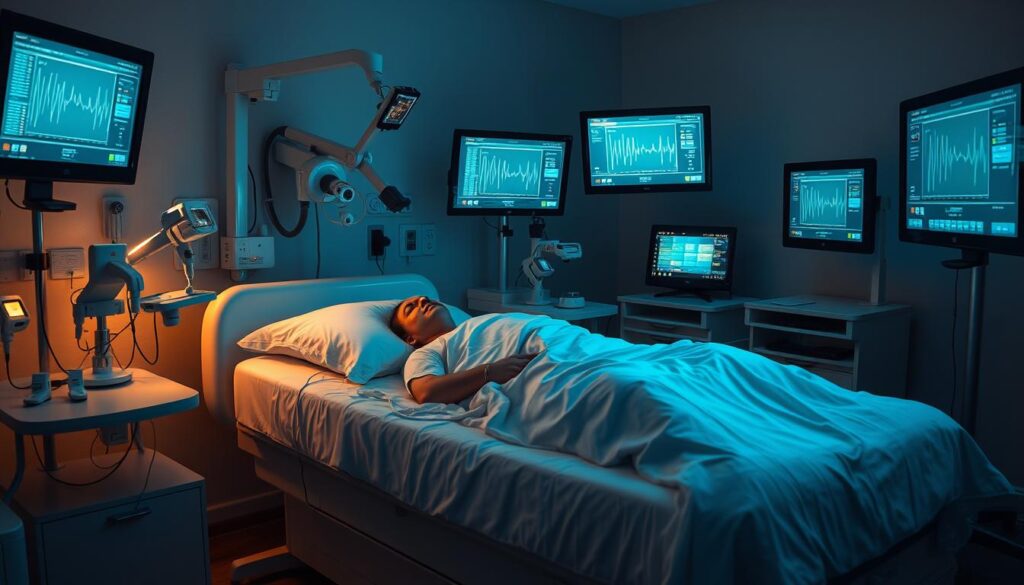
Struggling with sleep issues? Polysomnography might be your answer. This sleep monitoring technique diagnoses various sleep-related breathing disorders and complex sleep conditions1.
Sleep disorders can greatly affect your life quality. Professional sleep monitoring is vital for accurate diagnosis and treatment.
Over 2 million healthcare providers use advanced tools to evaluate sleep studies1. These tools offer precise insights into your sleep health.
Polysomnography tracks brain waves, oxygen levels, and heart rate. It creates a detailed map of your nighttime experiences.
Key Takeaways
- Polysomnography helps diagnose complex sleep disorders
- Sleep monitoring tracks multiple physiological processes
- Professional sleep studies offer comprehensive health insights
- Sleep apnea and other disorders can be accurately identified
- Advanced medical technologies support precise sleep analysis
What is Polysomnography (Sleep Study) and How Does it Work?
Polysomnography, or sleep study, is a detailed test that examines your body during sleep. It uncovers hidden sleep issues that might affect your health. This powerful tool helps doctors understand your sleep patterns better2.
In a sleep study, sensors track various body systems. These sensors map your sleep cycles in detail. They can reveal disruptions caused by sleep deprivation or sleep paralysis3.
Types of Measurements and Monitoring
The sleep study measures several aspects of your nighttime body functions:
- Brain wave activity using Electroencephalography (EEG)
- Heart rate monitoring with Electrocardiography (EKG)
- Muscle movement tracking through Electromyogram (EMG)
- Eye movement analysis using Electro-oculography (EOG)
| Sensor Type | Body System Monitored | Purpose |
|---|---|---|
| EEG Sensors | Brain Activity | Track sleep stages and brain wave patterns |
| Respiratory Sensors | Breathing | Monitor oxygen levels and breathing interruptions |
| Pulse Oximeter | Blood Oxygen | Measure oxygen saturation during sleep |
These measurements aim to provide a complete picture of your sleep patterns. They can also reveal potential health issues2.
“A sleep study is like a nighttime detective, uncovering the mysteries of your body’s nocturnal activities.”
Doctors often use these studies to diagnose various sleep disorders. These may include sleep apnea, narcolepsy, and periodic limb movement disorder2.
The detailed data helps create targeted treatments. These strategies aim to improve your overall sleep quality and health.
Preparing for Your Sleep Study: Essential Steps
A sleep study helps diagnose conditions like Sleep Apnea, Narcolepsy, and Restless Leg Syndrome. Good preparation ensures accurate results. Your approach to the night affects the quality of data collected4.
- Avoid caffeine and alcohol for at least 8 hours before the study
- Skip daytime naps to ensure natural sleep patterns
- Pack comfortable sleepwear and a change of clothes
- Bring approved medications
Tip: Arrive at the sleep center between 5:30 pm and 9:30 pm for your overnight study4. Most studies last about 10 hours, so plan accordingly5.
“Proper preparation is key to a successful sleep study diagnosis”
Special considerations for your visit:
- Avoid using hair products or makeup that might interfere with sensor attachment
- Discuss any skin allergies with your healthcare provider
- Follow your typical bedtime routine as closely as possible
If you’re under 18, one parent or guardian can stay overnight with you5. Contact your sleep disorder clinic for specific questions.
This will ensure a smooth experience during your sleep study4.
During the Sleep Study: What to Expect
Understanding the sleep study process can ease your worries. You’ll visit a special sleep lab to monitor your Sleep Cycles and potential Sleep Disorders6.
You’ll enter a cozy room that feels like a hotel suite. Sleep technologists will guide you through the overnight process. They’ll make sure you’re comfortable and supported7.
Monitoring Equipment and Process
Technicians will attach sensors to your body using gentle adhesive or gel. These sensors track important body functions during sleep.
- Brain wave activity
- Eye movements
- Heart rate patterns
- Breathing rhythms
- Blood oxygen levels
The setup allows you to move freely while capturing detailed Sleep Monitoring data6.
| Monitoring Device | Body Location | Purpose |
|---|---|---|
| Chest Belt | Chest | Track Breathing |
| Muscle Sensors | Face, Legs, Head | Monitor Muscle Activity |
| Brain Sensors | Head | Record Brain Waves |
“Our goal is to provide you with the most accurate understanding of your sleep patterns.” – Sleep Study Professional
A low-light camera and audio system help technologists monitor your progress. They can communicate with you if needed. Sometimes, they might use breathing devices like CPAP or BiPAP7.
Conclusion
Your sleep study provides vital insights into your sleep health. A polysomnography technologist analyzes the data to spot potential sleep disorders. Your doctor will review a detailed report on your sleep patterns8.
The results reveal important information about your breathing and sleep cycles. For men aged 30-49, sleep-disordered breathing affects about 10% of the group. Women in this age range have lower rates, around 3%8.
These findings help doctors suggest targeted treatments to boost your sleep quality. Your follow-up appointment is key to understanding the results. The healthcare team will discuss any sleep disorders found8.
They may propose lifestyle changes to improve your rest. This could include adjusting caffeine intake or exercise routines. By acting on these results, you can work towards better sleep patterns8.
FAQ
What exactly is a polysomnography (sleep study)?
Polysomnography is an overnight test that tracks your body’s activities during sleep. It records brain waves, oxygen levels, heart rate, and breathing. The study also monitors eye and leg movements to diagnose various sleep disorders.
This comprehensive test provides detailed insights into your sleep patterns. It helps identify potential disruptions in your normal sleep cycle.
How long does a typical sleep study take?
A standard polysomnography is an overnight test lasting about 8-10 hours. You’ll arrive at the sleep center in the evening. The study continues until early morning, usually around 6-7 AM.
Do I need to prepare anything special before my sleep study?
Yes, there are several important preparation steps. Avoid caffeine and alcohol for at least eight hours before the study. Skip daytime naps and pack comfortable sleepwear and toiletries.
Bring any medications approved by your doctor. Avoid using hair products, lotions, or makeup that might interfere with sensor attachment.
Will the sensors and equipment be uncomfortable?
The sensors may feel unusual at first, but they’re designed for comfort. Technicians use gentle adhesive or gel to attach them. The monitoring equipment allows you to move freely in bed.
Most patients quickly adapt to the sensors during the night.
Can I go home immediately after the sleep study?
Yes, you can leave the sleep center after the sensors are removed. A technologist will analyze the collected data. Your healthcare provider will review the results.
You’ll typically have a follow-up appointment to discuss the findings. This may include potential treatment recommendations.
What sleep disorders can polysomnography diagnose?
Polysomnography can help diagnose various sleep disorders. These include sleep apnea, narcolepsy, and periodic limb movement disorder. It can also identify REM sleep behavior disorder.
The comprehensive monitoring helps healthcare providers spot specific issues affecting your sleep quality.
Is a home sleep apnea test the same as a full polysomnography?
No, a home sleep apnea test is more limited than a full polysomnography. Home tests typically focus on breathing and oxygen levels.
A complete sleep study in a lab provides more detailed monitoring. It includes brain waves, heart activity, and muscle movements. It also includes full video and audio recording.
Source Links
- How to Prepare for a Sleep Study – https://www.sleepfoundation.org/sleep-studies/how-to-prepare-for-a-sleep-study
- Polysomnography (sleep study) – Mayo Clinic – https://www.mayoclinic.org/tests-procedures/polysomnography/about/pac-20394877
- Sleep Study: What It Is, What To Expect, Types & Results – https://my.clevelandclinic.org/health/diagnostics/12131-sleep-study-polysomnography
- Preparing for a Sleep Study – https://www.uclahealth.org/medical-services/sleep-disorders/patient-resources/patient-education/preparing-sleep-study
- What to Bring for an Overnight Sleep Study – Richmond University Medical Center – https://www.rumcsi.org/services/sleep-disorder/what-to-bring-for-an-overnight-sleep-study/
- Sleep Studies – https://www.sleepfoundation.org/sleep-studies
- What to Expect During a Sleep Study (Polysomnogram) – CHOC Children’s – https://choc.org/video/what-to-expect-during-a-sleep-study-polysomnogram-2/
- How to interpret the results of a sleep study – https://pmc.ncbi.nlm.nih.gov/articles/PMC4246141/

