
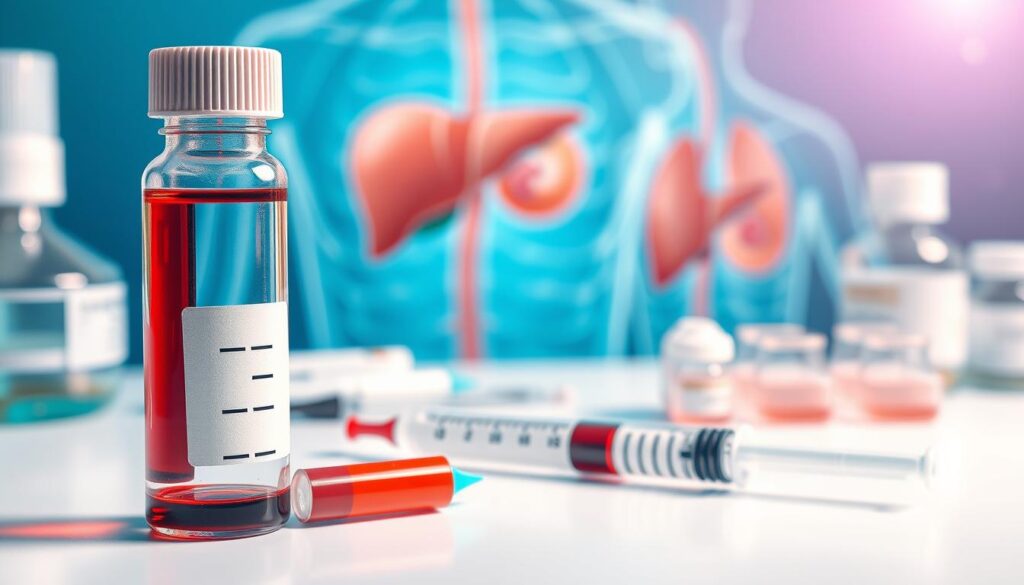
Your liver is vital for your health. It processes nutrients and filters toxins. High liver enzymes can signal liver stress or damage. About 1-9% of patients find high liver enzymes during routine checks.
Liver Function Tests measure enzyme levels to assess liver health. High enzymes don’t always mean serious issues. However, they need careful investigation to find the cause.
Many factors can raise liver enzymes. Large doses of Tylenol can affect enzyme levels. Alcohol, certain medicines, and herbal supplements may also impact your liver’s balance.
Key Takeaways
- Liver enzymes are critical indicators of liver health
- Multiple factors can cause enzyme elevation
- Routine screening can detect potential liver issues early
- Not all elevated enzymes signal serious disease
- Professional medical evaluation is crucial for accurate diagnosis
What Are Liver Enzymes and Their Function
Your liver is vital for maintaining good health. Liver enzymes are proteins that monitor liver function and detect health issues. These molecular workers act as internal health monitors, offering insights into your body’s processes.
Liver enzymes help you stay proactive about your health. Let’s explore these important biological indicators.
Types of Liver Enzymes
The main liver enzymes monitored in medical tests include:
- Alanine Transaminase (ALT) – normal levels range from 7 to 55 units per liter (U/L)3
- Aspartate Transaminase (AST) – typical levels range from 8 to 48 U/L3
- Alkaline Phosphatase (ALP) – standard range between 40 to 129 U/L3
- Gamma-Glutamyl Transferase (GGT) – levels from 8 to 61 U/L3
Role in Body Functions
Liver enzymes are essential for many body functions, including:
- Detoxification of harmful substances
- Protein synthesis
- Bile production
- Metabolic regulation
Normal vs. Abnormal Levels
High liver enzymes can signal potential health issues. Studies show 25-51% of people with high liver enzymes have fatty liver disease4. These elevated levels might indicate metabolic syndrome or liver damage4.
“Your liver enzymes tell a story about your overall health – listen carefully.”
Lifestyle choices affect liver enzyme levels. A balanced diet, regular exercise, and moderate alcohol intake can prevent liver problems4.
Common Causes of Elevated Liver Enzymes
Liver enzymes signal potential liver damage or inflammation. Understanding what triggers their elevation is vital for liver health5.
Various conditions can raise liver enzyme levels. Some are more common than others:
- Viral Hepatitis (Hepatitis A, B, and C)6
- Alcoholic Hepatitis caused by excessive drinking6
- Medication-Induced Liver Injury from various drugs5
Certain medications often affect liver enzyme levels:
- Nonprescription pain medicines like acetaminophen6
- Cholesterol-controlling statins6
- Antibiotics and antiviral drugs
Several health conditions can also impact liver enzyme levels:
“Your liver’s health is a complex interplay of lifestyle, genetics, and environmental factors”
Mild elevations of liver enzymes might not always indicate serious problems. About 6.2% of people have abnormal AST levels. Many return to normal during follow-up testing7.
If your liver enzyme levels stay high, see a doctor. They can provide a thorough evaluation5.
Treatment Options and Lifestyle Changes
Managing elevated liver enzymes requires a comprehensive approach. Your liver’s health is crucial. Understanding the right strategies can help prevent Hepatocellular Injury and potential Cirrhosis.
Medical Interventions
Your healthcare provider will likely recommend specific Liver Function Tests to diagnose the underlying issue8. Over 1,000 medicines and herbal products are linked to liver damage.
Careful medical evaluation is essential for proper diagnosis and treatment8.
Dietary Modifications
Your diet plays a critical role in liver health. Consider these dietary recommendations:
- Increase intake of vegetables and leafy greens
- Limit animal protein consumption
- Include potassium-rich foods
- Consider folic acid supplements
Research shows that dietary changes can significantly impact liver enzyme levels. One study showed a 20.3% decrease in ALT levels after changing lunch options9.
Lifestyle Adjustments
Implementing lifestyle changes can dramatically improve your liver health:
Your liver’s health is in your hands – small changes can make a big difference.
Drinking 1 to 4 cups of coffee daily might help lower liver enzymes. It may also reduce the risk of liver disease10.
An 8-week aerobic and resistance exercise program can reduce hepatic fat content10.
| Lifestyle Factor | Impact on Liver Health |
|---|---|
| Weight Loss | 66.7% improvement in ALT levels9 |
| Dietary Changes | Potential reduction in liver enzyme levels |
| Exercise | Reduces hepatic fat content |
Proper treatment and lifestyle changes can help normalize elevated liver enzyme levels. These steps protect your liver’s long-term health9.
Conclusion
Elevated liver enzymes play a vital role in your overall health. Liver Function Tests offer valuable insights into potential health risks11. Studies show that 10% to 21.7% of the general population have high liver enzyme levels11.
AST and ALT levels can change over time. Research indicates ALT elevation is intermittent in 36% of cases and persistent in 28%7. A single test result doesn’t always signal a serious problem.
The National Health and Nutrition Examination Survey found interesting results. Over 30% of initial abnormal tests were later reclassified as normal7.
Taking charge of your liver health is crucial. Team up with your doctor to assess your risk factors. Lifestyle choices greatly impact liver function.
A balanced diet and regular exercise support liver health. Limit alcohol intake and manage medications carefully12. Early detection and personalized care are key to maintaining a healthy liver.
FAQ
What are liver enzymes?
Liver enzymes are proteins that speed up chemical reactions in your liver. They play a key role in energy production and detoxification. ALT and AST are common enzymes measured to check liver function.
What causes elevated liver enzymes?
Many factors can raise liver enzyme levels. These include alcohol abuse, fatty liver disease, and viral hepatitis. Medications, obesity, and diabetes can also cause elevated enzymes.
Other potential causes are thyroid disorders and some cancers. Drug abuse and certain medications may also lead to higher enzyme levels.
Are elevated liver enzymes always a serious concern?
Not always. Elevated liver enzymes can show damage, but they don’t always mean a severe problem. Some people have mild increases that fix themselves.
It’s important to work with your doctor to find the cause. They can help determine the right treatment for you.
How are elevated liver enzymes diagnosed?
Doctors use blood tests and liver function tests to diagnose elevated enzymes. They may also order imaging studies like ultrasounds, CT scans, or MRIs.
Your medical history and symptoms help interpret the results. A liver biopsy might be needed in some cases.
What lifestyle changes can help manage liver enzyme levels?
To support liver health, eat a diet rich in whole foods. Exercise regularly and limit alcohol intake. Manage conditions like diabetes and maintain a healthy weight.
Avoid overusing medications. These changes can prevent liver problems and improve overall liver function.
Can medications affect liver enzyme levels?
Yes, many medications can change liver enzyme levels. These include pain relievers, cholesterol drugs, and antibiotics. Anti-seizure medicines, NSAIDs, and some herbal supplements can also affect enzymes.
Always talk to your doctor about possible drug interactions. They can advise on how medications might affect your liver.
How often should I get my liver enzymes checked?
The frequency of liver enzyme tests depends on your health and risk factors. Those with obesity or diabetes may need more frequent checks.
For most people, yearly check-ups can catch liver issues early. Your doctor can recommend the best testing schedule for you.
Source Links
- Interpreting Liver Enzymes and Liver Function Tests – https://www.nursingcenter.com/ncblog/october-2023/liver-function-tests
- Elevated Liver Enzymes: Symptoms, Causes, and Treatment – https://www.verywellhealth.com/elevated-liver-enzymes-5443042
- Liver function tests – Mayo Clinic – https://www.mayoclinic.org/tests-procedures/liver-function-tests/about/pac-20394595
- Elevated liver enzymes: Causes, symptoms, tests, and treatment – https://www.medicalnewstoday.com/articles/325838
- Elevated liver enzymes – https://www.beaconhealthsystem.org/library/symptoms/elevated-liver-enzymes?content_id=SYM-20050830
- Elevated liver enzymes Causes – https://www.mayoclinic.org/symptoms/elevated-liver-enzymes/basics/causes/sym-20050830
- Evaluation of Elevated Liver Enzymes – https://pmc.ncbi.nlm.nih.gov/articles/PMC7110573/
- Liver problems – Diagnosis and treatment – https://www.mayoclinic.org/diseases-conditions/liver-problems/diagnosis-treatment/drc-20374507
- How to lower ALT levels: 8 natural methods – https://www.medicalnewstoday.com/articles/326425
- Liver enzymes: What they are, and how and why to lower them – https://www.medicalnewstoday.com/articles/how-to-lower-your-liver-enzymes
- Influence of elevated liver enzyme level on 30-day mortality rates in patients undergoing nonemergency orthopedic surgery – Perioperative Medicine – https://perioperativemedicinejournal.biomedcentral.com/articles/10.1186/s13741-024-00395-7
- Elevated liver enzymes portends a higher rate of complication and death in SARS-CoV-2 – https://pmc.ncbi.nlm.nih.gov/articles/PMC8473493/

