
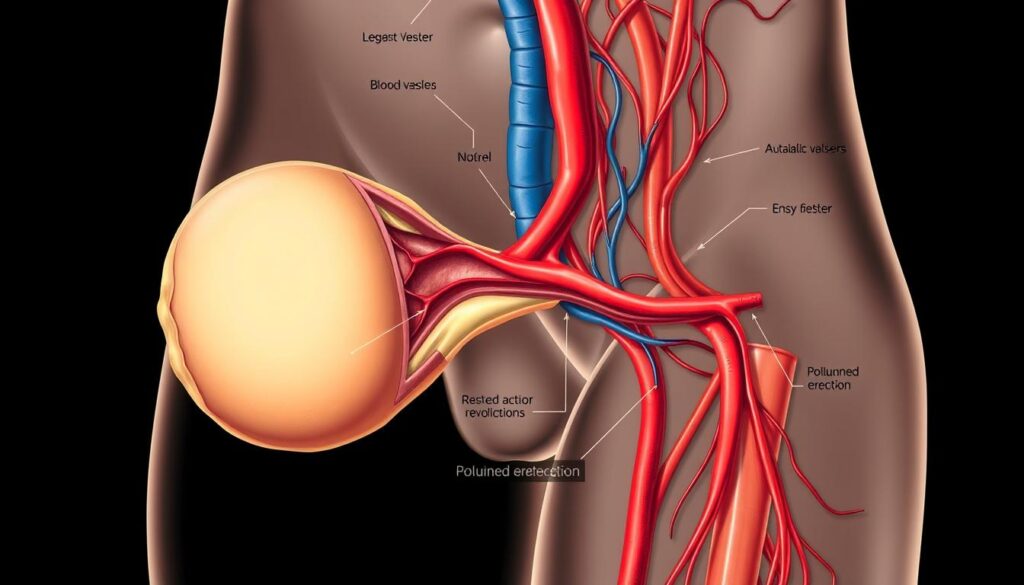
Priapism is a serious penis condition requiring urgent medical care. It’s an erection lasting over four hours without sexual stimulation1. This health issue can affect males of all ages.
Recognizing priapism risks is vital. It mainly affects men in their 30s and older1. Those with sickle cell disease face higher risks.
Priapism is rare, occurring in 0.73 to 5.4 per 100,000 men yearly2. Its complexity lies in varied presentations.
Some experience stuttering priapism, with intermittent prolonged erections1. Different types exist, including ischemic and non-ischemic variations. Each type has unique features and potential causes.
Key Takeaways
- Priapism is a medical emergency requiring immediate professional attention
- The condition can affect males of various ages, including children with specific health conditions
- Prolonged erections lasting over four hours signal potential priapism
- Multiple factors can trigger this urological condition
- Early recognition and medical intervention are critical
Understanding Priapism: Types and Symptoms
Priapism is a serious urological emergency affecting sexual health. It involves long-lasting erections without stimulation. If untreated, it can lead to severe complications3.
Types of Priapism
Three main types of priapism affect males of various ages3:
- Ischemic (low-flow) priapism
- Non-ischemic (high-flow) priapism
- Recurrent priapism
Ischemic vs. Non-ischemic Priapism
Ischemic priapism is most common, typically affecting males aged 20-503. It occurs when blood gets trapped in the penis, causing a rigid, painful erection.
Certain conditions increase the risk. For example, about 42% of adults with sickle cell anemia may develop priapism3.
| Priapism Type | Characteristics | Risk Factors |
|---|---|---|
| Ischemic Priapism | Rigid, painful erection | Sickle cell disease, medications |
| Non-ischemic Priapism | Less rigid, minimal pain | Trauma, vascular issues |
Key Warning Signs and Symptoms
Recognizing priapism symptoms is vital for quick treatment. A key sign is an erection lasting over four hours without arousal4.
Various medications can trigger this condition, including:
- Erectile dysfunction drugs
- Antidepressants
- Antipsychotic medications
- Blood thinners
When to Seek Emergency Care
Tissue damage can start 4-6 hours after priapism begins3. Seek medical help right away if you have a long-lasting erection.
Quick treatment is crucial to prevent potential long-term erectile dysfunction4.
“Prompt medical intervention is key to preserving sexual function and preventing permanent damage.”
Common Causes and Risk Factors of Prolonged Erections
Priapism is a complex medical issue with many potential triggers. Knowing these triggers can help you spot warning signs early. Timely medical help is crucial for this condition.
Blood disorders significantly impact prolonged erections. Sickle cell disease, leukemia, and thalassemia can affect blood flow. These conditions may lead to priapism5.
Key Causes of Priapism
- Medication side effects from antidepressants, antipsychotics, and erectile dysfunction treatments
- Recreational drug use, including cocaine
- Penile injury or trauma
- Neurological disorders
- Metabolic conditions
Medication side effects are crucial to understand. Some drugs can disrupt normal blood flow. This disruption may lead to prolonged erections5.
Approximately 1 in 60,000 males experience priapism annually, with 19 out of 20 cases being ischemic type5.
Certain medical conditions and lifestyle choices increase priapism risk. Early recognition and professional medical evaluation are crucial6.
| Risk Category | Contributing Factors |
|---|---|
| Blood Disorders | Sickle cell disease, leukemia |
| Medication | Antidepressants, blood thinners |
| Lifestyle | Recreational drug use |
If an erection lasts over four hours, seek medical help right away. Quick action can prevent serious complications5.
Conclusion
Priapism requires immediate medical attention. It affects 0.5 to 1 in 100,000 people yearly7. Knowing risk factors and early signs can greatly impact sexual health8.
Seek emergency care for erections lasting over a few hours. After 24 hours, 90% may lose sexual function9. Sickle cell patients have a 42% lifetime risk of priapism7.
Talk openly with your doctor about sexual health. Learn your risk factors and treatment options. Medical research can help prevent complications.
Early detection and professional care are crucial. They help manage priapism risks effectively. Don’t hesitate to seek help when needed.
FAQ
What exactly is priapism?
Priapism is a prolonged erection lasting over four hours without sexual stimulation. It occurs when blood gets trapped in the penis. This can cause severe pain and harm erectile function.
What are the different types of priapism?
There are two main types: ischemic (low-flow) and non-ischemic (high-flow) priapism. Ischemic priapism is more common and causes a rigid, painful erection. Non-ischemic priapism results in a less rigid erection with minimal pain.
How serious is priapism?
Priapism is a medical emergency that needs immediate attention. If untreated, it can lead to permanent erectile dysfunction. It may also cause tissue damage and long-term sexual health issues.
What causes priapism?
Priapism can stem from various factors, including blood disorders like sickle cell disease. Medication side effects, alcohol, drug use, and injuries can also cause it. Sometimes, the exact cause remains unknown.
Who is most at risk for priapism?
Priapism often affects males in their 30s and older. Children with sickle cell disease can also experience it. Risk factors include a history of priapism and certain medications.
What are the symptoms of priapism?
The main symptom is an erection lasting over four hours without sexual stimulation. Ischemic priapism causes a rigid shaft, soft tip, and increasing pain. Non-ischemic priapism results in a less rigid erection with minimal pain.
How is priapism treated?
Treatment depends on the type of priapism. Options include medications to constrict blood vessels and aspiration to remove trapped blood. Surgical interventions may be necessary in some cases.
Can priapism be prevented?
You can reduce risk by managing health conditions and using medications carefully. Avoid recreational drugs and consult healthcare providers about potential risk factors. For recurring priapism, discuss prevention strategies with a medical professional.
Source Links
- A prolonged erection of the penis-Priapism – Symptoms & causes – Mayo Clinic – https://www.mayoclinic.org/diseases-conditions/priapism/symptoms-causes/syc-20352005
- Priapism – StatPearls – NCBI Bookshelf – https://www.ncbi.nlm.nih.gov/books/NBK459178/?utm_source=content&utm_medium=article&utm_campaign=mark_wahlberg_coffee&utm_id=mark_wahlberg_coffee
- Priapism: Treatment, causes, symptoms, and types – https://www.medicalnewstoday.com/articles/318737
- Erectile Dysfunction and Priapism – https://www.webmd.com/erectile-dysfunction/erectile-dysfunction-priapism
- Priapism – https://en.wikipedia.org/wiki/Priapism
- A prolonged erection of the penis-Priapism – Diagnosis & treatment – Mayo Clinic – https://www.mayoclinic.org/diseases-conditions/priapism/diagnosis-treatment/drc-20352010
- Management of priapism: an update for clinicians – https://pmc.ncbi.nlm.nih.gov/articles/PMC4236300/
- Evaluation and management of Priapism: 2009 Update – https://pmc.ncbi.nlm.nih.gov/articles/PMC3905796/
- Recurrent priapism in the setting of cannabis use – Journal of Cannabis Research – https://jcannabisresearch.biomedcentral.com/articles/10.1186/s42238-020-0015-8

