
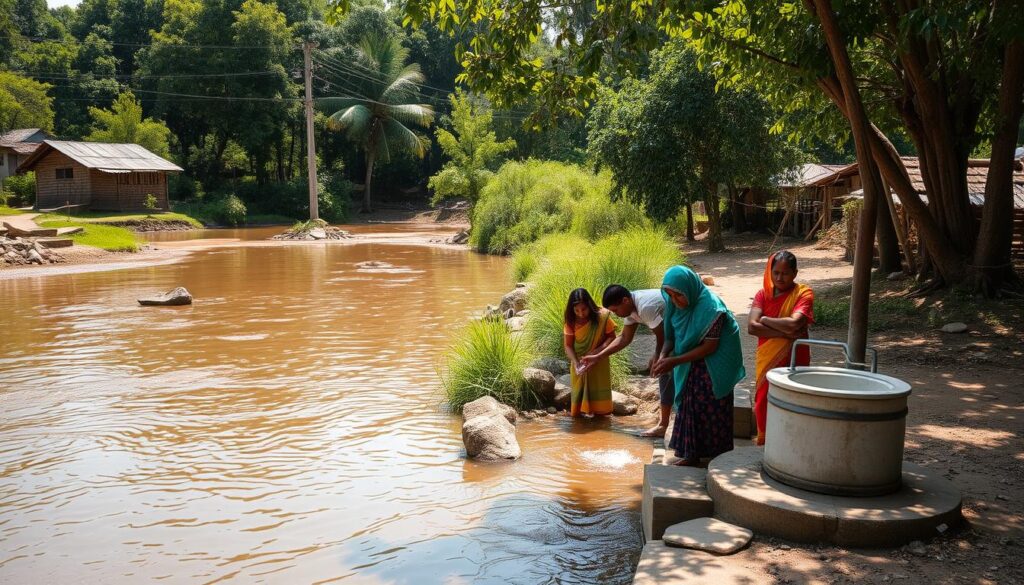
Cholera is a dangerous diarrheal disease affecting millions worldwide. This waterborne illness can quickly become life-threatening if not treated. Each year, 1.3 to 4 million people suffer from this bacterial infection1.
Knowing about cholera is vital for protecting yourself and others. People in areas with poor water and hygiene are at highest risk. Cholera remains a major health issue in parts of Africa, South Asia, and Latin America2.
The disease spreads mainly through contaminated water and food, not casual contact. Public water supplies, street vendor food, and poorly stored items can harbor the dangerous bacteria12.
Key Takeaways
- Cholera is a potentially fatal waterborne illness
- Affects millions globally each year
- Primarily spread through contaminated water and food
- Most prevalent in regions with poor sanitation
- Preventable through proper hygiene and clean water access
What is Cholera and Its Common Symptoms
Cholera is a severe bacterial infection that can be life-threatening if not treated. It’s caused by Vibrio cholerae, a bacterium that attacks the digestive system3.
Cholera spreads through contaminated water and food. It’s a major risk in areas with poor sanitation4.
Understanding Vibrio Cholerae Infection
Vibrio cholerae bacteria can cause severe health issues. Each year, 1.3 to 4.0 million cases occur globally. Fatalities range from 21,000 to 143,0003.
Your risk increases in certain environments. These include places with limited clean water and poor sanitation.
- Limited access to clean water
- Poor sanitation conditions
- Crowded living spaces
- Compromised hygiene practices
Key Warning Signs and Symptoms
Cholera symptoms can appear quickly. You might lose up to one quart of fluid per hour4. Be alert for these signs:
- Intense watery diarrhea
- Rapid dehydration
- Nausea and vomiting
- Muscle cramps
Stages of Cholera Development
The disease progresses through distinct stages. Without proper rehydration therapy, it can quickly become life-threatening4. Severe cases may lead to shock and fatal complications.
Prevention and quick medical intervention are crucial in managing cholera’s devastating potential.
Cholera is rare in the United States. Most cases are linked to international travel4. Knowing the symptoms and taking precautions can protect you from this serious infection.
Essential Prevention Methods and Treatment Options
Cholera prevention requires a thorough approach to hygiene and health. Knowing the right strategies can save lives when traveling to areas with cholera. Proper sanitation and personal hygiene are key.
Essential prevention steps include drinking only treated water and washing hands often. Eating thoroughly cooked foods is crucial. Avoid raw vegetables and unpeeled fruits.
- Drinking only treated or boiled water
- Washing hands frequently with soap
- Consuming thoroughly cooked foods
- Avoiding raw vegetables and unpeeled fruits
Cholera treatment mainly focuses on fast rehydration. Oral rehydration solution is vital in managing the disease5. Up to 80% of patients can be treated successfully with Oral Rehydration Therapy (ORT) alone6.
Vaccination is another key prevention method. The Dukoral vaccine has been used in over 60 countries6. Community immunity could potentially eliminate cholera if 70 percent of the population receives vaccination6.
| Treatment Option | Effectiveness |
|---|---|
| Oral Rehydration Solution | Up to 80% success rate |
| Antibiotics | Reduces diarrhea duration |
| Zinc Supplements | Decreases diarrhea in children |
Severe cases may need intravenous fluids5. Antibiotics like doxycycline can help reduce symptoms and shorten illness duration7.
Without proper treatment, cholera can be fatal within hours. With prompt rehydration, fatalities drop from 50% to less than 1%5.
Conclusion
Cholera prevention is vital in fighting this serious waterborne illness. Globally, it affects 4 million people annually, causing 143,000 deaths8. Your awareness can protect you and your community from this potentially fatal disease9.
Public health efforts are crucial in tackling cholera’s impact. The WHO aims to eliminate cholera by 2030 in high-risk areas8. By understanding waterborne disease transmission, you help prevent outbreaks.
Key strategies include proper sanitation, clean water sources, and good personal hygiene10. With prompt treatment, cholera’s mortality rate can drop from 25% to less than 1%89. Your quick action can save lives, especially in areas with limited healthcare.
Cholera prevention is everyone’s responsibility. Stay informed, support public health initiatives, and practice good hygiene. Your efforts can protect vulnerable communities from this preventable disease10.
FAQ
What exactly is cholera?
Cholera is a bacterial disease caused by Vibrio cholerae. It spreads through contaminated water or food. Cholera can cause severe diarrhea and quick dehydration, becoming fatal within hours if untreated.
How quickly do cholera symptoms develop?
Symptoms usually appear within hours to five days after infection. The disease progresses through three stages: evacuation, collapse, and recovery. Evacuation involves stomach cramps, vomiting, and diarrhea.
Collapse leads to low body temperature and weak pulse. Recovery is possible with proper treatment.
What are the main symptoms of cholera?
Common symptoms include sudden watery diarrhea, nausea, vomiting, and rapid dehydration. Severe cases can lead to shock and kidney failure. Without prompt treatment, cholera can be deadly.
How can I prevent cholera when traveling?
In cholera-affected areas, use bottled or boiled water and avoid raw foods. Practice frequent handwashing to stay safe. Consider getting the cholera vaccine (Vaxchora) if you’re between 2-64 years old.
What is the primary treatment for cholera?
Rapid rehydration is key, using oral or intravenous fluids in severe cases. Antibiotics can help shorten the illness and reduce bacterial spread.
Where is cholera most common?
Cholera thrives in parts of Africa, Southeast Asia, and Haiti. These areas often lack proper sanitation and clean water. Outbreaks can occur in places with poor water and hygiene systems.
Can everyone infected with Vibrio cholerae become sick?
Most people exposed to the bacteria don’t get ill. However, they can still spread the infection. Only a small number of infected individuals develop severe symptoms.
Is cholera completely preventable?
Prevention relies on clean water, proper sanitation, and good hygiene. Better water treatment and food handling are crucial. Improving public health systems helps reduce cholera transmission and prevent outbreaks.
Source Links
- About Cholera – https://www.cdc.gov/cholera/about/index.html
- Cholera: Causes, Symptoms, Treatment, and Prevention – https://www.webmd.com/a-to-z-guides/cholera-faq
- Cholera – https://www.who.int/news-room/fact-sheets/detail/cholera
- Cholera-Cholera – Symptoms & causes – Mayo Clinic – https://www.mayoclinic.org/diseases-conditions/cholera/symptoms-causes/syc-20355287
- Cholera-Cholera – Diagnosis & treatment – Mayo Clinic – https://www.mayoclinic.org/diseases-conditions/cholera/diagnosis-treatment/drc-20355293
- Cholera Treatment and Prevention – https://www.niaid.nih.gov/diseases-conditions/cholera-treatment-and-prevention
- Combating Cholera – PMC – https://pmc.ncbi.nlm.nih.gov/articles/PMC6492228/
- Diagnosis, Management, and Future Control of Cholera – https://pmc.ncbi.nlm.nih.gov/articles/PMC9491185/
- Lessons Learned during Public Health Response to Cholera Epidemic in Haiti and the Dominican Republic – https://wwwnc.cdc.gov/eid/article/17/11/11-0827_article
- John Snow, Cholera, the Broad Street Pump; Waterborne Diseases Then and Now – https://pmc.ncbi.nlm.nih.gov/articles/PMC7150208/

