
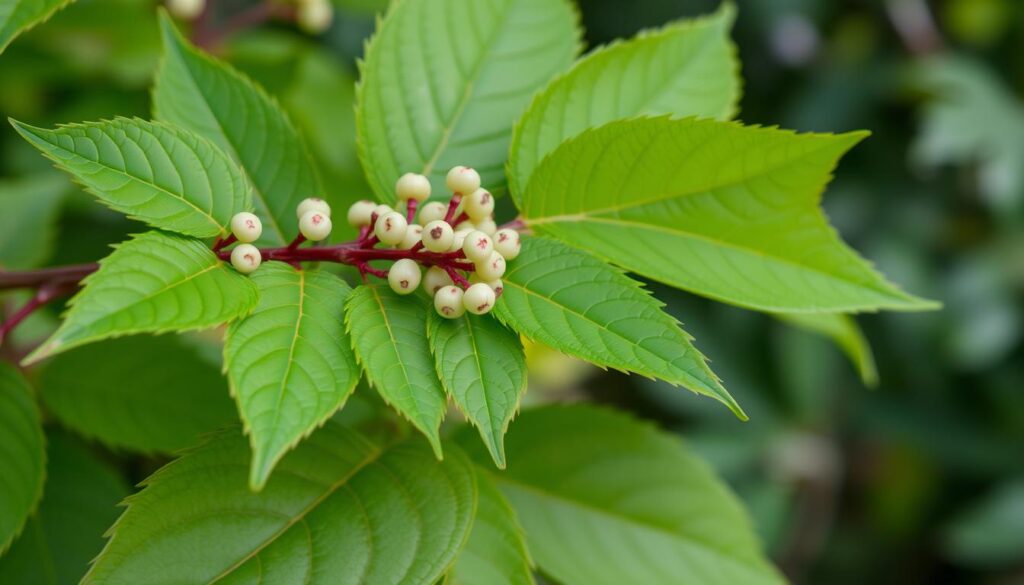
Poison sumac lurks in wooded and swampy areas. It contains urushiol oil, which can cause severe skin rashes. Knowing how to spot this plant is vital for outdoor enthusiasts and workers1.
This dangerous plant thrives in wet environments like bogs and swamps. You’ll find it across the Northeast, Midwest, and Southeast United States2. Its unique look makes it hard to spot, increasing the risk of contact1.
Farmers, foresters, and firefighters face a higher risk of exposure. Those who can’t identify poison sumac are more likely to develop skin irritations1. Protective gear and plant awareness are your best defense against this hazard.
Key Takeaways
- Poison sumac contains urushiol oil that triggers allergic reactions
- The plant grows in specific wet regions of the United States
- Rash symptoms can develop within 24 to 72 hours after exposure
- Protective clothing is essential when in potential poison sumac habitats
- Professional identification can help prevent accidental contact
Understanding Poison Sumac and Its Characteristics
Poison sumac thrives in wet areas across the United States. It’s a unique plant with distinct features that set it apart from poison ivy and oak3.
Poison sumac typically grows as a small tree or tall shrub in swampy regions. It can reach up to 20 feet in height3. The plant’s appearance changes with seasons, displaying vibrant colors throughout the year.
In spring, it shows orange hues. Summer brings rich greens. Fall showcases stunning yellows, oranges, and reds.
Physical Characteristics of Poison Sumac
Identifying poison sumac is crucial for removal. Here are its key features:
- Clusters of 7-13 smooth-edged leaflets on each stem
- Pale yellow or cream-colored berries in drooping clusters
- Smooth, elongated leaflets with a distinctive V-shaped point4
The Dangerous Urushiol Oil
Poison sumac’s real threat comes from its urushiol oil. This toxic substance causes severe allergic reactions. Just 50 micrograms of this oil can trigger a painful rash3.
Almost everyone who touches this oil will develop a rash. The oil is remarkably persistent and can remain active on surfaces for years.
“Poison sumac is more allergenic than both poison ivy and poison oak”4
Urushiol oil can transfer through direct plant contact, contaminated objects, or pet fur. People in wooded or swampy areas are particularly at risk of exposure4.
| Location | Poison Sumac Prevalence |
|---|---|
| Northeast | Common in wet regions |
| Midwest | Frequently found in swamps |
| Southeast | Thrives in wetland areas |
Knowing these characteristics helps protect you from this harmful plant. Stay alert and avoid contact to prevent painful reactions.
Symptoms and Treatment of Poison Sumac Rash
Recognizing poison sumac symptoms is vital for quick treatment. Poison sumac can trigger an intense allergic skin reaction. Swift action is key to managing this condition effectively5.
The rash has distinct features:
- Intense itching
- Red, swollen skin
- Fluid-filled blisters
- Potential severe symptoms like breathing difficulties5
Immediate relief is crucial for poison sumac remedies. Cool compresses and calamine lotion can soothe affected areas5.
Over-the-counter treatments work well for mild cases. Severe rashes might need medical help6.
| Treatment Option | Recommended For |
|---|---|
| Calamine Lotion | Mild itching and redness |
| Oral Antihistamines | Reducing allergic response |
| Corticosteroid Creams | Severe inflammation |
Most rashes heal within 10-14 days. Some may last longer5. Watch for infection signs or severe allergic reactions.
Seek immediate medical help if these occur6.
Remember: Prevention is always better than treatment. Learn to identify poison sumac and protect yourself during outdoor activities.
Conclusion
Knowing how to prevent poison sumac is key to avoiding its painful rash. Identifying poison sumac greatly lowers your exposure risk7. Wearing long pants and sleeves can protect you from these toxic plants7.
Poison sumac encounters can be risky. Half of all people may develop allergic reactions to urushiol oil8. If you touch the plant, act fast. Wash your skin with cool water and mild soap right away7.
Outdoor workers face higher risks of toxic plant exposure8. The rash can last 10 days to 3 weeks. In severe cases, it might stick around for 6 weeks7.
Learning about poison sumac is your best defense. Recognize the plant and its risks. Use careful prevention strategies. This way, you can safely enjoy outdoor areas where these plants grow.
FAQ
What is poison sumac and where does it grow?
Poison sumac is a dangerous plant found in wet, wooded areas of the southern US. It grows as a tall shrub or small tree in bogs and swamps. The plant has 7 to 13 smooth-edged leaflets per stem that change colors with the seasons.
How can I identify poison sumac?
Poison sumac doesn’t have a “leaves of three” pattern like poison ivy. Look for a shrub with 7 to 13 smooth-edged leaflets on each stem. It has yellow-greenish flowers and whitish-green fruits in loose clusters. The plant typically grows in wet, swampy areas.
What makes poison sumac dangerous?
Poison sumac contains urushiol oil, which causes severe allergic reactions. This oil can remain active for years and transfer through various means. Even a small amount can trigger a reaction in sensitive people.
What are the symptoms of poison sumac exposure?
Symptoms include intense itching, redness, swelling, and painful blisters. The rash usually appears within 24 to 72 hours after contact. It can last 14 to 21 days.
Severe cases may cause widespread rash, breathing problems, or swallowing difficulties.
How do I treat a poison sumac rash?
Treatment aims to relieve itching using calamine lotion, steroid creams, cool compresses, and oral antihistamines. Severe cases may require prescription steroids. Avoid scratching to prevent infection.
Seek medical help if the rash is severe or causes breathing problems.
How can I prevent poison sumac exposure?
Learn to identify the plant and avoid areas where it grows. Wear protective clothing in potentially infested areas. Use barrier creams like bentoquatam 5% for added protection.
Wash skin and clothing with soap and cool water if exposed. Teach family members about the plant’s dangers.
Can poison sumac exposure be dangerous through indirect contact?
Yes, urushiol oil can transfer through contaminated objects like clothing, tools, and pet fur. Even smoke from burning plants can cause exposure. The oil stays active for years, making indirect contact just as risky.
When should I see a doctor about a poison sumac rash?
See a doctor if you have a widespread or severe rash. Seek help if you have trouble breathing or swallowing. Get medical attention if you develop a fever or signs of infection.
Source Links
- Poison Ivy, Oak, and Sumac Rash – https://www.hopkinsmedicine.org/health/conditions-and-diseases/poison-ivy–poison-oak
- Outsmarting Poison Ivy and Other Poisonous Plants – https://www.fda.gov/consumers/consumer-updates/outsmarting-poison-ivy-and-other-poisonous-plants
- Poison Ivy Rash, Poison Oak, Poison Sumac: Symptoms, Causes & Treatment – https://my.clevelandclinic.org/health/diseases/10655-poison-plants-poison-ivy–poison-oak–poison-sumac
- Poison Sumac: Rash, Pictures, and Treatment – https://www.healthline.com/health/outdoor-health/poison-sumac
- Poison Ivy, Oak, or Sumac – https://www.columbiadoctors.org/health-library/condition/poison-ivy-oak-or-sumac/
- Poison sumac: What it is, treatment, and more – https://www.medicalnewstoday.com/articles/poison-sumac
- Poison Ivy, Oak, or Sumac – https://healthy.kaiserpermanente.org/health-wellness/health-encyclopedia/he.poison-ivy-oak-or-sumac.hw75039
- Patient education: Poison ivy (Beyond the Basics) – https://www.uptodate.com/contents/poison-ivy-beyond-the-basics/print

