
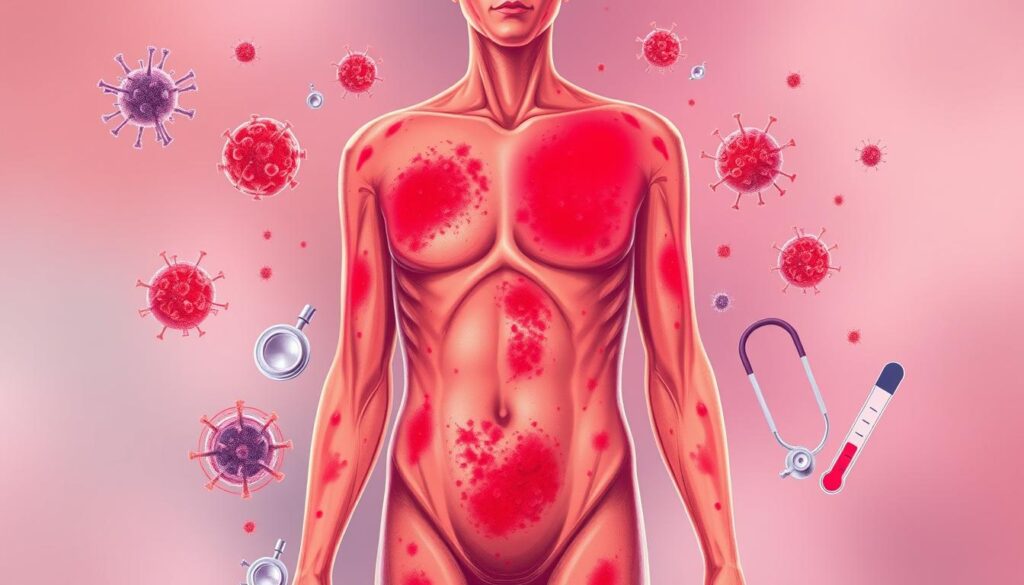
Scarlet fever is a bacterial infection that can surprise parents of young children. It causes a red rash and high fever. Modern medicine has made this condition easier to manage than before12.
This illness mainly affects children. It happens when people are vulnerable to toxins from Streptococcus bacteria1. Kids between 5 and 15 years old are most likely to get scarlet fever2.
Knowing about scarlet fever helps spot signs early and get proper care. The infection spreads fast where kids are close together, like schools and daycares12.
Key Takeaways
- Scarlet fever is a bacterial infection primarily affecting children
- The illness is characterized by a distinctive red rash and fever
- Most cases can be effectively treated with antibiotics
- Close contact settings increase transmission risk
- Early detection and treatment are crucial for recovery
Understanding Scarlet Fever: What You Need to Know
Scarlet fever is a serious strep infection that mostly affects children. It’s crucial to understand its causes and spread. This knowledge can help protect you and your family from this contagious illness.
What Causes Scarlet Fever?
Group A strep bacteria cause scarlet fever. These bacteria release toxins that trigger the disease’s distinctive symptoms. The toxins lead to a red rash and other telltale signs.
How is Scarlet Fever Spread?
This illness spreads through various ways:
- Respiratory droplets from coughing or sneezing3
- Direct contact with infected individuals
- Sharing contaminated utensils or personal items3
You can spread the infection until 24 hours after starting antibiotics4. Without treatment, you might stay contagious for 2-3 weeks4.
Risk Factors for Scarlet Fever
Some groups are more likely to get this strep infection:
- Children aged 5-15 years old5
- Students in close-contact environments like schools
- Individuals with recent strep throat or skin infections3
“Prevention is always better than cure when it comes to infectious diseases like scarlet fever.”
Pro tip: Wash your hands often and avoid sharing personal items. These simple steps can greatly lower your risk of getting this bacterial infection.
Recognizing the Symptoms of Scarlet Fever
Scarlet fever can surprise parents and caregivers. Knowing its symptoms helps catch it early and treat it properly.
Common Symptoms to Watch For
Scarlet fever symptoms appear quickly. Kids aged 5 to 12 are most likely to get this bacterial infection6.
Key signs include:
- High fever (typically 100.4°F or higher)
- Bright red rash that feels like sandpaper
- Sore throat with significant pain
- Swollen neck glands
- Strawberry tongue – a distinctive red and bumpy appearance
Distinguishing Scarlet Fever from Other Illnesses
The red rash is a clear sign of scarlet fever. It usually shows up 1-2 days after infection7.
This rash spreads across the body but rarely affects the face. It typically lasts between two to seven days6.
A key identifier is the characteristic “strawberry tongue” – a swollen, bright red tongue with a white coating that eventually peels.
When to Seek Medical Attention
Call a doctor right away if you notice:
- Symptoms persisting beyond a week
- Difficulty breathing
- Persistent high fever
- Signs of complications like chest pain
Quick antibiotic treatment is crucial to prevent serious issues. These can include rheumatic fever or kidney inflammation7.
Always finish all prescribed medicine for full recovery6. This ensures the infection is completely gone.
Treating Scarlet Fever Effectively
Proper treatment is vital for your child’s recovery from scarlet fever. Medical experts advocate for antibiotics and supportive care89. Penicillin is the go-to antibiotic, usually prescribed for ten days to eliminate strep bacteria8.
Your doctor may suggest different antibiotics based on your needs. For penicillin allergies, cephalexin offers a safe alternative9. Finishing the full antibiotic course is crucial to avoid complications like throat infections9.
Self-care measures help manage scarlet fever symptoms effectively. Over-the-counter pain relievers can reduce fever and ease body aches9. Good hygiene practices prevent the spread of infection9.
Stay home for at least 24 hours after starting antibiotics. This precaution helps protect others from potential transmission9.
FAQ
What is scarlet fever?
Scarlet fever is a bacterial illness caused by group A Streptococcus. It mainly affects children aged 5 to 15 years. The disease features a sandpaper-like red rash, high fever, and severe sore throat.
Modern antibiotics have made scarlet fever less dangerous. Treatment is now much more effective than in the past.
How do you catch scarlet fever?
Scarlet fever spreads through respiratory droplets from infected people. Close contact or sharing items can also transmit the bacteria. Kids in schools or daycares face higher risks due to proximity.
What are the main symptoms of scarlet fever?
Key signs include a pink-red sandpaper-like rash on the chest and stomach. High fever (over 100.4°F) and a very sore, red throat are common.
Other symptoms are swollen neck glands and difficulty swallowing. A “strawberry tongue” with white coating that later peels is also typical.
How is scarlet fever treated?
Doctors usually prescribe a 10-day course of antibiotics like penicillin or amoxicillin. For penicillin-allergic patients, alternatives such as erythromycin may be used. Symptoms often improve within 24 hours of starting treatment.
Can you get scarlet fever more than once?
Yes, you can get scarlet fever multiple times. Immunity to the bacterial toxins doesn’t last forever. Repeated exposure to the bacteria can lead to reinfection.
How can I prevent spreading scarlet fever?
Wash hands often and cover your mouth when coughing or sneezing. Avoid sharing personal items to prevent spread. Stay home for at least 24 hours after starting antibiotics.
When should I see a doctor?
See a doctor if symptoms last over a week. Seek help if scarlet fever occurs with chickenpox. Get medical attention for shortness of breath, chest pain, or persistent vomiting.
Early diagnosis and treatment are crucial to prevent serious complications.
Are there any home remedies to help with scarlet fever?
Drink plenty of cool fluids and eat soft foods to ease discomfort. Use calamine lotion or antihistamines for itching. Over-the-counter pain relievers can reduce fever.
Remember, these remedies don’t replace antibiotic treatment. Always follow your doctor’s advice for proper care.
Source Links
- Scarlet fever – Illnesses and conditions – https://www.nhsinform.scot/illnesses-and-conditions/infections-and-poisoning/scarlet-fever/
- Clinical Guidance for Scarlet Fever – https://www.cdc.gov/group-a-strep/hcp/clinical-guidance/scarlet-fever.html
- Scarlet Fever (for Parents) – https://kidshealth.org/en/parents/scarlet-fever.html
- Scarlet fever – https://www.nhs.uk/conditions/scarlet-fever/
- The difference between scarlet fever and strep throat-Scarlet fever – Symptoms & causes – Mayo Clinic – https://www.mayoclinic.org/diseases-conditions/scarlet-fever/symptoms-causes/syc-20377406
- Scarlet Fever – https://www.chop.edu/conditions-diseases/scarlet-fever
- Scarlet fever – https://www.healthdirect.gov.au/scarlet-fever
- Scarlet fever: a guide for general practitioners – https://pmc.ncbi.nlm.nih.gov/articles/PMC5649319/
- Treating Scarlet Fever: Relief for Sore Throat, Skin Rash, and More – https://www.verywellhealth.com/scarlet-fever-treatment-770658

