
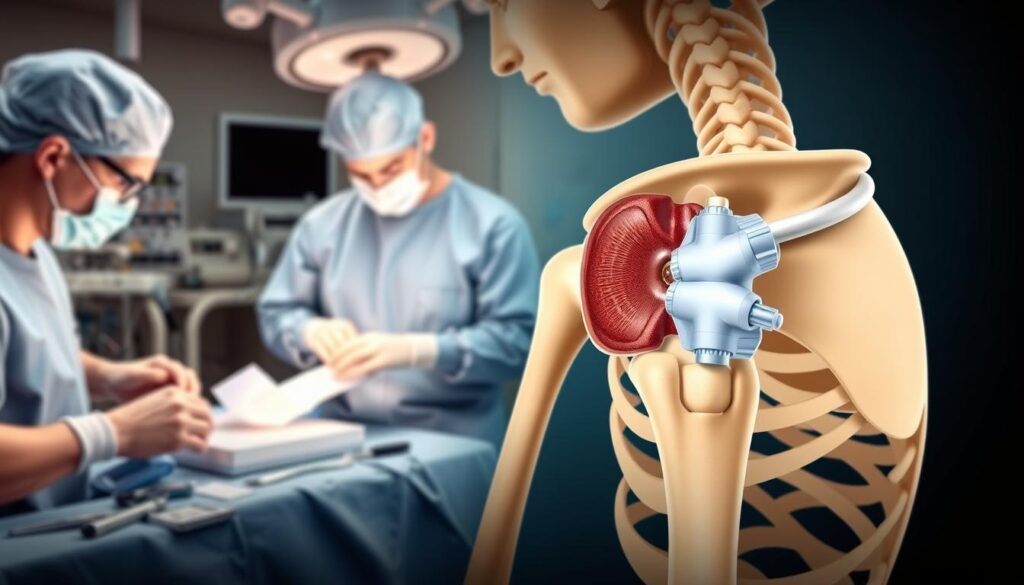
Shoulder replacement surgery restores mobility and eases chronic pain in severely damaged joints. Each year, over 50,000 such surgeries occur in the United States1. This procedure replaces damaged bone with advanced metal and plastic implants2.
Orthopedic experts remove damaged areas of your shoulder joint during this surgery. They replace these with custom-engineered parts. The operation usually lasts between 1 to 2 hours23.
Many patients see big improvements in pain relief and movement after surgery2. This treatment can greatly boost your quality of life. It offers a way to regain mobility and reduce pain.
Key Takeaways
- Shoulder replacement surgery addresses chronic shoulder pain and limited mobility
- The procedure typically takes 1-2 hours with potential same-day hospital discharge
- Over 50,000 surgeries are performed annually in the United States
- Most patients experience significant pain reduction after surgery
- Advanced implant technologies offer improved joint function
Understanding Shoulder Replacement Surgery
Shoulder replacement surgery helps patients regain mobility and reduce chronic pain4. Over 100,000 people in the U.S. undergo this surgery annually. Projections suggest this number could reach 350,000 by 20254.
Types of Shoulder Replacement Procedures
Patients have several options for shoulder arthroplasty. These options are tailored to their specific bone health and condition.
- Anatomic Total Shoulder Replacement: Replaces both ball and socket with implants mimicking natural bone structure
- Reverse Total Shoulder Replacement: Recommended for patients with significant rotator cuff damage
- Partial Shoulder Replacement: Addresses only the damaged portion of the shoulder joint
Common Reasons for Surgery
Minimally invasive surgery for shoulder replacement addresses various joint issues4. These surgeries aim to improve joint functionality.
- Osteoarthritis affecting individuals 50 and older
- Rheumatoid arthritis causing joint damage
- Posttraumatic arthritis from serious shoulder injuries
- Avascular necrosis disrupting bone blood supply
“One year after shoulder replacement surgery, 95% of patients report pain-free functionality”5
Rotator cuff repair might be necessary for significant shoulder joint complications6. Recovery typically takes two to six months. Physical therapy is often part of the recovery process6.
Preparing for Your Shoulder Replacement Surgery
Careful planning is key for a smooth shoulder replacement surgery. Your preparation involves several crucial steps. These will help you navigate the upcoming procedure7.
- Schedule a comprehensive medical evaluation7
- Discuss pain management strategies with your surgeon8
- Arrange transportation and post-surgery support7
Medical preparation is vital for successful rehabilitation. Your surgeon will likely recommend specific actions.
| Preparation Area | Recommended Actions |
|---|---|
| Medical Evaluation | Complete preadmission testing and manage chronic conditions7 |
| Medication Management | Stop anti-inflammatory drugs before surgery9 |
| Home Preparation | Create a safe recovery environment with necessary supplies7 |
It’s important to understand anesthesia and surgical expectations. Most procedures last 2-3 hours under general anesthesia. Patients typically stay one night in the hospital7.
Proper preparation can significantly improve your surgical outcome and recovery experience.
Your recovery success hinges on thorough preparation. Follow your healthcare team’s guidance for optimal pain management and rehabilitation8.
Conclusion
Shoulder replacement surgery can greatly improve your mobility and reduce pain. Recovery typically takes up to 6 months. During this time, you’ll slowly regain strength and function10.
Physical therapy is crucial for your rehabilitation. Most patients start structured programs about 6 weeks after surgery10. Long-term outcomes are usually positive, with significant improvements in shoulder function.
Research shows that conventional replacement techniques can boost function scores by over 10 points. This is on a 100-point scale11. Your dedication to rehab and following your surgeon’s advice is key to success10.
Shoulder replacements have high success rates, but it’s important to understand potential risks. Adverse events are relatively rare. Conventional replacements often have fewer complications than other surgical approaches11.
Choosing an experienced surgeon is crucial. Staying informed about your recovery process can help maximize your chances of success10. Your recovery will depend on your health, surgery complexity, and rehab efforts.
Stay positive and patient with your healing journey. Follow your doctor’s advice for the best results.
FAQ
What is shoulder replacement surgery?
Shoulder replacement surgery removes damaged parts of the shoulder joint. It replaces them with artificial implants. This procedure aims to ease pain and improve shoulder function.
Patients with osteoarthritis, rotator cuff injuries, or severe joint damage may need this surgery. It’s also known as shoulder arthroplasty.
How long does the actual surgery take?
Shoulder replacement surgery usually lasts about 2-3 hours. You’ll be under general anesthesia during this time. Most patients stay one night in the hospital after surgery.
What are the different types of shoulder replacement?
There are three main types of shoulder replacement. Anatomic total shoulder replacement replaces both ball and socket. Reverse total shoulder replacement is used for severe rotator cuff damage.
Partial shoulder replacement only replaces the ball side of the joint. Your doctor will recommend the best option for you.
What conditions typically require shoulder replacement surgery?
Common conditions include osteoarthritis, rheumatoid arthritis, and severe rotator cuff injuries. Shoulder fractures and osteonecrosis may also require this surgery. These issues can cause significant pain and limit daily activities.
How long is the recovery process?
Recovery typically spans about a year. Physical therapy starts within a day or two after surgery. You’ll follow a structured exercise program to strengthen your shoulder muscles.
Most patients experience less pain and improved range of motion over time. The process is gradual but effective.
What preparations are needed before the surgery?
You’ll meet with your surgeon for evaluation. Pre-operative tests like blood work and electrocardiogram are necessary. You may need to stop certain medications.
Follow specific instructions about eating and drinking before surgery. The night before, don’t eat or drink after midnight.
What are the potential risks of shoulder replacement surgery?
Potential complications include infection, nerve damage, and dislocation. Implant loosening can also occur. However, these risks are relatively rare.
Most patients report high satisfaction and positive long-term outcomes. Your doctor will discuss all risks with you.
How successful is shoulder replacement surgery?
Shoulder replacement surgery has a high success rate. Most patients experience significant pain relief and improved shoulder function. About 97% of implants remain stable after ten years.
This makes it a reliable option for severe shoulder joint problems. Your doctor can provide more specific information.
Source Links
- Shoulder Replacement Surgery – Risks and Recovery – https://www.webmd.com/arthritis/shoulder-replacement-surgery-what-to-know
- Shoulder replacement surgery – Mayo Clinic – https://www.mayoclinic.org/tests-procedures/shoulder-replacement/about/pac-20519121
- Shoulder Replacement: Surgery & Recovery – https://my.clevelandclinic.org/health/treatments/8290-shoulder-replacement
- Shoulder Joint Replacement – OrthoInfo – AAOS – https://orthoinfo.aaos.org/en/treatment/shoulder-joint-replacement/
- Shoulder Replacement Surgery | HSS Orthopedics – https://www.hss.edu/condition-list_shoulder-replacement.asp
- What You Need to Know About Total Shoulder Replacement – https://www.nm.org/healthbeat/healthy-tips/What-You-Need-to-Know-About-Total-Shoulder-Replacement
- How to Prepare for Shoulder Replacement Surgery – https://coloradosportsdoctor.com/how-to-prepare-for-shoulder-replacement-surgery/
- Preparing for Shoulder Replacement Surgery and Recovery: Orthopaedic Specialists: Orthopedics – https://www.orthopaedicspecialists.com/blog/preparing-for-shoulder-replacement-surgery-and-recovery
- Preparing for My Shoulder Replacement | OrthoUnited – https://orthounitedohio.com/blog/preparing-for-my-shoulder-replacement/
- A Patient’s Guide to Shoulder Replacement Surgery – https://forteortho.com/a-patients-guide-to-shoulder-replacement-surgery/
- Shoulder replacement surgery for osteoarthritis and rotator cuff tear arthropathy – PubMed – https://pubmed.ncbi.nlm.nih.gov/32315453/

