
Cushing syndrome is a complex endocrine disorder that affects your health and life quality. It happens when your body has too much cortisol for a long time1. Cortisol helps manage stress and metabolism, but too much can cause health problems2.
The syndrome affects people differently, with women having higher rates. Your risk goes up from medication use, tumors, or other health issues2. Knowing about this adrenal disorder helps catch it early.
Spotting hypercortisolism symptoms can lead to quick medical help. Cushing syndrome affects many body systems1. Look for changes like weight gain and thinking problems.
Early diagnosis and full treatment are key to managing this tricky endocrine disease. Don’t wait to see a doctor if you notice these signs.
Key Takeaways
- Cushing syndrome results from prolonged cortisol excess
- Women are more frequently affected by this condition
- Multiple causes include medications and hormonal imbalances
- Early detection is crucial for effective treatment
- The syndrome can impact multiple body systems
What is Cushing Syndrome?
Cushing syndrome is a complex hormonal disorder that affects your health and life quality. It happens when your body has high levels of cortisol, the stress hormone, for a long time34.
Understanding the Condition
Cushing syndrome occurs when your body makes too much cortisol. This often happens due to pituitary adenoma or adrenal tumors. The condition can have various causes, creating unique challenges for patients5.
Prevalence and Demographics
Cushing syndrome is rare. Here are some key facts:
- About 10 to 15 new cases per million people are diagnosed yearly in the U.S3.
- Women are 3-5 times more likely to get it than men34
- It mostly affects people between 20-50 years old3
Who Gets Affected?
Cushing’s disease makes up about 70% of endogenous Cushing syndrome cases. The condition can affect various groups of people. Steroid therapy side effects can also cause similar symptoms in some patients3.
Understanding your body’s hormone balance is key to recognizing potential Cushing syndrome symptoms early.
People at risk include those with:
- Chronic steroid medication use
- Underlying pituitary or adrenal tumors
- Specific genetic predispositions
Spotting the signs early can lead to better management and treatment. Proper medical guidance is crucial for dealing with this complex hormonal disorder5.
Causes of Cushing Syndrome
Cushing syndrome stems from various internal and external factors. Understanding these causes helps patients and doctors manage this complex endocrine disorder effectively.
Endogenous Causes
Internal hormone production issues often trigger Cushing syndrome. ACTH-producing pituitary adenomas are the main culprits. These tumors in the pituitary gland cause excessive cortisol secretion.
- ACTH-producing pituitary adenoma
- Ectopic ACTH-producing tumors
- Adrenal gland tumors
Exogenous Causes
External factors can also lead to Cushing syndrome. Long-term use of glucocorticoid medications is a key external cause6. High doses of drugs like prednisone over time can induce the syndrome6.
| Medication Type | Potential Impact |
|---|---|
| Glucocorticoids | High risk of Cushing syndrome |
| Medroxyprogesterone | Can cause hormonal imbalances |
Risk Factors and Genetic Links
Some people are more likely to develop Cushing syndrome. Those who are overweight or have uncontrolled type 2 diabetes face higher risks7. High blood pressure also increases the chances.
Genetic factors can play a role too. Rare inherited disorders like multiple endocrine neoplasia type 1 may lead to the syndrome6.
“Understanding your unique risk factors is the first step in managing Cushing syndrome.”
Each case of Cushing syndrome is unique. Talking to an endocrinologist can help you understand your situation better. They can guide you through potential treatment options tailored to your needs.
Symptoms of Cushing Syndrome
Cushing syndrome causes various symptoms that affect your health and life quality. Recognizing these signs early is key for managing this condition effectively8.
Physical Manifestations
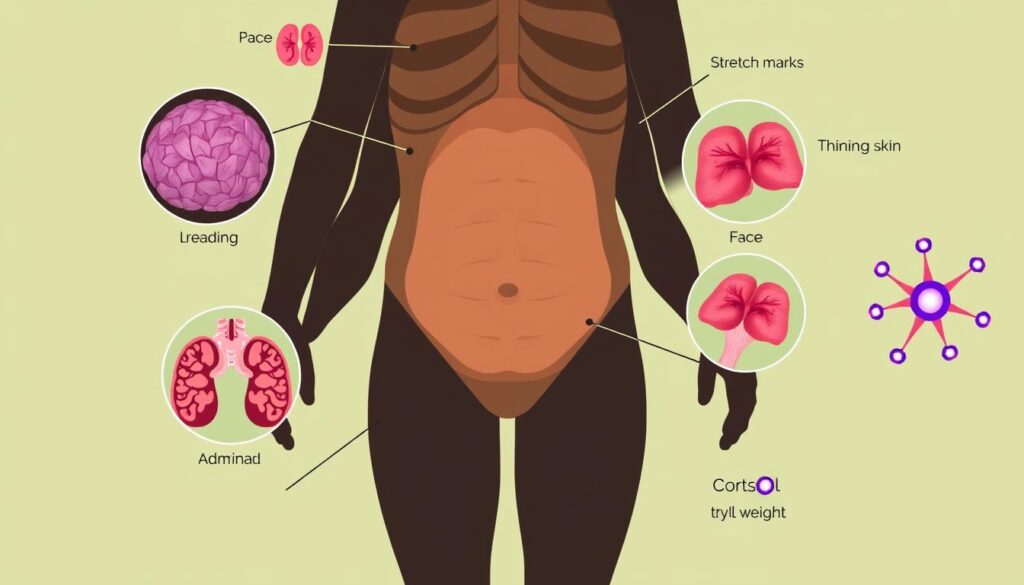
Cushing syndrome has distinct physical symptoms that are often visible. You might gain weight in your trunk and face, while your limbs stay thin9.
Key physical signs include:
- A fatty hump between the shoulders
- Purple stretch marks across the skin
- Thin and fragile skin prone to bruising
- Muscle weakness affecting daily activities
Emotional and Psychological Impact
Cushing syndrome can greatly affect your mental health. People often face emotional issues like depression and anxiety. These problems can disrupt daily life9.
Long-term Health Consequences
Without treatment, Cushing syndrome can cause serious metabolic problems. These may include:
| Health Condition | Potential Impact |
|---|---|
| Cardiovascular Health | Increased risk of heart attack and stroke |
| Bone Density | Significant osteoporosis risk |
| Metabolic Disorders | High probability of developing type 2 diabetes |
Quick detection and treatment can prevent these serious health issues8.
“Understanding your body’s signals can be the first step towards recovery” – Endocrinology Research Institute
Treatment Options for Cushing Syndrome
Your healthcare team will create a personalized treatment plan for Cushing syndrome. Pituitary surgery is often the main approach, with high success rates. The aim is to lower cortisol production and restore hormonal balance.
Treatment strategies target the specific cause of your condition. Carefully chosen medical approaches help manage symptoms effectively. Your doctor will guide you through the best options for your situation.
Medical Treatments
Doctors may reduce glucocorticoids under close watch. For hormone-producing tumors, targeted meds can control cortisol levels. Radiation therapy is an option when surgery isn’t possible.
Surgical Options
Surgery can often cure Cushing syndrome permanently. Adrenalectomy may be done for adrenal tumors. The surgical approach depends on the tumor’s location and type.
Lifestyle Changes and Support Strategies
Lifestyle changes are key to recovery from Cushing syndrome. A complete treatment plan includes exercise, stress management, and healthy eating. Most patients see big improvements within a year.
Ongoing support helps you navigate the healing process. Your healthcare team will be there to guide you through recovery. Remember, each person’s journey is unique.
FAQ
What exactly is Cushing syndrome?
Cushing syndrome is a hormonal disorder caused by too much cortisol. It can result from your body’s overproduction or from taking certain medications. This condition leads to various physical and emotional symptoms.
How common is Cushing syndrome?
Cushing syndrome is rare, affecting 40 to 70 people per million. It mainly impacts adults aged 30 to 50. Women are three times more likely to develop it than men.
What are the main symptoms of Cushing syndrome?
Key symptoms include weight gain in the trunk and face. Thin arms and legs, purple stretch marks, and a fatty hump between shoulders are also common. Thin skin, slow wound healing, and acne may occur too.
Emotional symptoms can include depression, anxiety, and thinking problems.
What causes Cushing syndrome?
Causes can be internal or external. Internal causes include certain tumors in the pituitary or adrenal glands. External causes mainly involve long-term use of certain medications for conditions like asthma.
Is Cushing syndrome dangerous if left untreated?
Yes, untreated Cushing syndrome can lead to serious health problems. These include high blood pressure, bone loss, and type 2 diabetes. It can also increase infection risk and cause heart issues.
Early diagnosis and treatment are crucial for better recovery.
How is Cushing syndrome treated?
Treatment depends on the cause. For medication-induced cases, slowly reducing the drug under medical supervision is key. For other cases, treatments may include surgery to remove tumors.
Radiation therapy or medications to control cortisol production might also be used.
Can Cushing syndrome affect fertility?
Yes, Cushing syndrome can impact reproductive health. Men may have reduced sex drive and fertility issues. Women might experience irregular periods and hormonal imbalances.
Are there lifestyle changes that can help manage Cushing syndrome?
Yes! Lifestyle changes are crucial. These include eating a healthy diet and exercising regularly. Managing stress and following your doctor’s treatment plan carefully are also important.
Source Links
- Patient education: Cushing syndrome (Beyond the Basics) – https://www.uptodate.com/contents/cushing-syndrome-beyond-the-basics/print
- Cushing syndrome: MedlinePlus Medical Encyclopedia – https://medlineplus.gov/ency/article/000410.htm
- Cushing Disease / Cushing Syndrome | Brain Institute – https://www.ohsu.edu/brain-institute/cushing-disease-cushing-syndrome
- Cushing’s Disease / Cushing’s Syndrome – MGH Neuroendocrine and Pituitary Tumor Clinical Center – Massachusetts General Hospital – https://pituitary.mgh.harvard.edu/CushingsSyndrome.htm
- Cushing Syndrome | Hypercortisolism | MedlinePlus – https://medlineplus.gov/cushingssyndrome.html
- What causes Cushing syndrome? – https://www.nichd.nih.gov/health/topics/cushing/conditioninfo/causes
- Cushing’s Syndrome – https://www.hopkinsmedicine.org/health/conditions-and-diseases/cushing-syndrome
- Cushing’s Syndrome – NIDDK – https://www.niddk.nih.gov/health-information/endocrine-diseases/cushings-syndrome
- Cushing’s syndrome – https://www.nhs.uk/conditions/cushings-syndrome/

