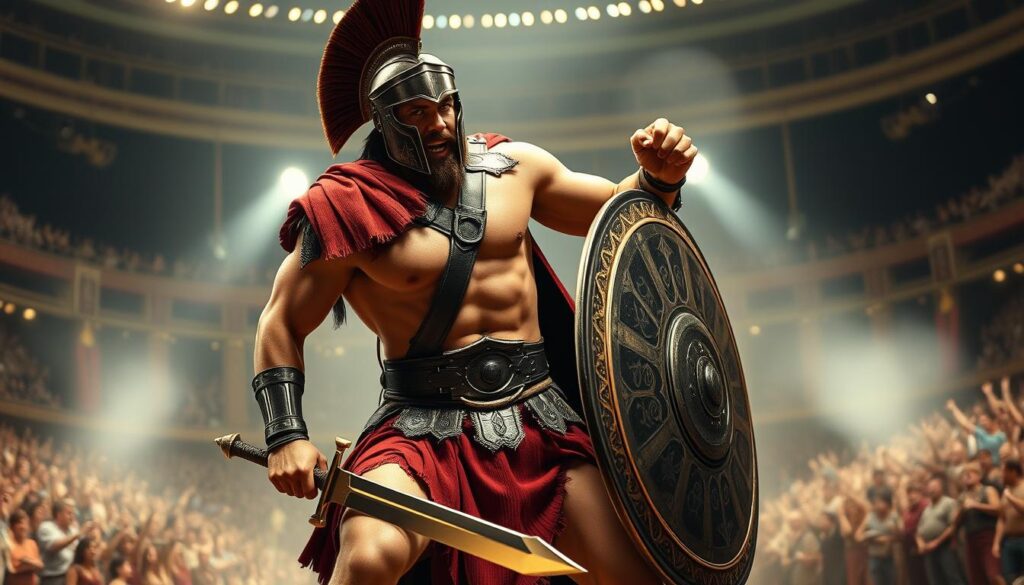
Spartacus, a Thracian gladiator, lived from c. 103–71 BC. He was a key figure in the Third Servile War, a major slave uprising against the Roman Republic1. Born around 103 BC near the Strymon river in present-day Bulgaria, he died in 71 BC near the Sele River in Lucania, Italy, at 321.
As a gladiator in ancient Rome, Spartacus became famous. He led a rebel slave army from 73-71 BC1.
Spartacus is known for his bravery and rebellion. His story inspires many, showing how a Thracian gladiator in ancient Rome could overcome adversity. His legacy lives on, with his character appearing in TV shows. Actors Andy Whitfield and Liam McIntyre have played him2.
Key Takeaways
- Spartacus was a Thracian gladiator who lived from c. 103–71 BC and played a key role in the Third Servile War1.
- He was born near the Strymon river in present-day Bulgaria and died in 71 BC near the Sele River in Lucania, Italy1.
- Spartacus led a rebel slave army from 73-71 BC, posing a significant challenge to Roman authority1.
- His character has been portrayed by actors Andy Whitfield and Liam McIntyre in television shows2.
- Spartacus’ story has become a symbol of bravery and rebellion, continuing to inspire audiences today.
Historical Overview of Spartacus
Spartacus was born in Thrace, a land known for its fierce warriors and rich culture. He was born around 103 BC. He was captured and became a slave, which shaped his strength and leadership skills.
Born into Slavery in Thrace
Originally, Spartacus was a soldier. He was captured and sold into slavery, a common fate during the Roman expansion. The culture of Thrace taught him about power and authority, preparing him for his future in Roman history3.
Rise to Prominence as a Gladiator
In 73 BC, Spartacus and about 70 other gladiators made a daring escape from a gladiatorial school near Capua. They were armed with knives and cleavers. This was the start of a massive rebellion against Roman control4.
Leadership During the Third Servile War
Spartacus’s leadership was key during the Third Servile War. His army grew to tens of thousands. He outsmarted many Roman legions, challenging Rome’s power43.
| Event | Details | Reference |
|---|---|---|
| Initial Escape | 70 gladiators escape near Capua | 4 |
| Army Size | Up to 40,000 troops by spring 72 B.C. | 4 |
| Significant Victory | Defeated Roman governor Gaius Cassius Longinus | 3 |
| Final Stand | Reached the Strait of Messina, failed to cross | 4 |
Impact of Spartacus on Roman Society
Spartacus’s rebellion left a lasting impact on
Challenge to Roman Authority
The uprising made Rome face its weaknesses. Spartacus led the biggest slave revolt in ancient times, lasting almost three years. He defeated many Roman armies56. This long fight showed Rome’s power was not as strong as thought.
Rome had to send many armies to fight him. This showed the need for a big military effort.
Influence on Slave Revolts
Spartacus’s success inspired other slave uprisings. It changed how slaves and their owners saw each other. Even though it was the last big slave revolt, it led to harsher rules and more distrust6.
Cultural Legacy and Representation
Spartacus became a symbol of fighting against oppression. His story lives on in books and movies. It shows the struggle for freedom and has inspired many movements.
His story continues to inspire and connect with people. It shows his lasting impact in stories and culture.
Modern Interpretations of Spartacus
Spartacus continues to inspire various forms of media and cultural expressions today.
Spartacus in Literature and Film
The 1960 film “Spartacus,” starring Kirk Douglas, is a classic portrayal of the legendary gladiator7. It brought his fight for freedom to the world. Many books and novels have also explored his life, showing different views of his battle against oppression8.
The Role of Spartacus in Popular Culture
Spartacus’s legacy goes beyond movies and books. He has inspired sports teams and political movements. His story is often talked about in discussions of leadership and change9.
Lessons from Spartacus’s Legacy
Looking at Spartacus’s story teaches us about leadership and courage. He showed how strong leadership can change the world. His story motivates us to fight for justice and equality89.
FAQ
Who was Spartacus and why is he considered a significant figure in Roman history?
Spartacus was a Thracian gladiator who became a leader in the Third Servile War. This was a major rebellion against ancient Rome. His bravery and leadership made him a symbol of fighting against oppression.
What were the origins of Spartacus before he became a gladiator?
Spartacus was born in Thrace, a region north of the Roman Empire. He was captured and sold into slavery. His Thracian background and warrior skills helped him become a strong leader as a gladiator.
How did Spartacus’s skills as a gladiator contribute to his leadership in the rebellion?
Spartacus was a skilled gladiator, trained in combat, discipline, and strategy. These skills helped him organize and lead a group of slaves. He also used his knowledge to fight against the Roman legions and keep his followers united.
What were the key factors that led to Spartacus’s successful initial rebellion against Roman authority?
The slave-based economy in ancient Rome was oppressive, causing widespread discontent. Spartacus united slaves and used his battle tactics to gain early victories. He also took advantage of strategic positions against the Romans.
How has Spartacus been portrayed in modern media, and what impact has this had on his legacy?
Spartacus has been featured in literature and film, most famously in the 1960 movie with Kirk Douglas. These portrayals have made him a heroic figure, fighting for freedom. They have also inspired modern movements against oppression.
Source Links
- https://en.wikipedia.org/wiki/Spartacus – Spartacus
- https://spartacus.fandom.com/wiki/Spartacus – Spartacus
- https://www.thecollector.com/spartacus-gladiator/ – Spartacus: What Is the True Story of the Slave Who Led a Rebellion?
- https://www.livescience.com/39730-spartacus.html – Spartacus, the gladiator who led a slave revolt against the Romans
- https://www.dailyhistory.org/What_was_the_impact_of_Spartacus’_uprising_on_Rome – What was the impact of Spartacus’ uprising on Rome
- https://scanderbegal.medium.com/the-shadow-of-rebellion-how-spartacus-shook-roman-society-and-politics-9afd535be692 – The Shadow of Rebellion: How Spartacus Shook Roman Society and Politics
- https://historyandarchaeologyonline.com/starzs-spartacus-a-faithful-historical-portrayal/ – Starz’s Spartacus — A Faithful Historical Portrayal? | History and Archaeology Online
- https://academicworks.cuny.edu/cgi/viewcontent.cgi?article=1013&context=qb_pubs – BLOOD, TITS AND THE MODERN DEPICTION OF ANTIQUITY – SPARATCUS: BLOOD AND SAND AND THE DISPLAY OF A HISTORICAL MYTH
- https://digitalworks.union.edu/cgi/viewcontent.cgi?article=1548&context=theses – PDF