
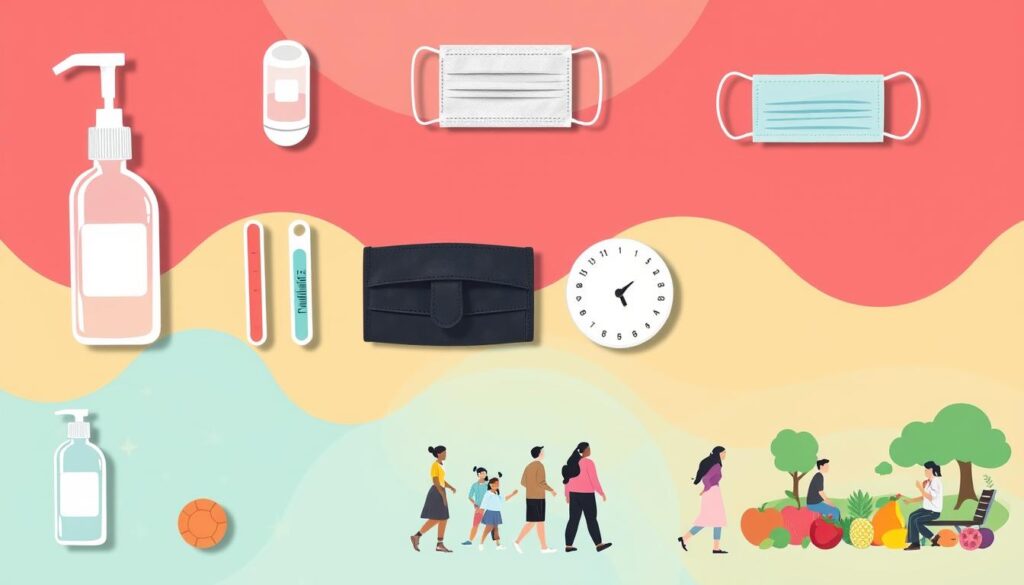
The coronavirus pandemic has changed how we live our daily lives. It’s vital to know how to protect yourself and your family. By staying informed and taking action, you can lower your risk of getting COVID-191.
Stopping the virus needs a well-rounded approach. Keep your distance from others and practice good hygiene. Be aware of places where you might catch the virus1.
You can make a difference by following guidelines and staying alert2. Knowing how the virus spreads is the first step in protecting yourself.
COVID-19 mainly spreads through close contact indoors1. Stay safe by keeping your distance and wearing masks properly. Avoid high-risk places to prevent catching the virus2.
Key Takeaways
- Maintain physical distancing of at least 6 feet in public spaces
- Use hand sanitizer with 60% alcohol when soap is unavailable
- Wear masks correctly in crowded or indoor settings
- Practice good respiratory hygiene
- Stay informed through reliable health sources
Understanding COVID-19 and Its Impact
COVID-19 has changed our world in ways we never imagined. The SARS-CoV-2 virus affects millions of lives every day. It’s a global health challenge that demands our attention.
What is COVID-19?
COVID-19 is a highly infectious respiratory disease. It’s caused by the SARS-CoV-2 virus and can affect anyone. The severity of the illness varies from person to person.
The virus spreads mainly through respiratory droplets. This happens when an infected person talks, coughs, or sneezes3.
How Does COVID-19 Spread?
Knowing how the virus spreads is key to staying safe. The coronavirus can spread in several ways:
- Through respiratory droplets
- Close personal contact
- Touching contaminated surfaces
- Potential airborne transmission
About half of all infections come from people without symptoms4. This makes prevention even more important.
Recognizing Symptoms of COVID-19
COVID-19 symptoms can be mild or severe. Here are some common signs:
| Mild Symptoms | Severe Symptoms |
|---|---|
| Dry cough | Severe breathing difficulties |
| Fatigue | Chest pain |
| Low-grade fever | Organ damage |
Some people might lose their sense of taste or smell3. One-third of hospital patients still have symptoms weeks later5.
“Knowledge is the first line of defense against COVID-19”
Learn about new virus variants to protect yourself. Follow health guidelines to stay safe and healthy.
Key Preventive Measures You Can Take
Protecting yourself from COVID-19 requires a smart approach. Stay informed and use effective prevention strategies. These actions can greatly reduce the risk of transmission.
Importance of Vaccination
Vaccines are a key defense against COVID-19. Updated vaccines from Pfizer-BioNTech and Moderna are now available. They’re for everyone 6 months and older6.
These vaccines boost your immune response. They help reduce the risk of severe illness6. Consider getting vaccinated, especially before fall and winter.
- Consider getting vaccinated, especially before fall and winter seasons
- Check with healthcare providers about recommended vaccine schedules
- Wait approximately 3 months after COVID-19 illness before vaccination6
Practicing Good Hygiene
Good hygiene is crucial in stopping COVID-19 spread. Use hand sanitizers with at least 60% alcohol6. Wash your hands often and cover coughs and sneezes.
“Clean hands save lives” – Public Health Experts
Wearing Masks Properly
Masks help reduce virus spread. Wear them in indoor public spaces when illness rates are high6. Make sure your mask covers both nose and mouth completely.
Follow proper contact tracing guidelines for best results. Your actions matter in keeping everyone safe.
- Choose well-fitting masks
- Handle masks with clean hands
- Replace masks when they become damp or dirty
Remember, your individual actions contribute to community health and safety.
Staying Informed and Prepared
Planning and reliable info are key to navigating COVID-19. Protect yourself and your community with a smart pandemic response7. The CDC offers vital safety guidance through public health resources8.
Trusted Sources for Information
For COVID-19 updates, trust official public health authorities. Local and national health departments provide the latest virus info7.
Wheaton College’s Humanitarian Disaster Institute offers free resources for community preparation7.
Creating a COVID-19 Action Plan
A solid action plan protects you and your loved ones. Find local testing sites and stock up on essentials8.
Know your workplace or school policies. Keep an emergency kit with masks, sanitizer, and healthcare provider contacts.
What to Do If You Feel Unwell
If you have COVID-19 symptoms, act fast. Stay home, self-isolate, and call your healthcare provider7.
Watch your health closely. Seek medical help for severe symptoms like breathing trouble or chest pain.
FAQ
What is COVID-19?
COVID-19 is a respiratory illness caused by the SARS-CoV-2 virus. It spreads through droplets when infected people cough, sneeze, or talk. The pandemic has changed daily life and challenged healthcare systems worldwide.
What are the common symptoms of COVID-19?
Common symptoms include fever, dry cough, tiredness, and loss of taste or smell. Less common signs are body aches, headache, sore throat, and skin rash.
Symptoms usually appear 2-14 days after exposure to the virus. Seek medical help if you have trouble breathing.
How can I protect myself from COVID-19?
Wash your hands often with soap and water. Use hand sanitizer with at least 60% alcohol when soap isn’t available.
Keep 6 feet away from others and wear a mask covering your nose and mouth. Avoid crowded spaces and stay up to date with CDC-recommended vaccines.
Who is at higher risk for severe COVID-19?
Older adults and people with underlying health conditions face higher risks. Take extra care by limiting exposure and wearing high-quality masks.
Maintain strict social distancing if you or someone you know is in these groups.
How do I properly wear a mask?
Cover both your nose and chin, ensuring a snug fit with no gaps. Handle masks with clean hands and avoid touching the front.
Wash or sanitize your hands before and after putting on or removing the mask. The WHO advises against masks with valves.
What should I do if I suspect I have COVID-19?
Stay home and self-isolate if you feel unwell. Contact your doctor for guidance and get tested.
Tell close contacts about potential exposure. Monitor your symptoms closely. Seek urgent care if you have severe symptoms like chest pain.
Are free COVID-19 tests available?
Yes, U.S. households can get free at-home COVID-19 tests. Check the CDC website or local health department for access details.
Consider testing if you have symptoms, were exposed, or plan to gather with others.
How can I stay informed about COVID-19?
Check updates from trusted sources like the CDC, WHO, and local health authorities. Create an action plan that includes knowing testing sites.
Keep essential supplies on hand. Understand workplace or school policies related to COVID-19.
Source Links
- Advice for the public on COVID-19 – World Health Organization – https://www.who.int/emergencies/diseases/novel-coronavirus-2019/advice-for-public
- COVID-19: Safety Tips for You – https://www.redcross.org/about-us/news-and-events/news/2020/coronavirus-safety-and-readiness-tips-for-you.html?srsltid=AfmBOorU6AejWYZoPlGcNazFgdjPrbescJ5HPAuTsIXsb7VQp449El40
- Coronavirus disease 2019 (COVID-19) – Symptoms and causes – https://www.mayoclinic.org/diseases-conditions/coronavirus/symptoms-causes/syc-20479963
- Understanding COVID-19 – https://newsinhealth.nih.gov/2021/03/understanding-covid-19
- Consequences of COVID-19 and Its Variants: Understanding the Physical, Oral, and Psychological Impact – https://pmc.ncbi.nlm.nih.gov/articles/PMC9967910/
- Prevent COVID-19 – https://www.lung.org/lung-health-diseases/lung-disease-lookup/covid-19/prevention
- ECFA – https://www.ecfa.org/Content/Coronavirus-Stay-Prepared-and-Stay-Informed
- Staying Informed on the Coronavirus – https://dustyjohnson.house.gov/media/weekly-column/staying-informed-coronavirus

