
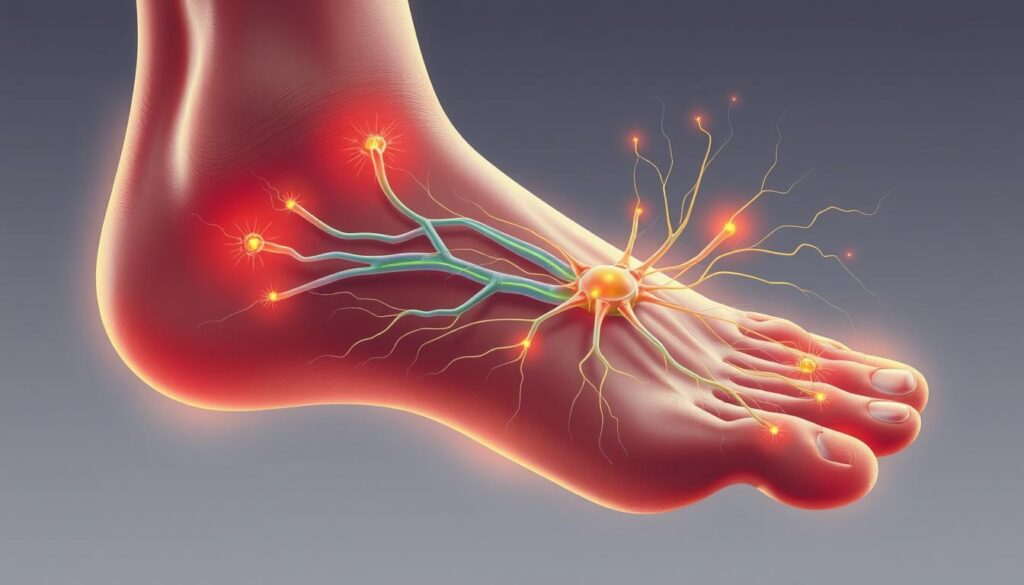
Diabetic neuropathy is a serious nerve damage complication affecting many people with diabetes. About half of all diabetes patients face this challenging condition1. High blood sugar can harm nerves, especially in feet and hands1.
Knowing about diabetic neuropathy helps manage your health better. Nerve damage can cause numbness, tingling, burning sensations, and muscle weakness1. These symptoms often start in extremities and spread to legs and arms1.
Having diabetes means taking charge of your health. Your risk of nerve damage increases the longer you have diabetes1. High blood sugar, hypertension, vitamin deficiencies, and unhealthy habits can contribute to this condition1.
Key Takeaways
- Diabetic neuropathy affects up to 50% of diabetes patients
- Nerve damage can cause widespread symptoms in extremities
- Early detection and management are critical
- Lifestyle and blood sugar control play significant roles
- Comprehensive foot care is essential for prevention
What is Diabetic Neuropathy?
Diabetic neuropathy is a complex condition affecting millions with diabetes. It causes nerve damage that can greatly impact your life. Understanding this condition is key to managing your health effectively.
Nerve damage from diabetes develops slowly, affecting various parts of your nervous system. Up to 50% of people with diabetes may experience some form of diabetic neuropathy2.
The condition occurs when high blood sugar levels damage nerve fibers throughout your body. This damage can lead to various symptoms and complications.
Types of Diabetic Neuropathy
There are several distinct types of diabetic neuropathy that can affect different body systems:
- Peripheral Neuropathy: The most common type, affecting up to one-half of diabetes patients3. It typically impacts nerves in the feet and hands.
- Autonomic Neuropathy: Impacts internal organ function, affecting more than 30 percent of people with diabetes3.
- Focal Neuropathy: Involves specific nerves, with carpal tunnel syndrome being the most common type3.
- Proximal Neuropathy: A less common form that affects muscles in the legs, hips, and buttocks.
Causes and Risk Factors
The development of diabetic neuropathy is influenced by multiple factors:
| Risk Factor | Impact on Neuropathy |
|---|---|
| Blood Sugar Control | Poor management increases nerve damage risk2 |
| Diabetes Duration | Longer duration increases neuropathy likelihood2 |
| Smoking | Narrows arteries, reduces blood flow to nerves2 |
Managing your blood sugar is the most critical step in preventing and slowing diabetic neuropathy progression.
Genetic factors may also play a role in your susceptibility to nerve damage. Early screening for neuropathy is crucial for both type 1 and type 2 diabetes.
The American Diabetes Association recommends screening right after type 2 diabetes diagnosis. For type 1 diabetes, screening should start five years after diagnosis2.
Understanding diabetic neuropathy helps you take proactive steps in managing diabetes. This knowledge can protect your nervous system from potential complications.
Recognizing the Symptoms of Diabetic Neuropathy
Diabetic neuropathy is a serious condition affecting many people with diabetes. It can cause nerve-related complications. Knowing the symptoms helps with early detection and management.
About 60 to 70 percent of diabetics experience some form of neuropathy4. Nerve complications can show up in different ways. Symptoms vary depending on the type of neuropathy.
Common Symptoms to Watch For
The most prevalent signs of diabetic neuropathy include:
- Numbness in hands and feet
- Tingling sensations that feel like pins and needles
- Sharp or burning pain in extremities
- Muscle weakness
- Foot care challenges
How Symptoms Vary by Type
Different types of diabetic neuropathy present unique symptoms:
| Neuropathy Type | Primary Symptoms |
|---|---|
| Peripheral Neuropathy | Numbness, tingling in feet and hands |
| Autonomic Neuropathy | Digestive issues, bladder problems |
| Proximal Neuropathy | Pain in hips, thighs, and buttocks |
When to Consult a Healthcare Professional
Seek medical advice if you have ongoing numbness, tingling sensations, or unexplained pain. Up to 26 percent of type 2 diabetes patients show nerve damage at diagnosis5.
Early detection through professional medical screenings can prevent further problems. Regular check-ups are vital for managing diabetic neuropathy.
“Proactive foot care and regular check-ups are your best defense against diabetic neuropathy progression.”
Managing your blood sugar levels is key to reducing neuropathy risks. A healthy lifestyle can also help prevent severe symptoms. Take charge of your health today.
Effective Treatments and Management Strategies
Diabetic neuropathy management requires a multi-pronged approach. It focuses on pain control and improving life quality. Keeping blood sugar in check is vital to prevent further nerve damage67.
Medications are key in tackling nerve pain. Doctors often prescribe anti-seizure drugs and antidepressants for symptom relief7. The American Diabetes Association suggests personalized medicine for specific nerve pain issues6.
Alternative therapies can boost neuropathy management. Acupuncture may ease pain with few side effects7. Electrical spinal cord stimulation has shown promise in reducing pain for some6.
Regular check-ups with healthcare experts are crucial. They help track progress and fine-tune treatments as needed7.
FAQ
What exactly is diabetic neuropathy?
Diabetic neuropathy is nerve damage caused by high blood sugar in people with diabetes. It affects up to 50% of patients, mainly impacting nerves in legs and feet. Symptoms include numbness, pain, and tingling sensations, developing gradually over time.
What are the main types of diabetic neuropathy?
There are four primary types of diabetic neuropathy. Peripheral neuropathy affects extremities and is most common. Autonomic neuropathy impacts internal organ function.
Proximal neuropathy causes pain in hips and thighs. Focal neuropathy leads to sudden muscle weakness or pain.
What are the primary risk factors for developing diabetic neuropathy?
Key risk factors include poor blood sugar control and long-term diabetes. Kidney disease, obesity, smoking, and genetic predisposition also play a role. Uncontrolled blood sugar increases the risk of nerve damage.
What symptoms should I watch out for?
Look for numbness or tingling in your extremities, sharp pains, and muscle weakness. Loss of reflexes, digestive issues, bladder problems, or sexual dysfunction are also signs. Consult your doctor if you experience persistent symptoms.
How can I manage or prevent diabetic neuropathy?
Maintain tight blood sugar control and follow a healthy diet. Exercise regularly, quit smoking, and take prescribed medications. The American Diabetes Association recommends A1C tests twice yearly.
For many adults, the target A1C level is less than 7.0%.
Are there treatment options for diabetic neuropathy?
Yes, treatments include medications for pain relief, such as anti-seizure drugs and antidepressants. Topical treatments and alternative therapies like acupuncture can also help. Your doctor can create a personalized treatment plan for you.
How important is foot care with diabetic neuropathy?
Foot care is crucial for preventing serious complications like ulcers or infections. Daily foot inspections and regular check-ups are essential. Nerve damage can reduce foot sensation, making careful monitoring vital.
Can diabetic neuropathy be reversed?
Current treatments can’t completely reverse nerve damage. However, early detection and proper management can slow progression and manage symptoms. Strict blood sugar control is key to preventing and managing diabetic neuropathy.
Source Links
- Diabetic neuropathy – https://www.healthdirect.gov.au/diabetic-neuropathy
- An often preventable complication of diabetes-Diabetic neuropathy – Symptoms & causes – Mayo Clinic – https://www.mayoclinic.org/diseases-conditions/diabetic-neuropathy/symptoms-causes/syc-20371580
- What Is Diabetic Neuropathy? – NIDDK – https://www.niddk.nih.gov/health-information/diabetes/overview/preventing-problems/nerve-damage-diabetic-neuropathies/what-is-diabetic-neuropathy
- Diabetic Neuropathies | UCSF Department of Surgery – https://surgicaloncology.ucsf.edu/condition/diabetic-neuropathies
- Patient education: Diabetic neuropathy (Beyond the Basics) – https://www.uptodate.com/contents/diabetic-neuropathy-beyond-the-basics/print
- Approach Considerations, Glycemic Control, Diabetic Neuropathic Pain Management – https://emedicine.medscape.com/article/1170337-treatment
- An often preventable complication of diabetes-Diabetic neuropathy – Diagnosis & treatment – Mayo Clinic – https://www.mayoclinic.org/diseases-conditions/diabetic-neuropathy/diagnosis-treatment/drc-20371587

