
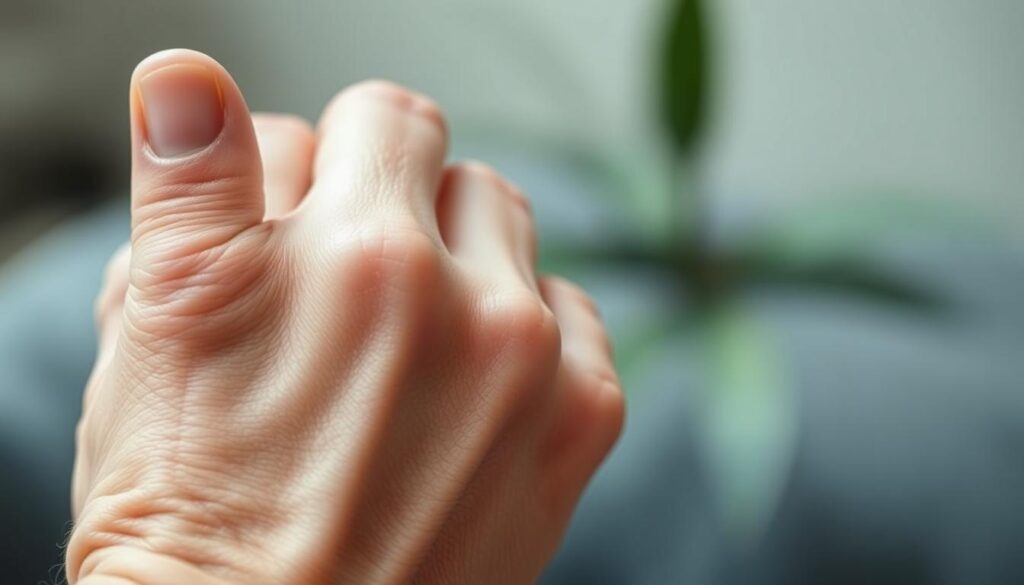
Thumb joint pain can make daily tasks tough. Thumb arthritis affects millions worldwide. It can make writing, typing, and opening jars hard.
Thumb arthritis mainly affects women over 40. It can greatly disrupt hand function. The thumb is key for hand movement, responsible for 40% of hand use1.
Knowing your symptoms is crucial for managing this condition. Pain, stiffness, and weak grip are common signs. Early diagnosis can prevent symptoms from getting worse.
Nonsurgical treatments can provide relief2. These include anti-inflammatory drugs, ice therapy, and supportive splints. Hand therapy can also improve mobility and strength.
Key Takeaways
- Thumb arthritis most frequently occurs in women after age 40
- The thumb contributes 40% of overall hand function
- Early diagnosis can prevent symptom progression
- Multiple treatment options exist for managing joint pain
- Hand therapy can improve mobility and strength
Understanding Thumb Arthritis and Its Impact on Daily Life
Thumb arthritis can make simple tasks challenging. It affects your hand’s most crucial joint. This condition causes discomfort and limits movement3.
https://www.youtube.com/watch?v=Xei3LFzcUyY
Thumb arthritis usually starts in adults aged 40-50. Women are more likely to get it34. Learning about it helps manage symptoms and keep hands working well.
Common Signs and Symptoms
Spotting thumb arthritis early is important. Look out for these key symptoms:
- Pain at the thumb base during gripping4
- Decreased range of motion
- Swelling and tenderness
- Development of bony prominences4
Risk Factors and Causes
Several things can lead to thumb arthritis:
- Age: Mostly affects people over 405
- Gender: Women get it more often5
- Previous hand injuries5
- Jobs with repeated thumb movements
Rheumatoid arthritis can speed up joint damage. It raises the chance of getting thumb arthritis5. Hand exercises and wrist braces can help manage symptoms.
“Understanding your condition is the first step toward effective management and maintaining quality of life.”
Effective Treatment Options for Joint Pain Relief
Thumb arthritis treatment offers several ways to manage pain and improve joint function. Experts suggest a mix of different for the best results6. This strategy helps tackle the problem from multiple angles.
Splinting is key in managing thumb arthritis. Soft, pre-made splints offer support during day and night6. Custom rigid splints work best at night or when inflammation is severe7.
- Anti-inflammatory medications help reduce joint pain and swelling
- Steroid injections provide temporary relief for intense discomfort
- Topical treatments can target specific areas with minimal side effects
Steroid injections offer quick, short-term relief. Typically, you can receive corticosteroid injections only two or three times per year7. These shots can greatly reduce inflammation and ease pain for a while.
| Treatment Option | Duration | Effectiveness |
|---|---|---|
| Splinting | 3-4 weeks | High |
| Steroid Injections | 2-3 times yearly | Moderate |
| Anti-inflammatory Medications | Ongoing | Moderate to High |
Protecting your joints is key to managing thumb arthritis symptoms effectively.
In severe cases, surgery might be needed. Options include trapeziectomy, joint fusion, or joint replacement7. Your doctor can help choose the best treatment for your specific case6.
Conclusion
Understanding your treatment options is key for managing thumb arthritis. Your journey involves a personalized approach combining medical interventions and lifestyle changes. Hand therapy techniques can greatly improve your daily life89.
Non-surgical methods often provide relief for osteoarthritis. Adaptive tools like specialized jar openers can reduce stress on thumb joints. Gentle hand exercises and heat or cold therapy can help ease discomfort.
About 15% of women and 7% of men experience thumb arthritis symptoms10. Surgical options exist if conservative treatments aren’t enough. Procedures like trapeziectomy can offer pain relief and improve hand function.
Most patients find relief through non-invasive methods810. Managing joint pain is a team effort. Work with healthcare pros to create a treatment plan just for you.
Your proactive approach can help maintain hand mobility. This can minimize the impact of thumb osteoarthritis on your daily activities.
FAQ
What is thumb arthritis?
Thumb arthritis is a common form of osteoarthritis affecting the thumb joints. It happens when cartilage breaks down, causing pain, stiffness, and swelling. This condition can make everyday tasks difficult.
You might hear grinding sounds or feel gritty sensations when moving your thumb. These symptoms can greatly affect your daily activities.
What are the main symptoms of thumb arthritis?
The key symptoms include pain at the thumb’s base, swelling, and reduced motion. Simple tasks like turning keys or opening doors become challenging.
Some people experience weakness in the thumb and decreased grip strength. These issues can make holding objects difficult.
Who is most at risk for developing thumb arthritis?
Several factors increase the risk of thumb arthritis. These include age, previous hand injuries, and repetitive stress on the thumb joint.
Women are more likely to develop this condition. The risk also increases for people over 40 years old.
How is thumb arthritis diagnosed?
Diagnosis involves a thorough physical exam to assess joint movement and look for inflammation. Imaging tests like X-rays can reveal bone spurs and worn-down cartilage.
CT scans or MRIs may also be used. Early diagnosis is crucial for effective management of thumb arthritis.
What are the treatment options for thumb arthritis?
Treatment ranges from conservative approaches to surgical interventions. Non-surgical options include medications, splinting, and corticosteroid injections for pain relief.
Physical and occupational therapy can improve hand strength and mobility. Severe cases may require surgical options like joint fusion or replacement.
How can I manage thumb arthritis at home?
You can manage thumb arthritis using adaptive equipment like jar openers. Applying cold or heat to the joint can help ease discomfort.
Practice joint preservation techniques and do regular hand exercises. Incorporate rest periods and use larger joints for activities when possible.
Working closely with healthcare professionals is key to maintaining your quality of life.
Can thumb arthritis be prevented?
While complete prevention isn’t possible, you can reduce your risk of thumb arthritis. Maintain joint health by avoiding repetitive strain and keeping a healthy weight.
Do hand strengthening exercises and protect your joints from injury. If you notice early symptoms, consult a healthcare professional promptly.
Source Links
- Thumb Arthritis – https://orthop.washington.edu/patient-care/hand/thumb-arthritis.html
- Thumb Arthritis | FORM Hand, Wrist & Elbow Institute – https://www.drbesh.com/thumb-arthritis/
- Basal Joint Arthritis: Osteoarthritis of the Thumb | HSS – https://www.hss.edu/conditions_basal-joint-arthritis-overview.asp
- Arthritis of the Thumb – OrthoInfo – AAOS – https://orthoinfo.aaos.org/en/diseases–conditions/arthritis-of-the-thumb/
- Thumb arthritis – Symptoms and causes – https://www.mayoclinic.org/diseases-conditions/thumb-arthritis/symptoms-causes/syc-20378339
- Basal Joint Arthritis: How Therapy Can Help Thumb Pain – https://www.hss.edu/conditions_basal-joint-arthritis-therapy.asp
- Treatment for Thumb Arthritis – https://www.healthline.com/health/osteoarthritis/thumb
- Basal thumb arthritis – https://www1.racgp.org.au/ajgp/2020/november/basal-thumb-arthritis
- Thumb CMC Arthritis – North Texas Orthopedic & Spine Center – https://www.ntxortho.com/2024/12/26/thumb-cmc-arthritis/
- nonsurgical thumb arthritis treatment – https://www.johnericksonmd.com/news/nonsurgical-thumb-arthritis-treatment/

