
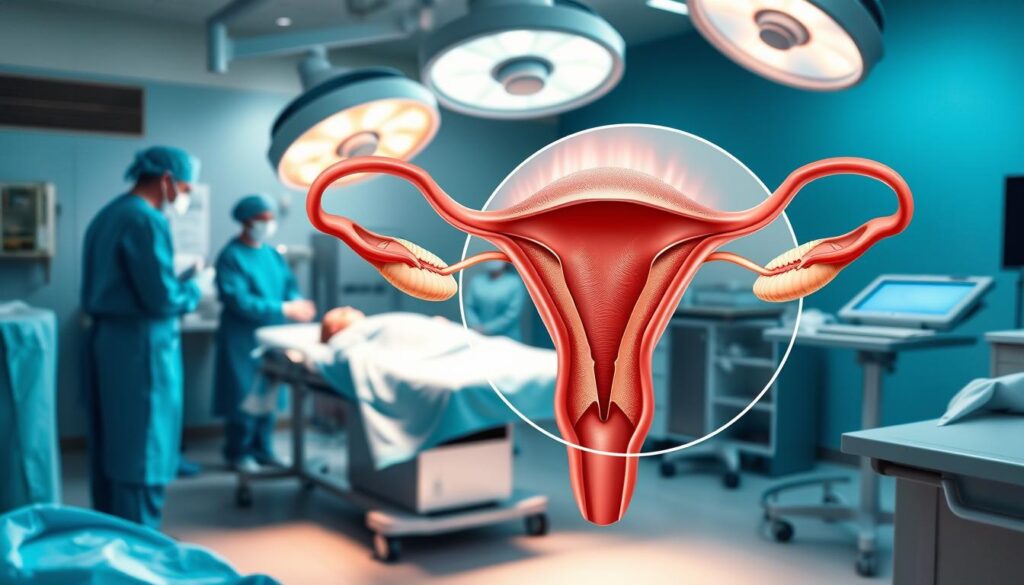
Tubal ligation offers reliable, permanent birth control for women. This surgery blocks fallopian tubes, preventing pregnancy. It’s a long-term solution for those seeking contraception without ongoing maintenance.
The procedure is highly effective, with less than 1% of women getting pregnant after. Understanding the process, risks, and recovery is crucial before deciding.
Surgery typically lasts 20 to 30 minutes. Doctors close or remove fallopian tubes to stop egg fertilization.
Recovery time depends on the surgical method used. Laparoscopic surgery allows for a shorter 2-4 hour hospital stay. Patients often return to work within 2-7 days.
Open surgery requires longer recovery. Hospital stays can last up to 3 days. Work absence may extend to 1-2 weeks123.
Key Takeaways
- Tubal ligation is a permanent female sterilization method
- Surgery takes approximately 20-30 minutes
- Recovery time varies by surgical approach
- Less than 1% chance of pregnancy after procedure
- Requires careful consideration before commitment
Understanding Tubal Ligation and Its Purpose
Female sterilization offers a permanent birth control solution. Tubal ligation prevents pregnancy while maintaining overall health and sexual well-being. This reliable method provides women with peace of mind.
What Is Female Sterilization Surgery
Fallopian tube removal is a permanent pregnancy prevention surgery. Doctors can close the fallopian tubes using various methods. These methods ensure effective sterilization.
- Cutting and tying the tubes
- Blocking tubes with clips or rings
- Cauterizing the tube openings
Benefits and Effectiveness of Permanent Birth Control
Tubal ligation is highly effective for birth control. Only 1 in 200 women may become pregnant after the procedure4. The surgery typically lasts about 30 minutes.
Serious complications are rare, affecting less than 1 in 1,000 women4. This makes tubal ligation a safe option for many women.
| Procedure Aspect | Details |
|---|---|
| Pregnancy Prevention | 99.5% effective |
| Surgery Duration | 30 minutes |
| Complication Rate | Less than 0.1% |
Impact on Menstrual Cycle and Sexual Health
Tubal ligation recovery doesn’t greatly affect menstrual cycles or sexual desire. Women can resume normal sexual activity within a week4. The procedure may even lower the risk of ovarian cancer5.
Remember, tubal ligation is a permanent decision that requires careful consideration of your future family planning goals.
Post-Tubal Ligation Syndrome is still being studied by medical professionals. Some women report hormonal changes after the procedure. Consulting with a healthcare professional can help you understand potential individual experiences and make an informed decision.
Types of Tubal Ligation Procedures and Surgical Methods
Several permanent birth control options exist for those seeking sterilization. Each method has unique features to suit different needs and preferences6.
https://www.youtube.com/watch?v=GxRJH2f–P0
- Laparoscopic Tubal Ligation: A minimally invasive procedure using small incisions and specialized instruments7
- Bipolar Coagulation: Involves carefully cauterizing 2-3 adjacent tube sites7
- Tubal Clip Technique: Known for high reversal success rates7
The Essure Procedure is no longer available in the United States6. Modern options focus on methods like the Pomeroy Tubal Ligation. This technique offers reliable sterilization with potential for reversal if needed7.
Careful consideration of your long-term reproductive goals is crucial when selecting a sterilization method.
Different techniques offer varying levels of potential future fertility restoration. The Tubal Clip method shows pregnancy success rates up to 85% if reversal is necessary7.
Your doctor can help you choose the best approach for your medical history and reproductive goals6.
Conclusion
Tubal ligation is a permanent birth control option that demands careful thought. It’s a highly effective way to prevent pregnancy8. Talk to healthcare pros about the risks and benefits before deciding9.
Keep in mind that reversing tubal ligation is tricky and not always possible. About 1 in 200 women might still get pregnant after the procedure9. Serious complications are rare, affecting less than 1 in 1,000 women9.
Recovery usually takes a few days. The surgery won’t change your menstrual cycle8. Remember, tubal ligation doesn’t protect against STIs, so stay vigilant8.
Some health conditions may increase surgical risks. These include diabetes and past abdominal surgeries9. Your health history and future plans are key factors to consider.
Tubal ligation is a personal choice that needs deep reflection. Talk to your gynecologist and weigh all options. Make sure you’re confident in your decision for permanent birth control.
FAQ
What is tubal ligation?
Tubal ligation is a permanent birth control method. It surgically closes the fallopian tubes. This prevents eggs from traveling and stops potential fertilization and pregnancy.
The procedure is highly effective. It’s done through surgical techniques like cutting, banding, or blocking the tubes.
How effective is tubal ligation as a birth control method?
Tubal ligation is extremely effective. There’s less than a 1% chance of pregnancy after the procedure. It’s one of the most reliable permanent contraception methods available.
The surgery provides near-absolute protection against pregnancy. It’s great for women who don’t want future children.
What are the different methods of tubal ligation?
There are three main methods of tubal ligation:
– Laparoscopic tubal ligation: Minimally invasive procedure with small incisions
– Laparotomy: Larger abdominal incision with longer recovery time
– Mini-laparotomy: Often performed immediately after childbirth
Fallopian tubes can be closed using bands, rings, clips, or electrocoagulation. The method depends on individual medical circumstances.
Does tubal ligation affect my menstrual cycle or sexual desire?
No, tubal ligation doesn’t impact your menstrual cycle, sexual desire, or hormone levels. The procedure only prevents pregnancy by blocking egg fertilization.
You’ll continue to have regular periods and normal sexual function after surgery.
What is the recovery time for tubal ligation?
Recovery time varies depending on the surgical method. Laparoscopic procedures typically have shorter recovery and are often outpatient surgeries.
Laparotomy requires a longer recovery period. Mini-laparotomy recovery varies based on individual healing. Most women return to normal activities within a week.
Full recovery might take 2-3 weeks. Always follow your doctor’s post-surgical instructions.
Can tubal ligation be reversed?
Tubal ligation is considered permanent. Reversal is possible in some cases through complex surgery, but it’s not guaranteed.
It can be expensive and success rates vary. Pregnancy after reversal isn’t assured. Be certain about not wanting future children before choosing this method.
Are there any risks associated with tubal ligation?
Like any surgery, tubal ligation has potential risks. These include surgical complications, infection, bleeding, and adverse reactions to anesthesia.
Rare instances of post-tubal ligation syndrome can occur. Discuss your medical history and potential risks with a doctor before deciding.
Source Links
- Tubal ligation – Mayo Clinic – https://www.mayoclinic.org/tests-procedures/tubal-ligation/about/pac-20388360
- Tubal Ligation: Before Your Surgery – https://healthy.kaiserpermanente.org/health-wellness/health-encyclopedia/he.tubal-ligation-before-your-surgery.zy1252
- Tubal Ligation: Before Your Surgery – https://myhealth.alberta.ca/Health/aftercareinformation/pages/conditions.aspx?hwid=zy1252
- Tubal Ligation – https://www.hopkinsmedicine.org/health/treatment-tests-and-therapies/tubal-ligation
- Tubal ligation Information | Mount Sinai – https://www.mountsinai.org/health-library/surgery/tubal-ligation
- Tubal Ligation Procedure | Female Sterilization | Essure – https://www.plannedparenthood.org/learn/birth-control/sterilization
- Types of Tubal Ligations | NCCRM | NCCRM – https://www.nccrm.com/tubal-reversal-surgery/types-of-tubal-ligation/
- Tubal Sterilization (Tubal Ligation) – familydoctor.org – https://familydoctor.org/tubal-sterilization/
- No title found – https://www.urmc.rochester.edu/encyclopedia/content?contenttypeid=135&contentid=27

