
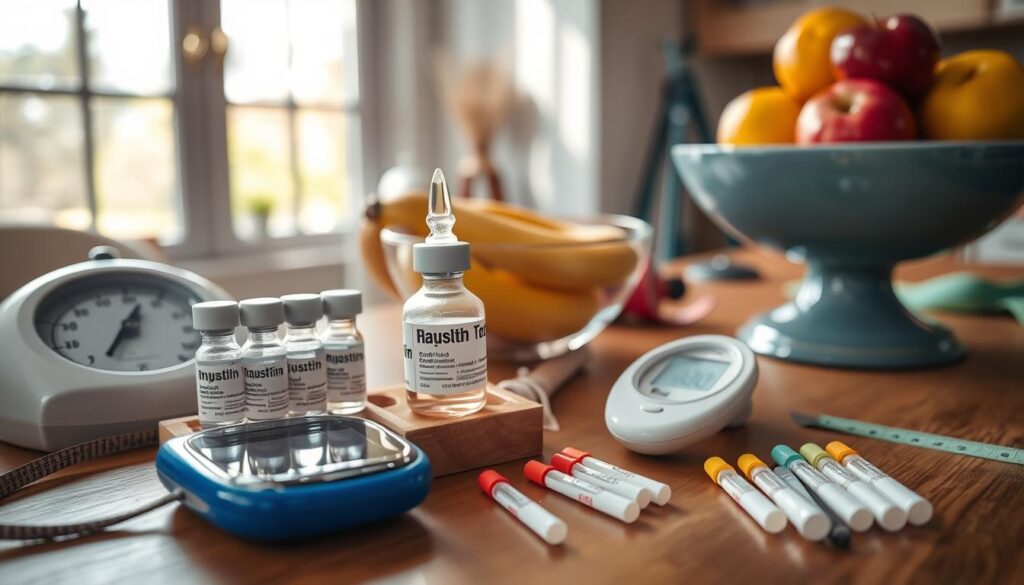
Type 1 Diabetes (T1D) management can be tough, but knowledge is power. This autoimmune disorder needs daily care through glucose monitoring and insulin therapy1. New tech makes tracking blood sugar levels easier, helping you take charge1.
Keeping tight control of blood sugar is vital to prevent health issues. Aim for an A1C below 7% to reduce diabetes-related risks1. About 64% of Americans with T1D use insulin pumps for more precise management1.
Managing Type 1 Diabetes requires a well-rounded approach. This includes regular blood sugar checks and smart insulin use. Your daily choices play a big role in staying healthy2.
Key Takeaways
- Type 1 Diabetes requires consistent daily management
- Technological tools can help improve glucose monitoring
- Maintaining an A1C goal under 7% reduces health risks
- Insulin therapy is crucial for blood sugar control
- Personalized approach is key to effective management
Understanding Type 1 Diabetes
Type 1 diabetes is a complex autoimmune condition affecting glucose processing. It requires careful management and understanding of its unique traits3.
What Is Type 1 Diabetes?
Type 1 diabetes is a chronic condition where the pancreas produces little or no insulin. This hormone is crucial for managing blood sugar.
Unlike type 2 diabetes, this form isn’t preventable. It typically develops early in life4.
- Affects 5-10% of diabetes cases worldwide4
- Can develop in anyone at any age3
- Requires lifelong insulin therapy
Causes and Risk Factors
The exact cause of type 1 diabetes remains unclear. Researchers know it involves complex genetic and environmental interactions.
An autoimmune response triggers the body’s immune system. It attacks insulin-producing beta cells4.
| Risk Factors | Details |
|---|---|
| Genetic Predisposition | 85-90% of diagnosed individuals have no family history4 |
| Ethnic Background | Most frequent in European ancestry4 |
| Age | Commonly diagnosed during adolescence4 |
Common Symptoms to Watch For
Recognizing early signs can help prevent serious complications like diabetic ketoacidosis. Watch for increased thirst, frequent urination, unexplained weight loss, and fatigue3.
Early detection and treatment can significantly decrease the risk of complications3.
Managing type 1 diabetes often involves using an insulin pump. Carefully monitoring blood sugar levels helps prevent hypoglycemia.
Regular consultations with your diabetes care team are essential. They ensure effective management of the condition3.
Daily Management Strategies
Managing type 1 diabetes requires careful monitoring, smart nutrition, and personalized treatment. Your daily routine plays a vital role in maintaining good health. It helps prevent complications and keeps you feeling your best.
Monitoring Blood Sugar Levels
Blood sugar monitoring is key to effective diabetes management. You can track glucose levels through two main methods. These are traditional capillary blood testing and continuous glucose monitoring (CGM).
Your target blood sugar before meals should be 80-130 mg/dL. After eating, it should not exceed 180 mg/dL within two hours5.
Insulin Therapy Essentials
Insulin is crucial for people with type 1 diabetes6. Your treatment may involve multiple daily injections or an insulin pump. New technologies are making diabetes care easier.
- Ultra-rapid-acting insulins
- More stable long-acting insulin variants
- Artificial pancreas systems
Nutrition and Carbohydrate Management
Counting carbs is vital for stable blood sugar. You need to match carb intake with the right insulin dose6. Try these nutrition strategies:
| Strategy | Benefit |
|---|---|
| Plate Method | Helps control portion sizes |
| Balanced Meal Planning | Supports consistent blood sugar levels |
Exercise and Diabetes Management
Regular exercise can boost insulin sensitivity5. Aim for 150 minutes of moderate aerobic activity weekly. Monitor your blood sugar during and after workouts5.
Remember, managing type 1 diabetes is a personal journey. Work closely with your healthcare team to develop a strategy that works best for you.
Research is ongoing, and new technologies and treatments are improving diabetes care7. These advances make managing the condition easier and less of a burden.
Navigating Challenges and Support
Living with Type 1 Diabetes goes beyond medical management. Your emotional well-being is crucial for successful diabetes care. Many young adults with T1DM face significant challenges in their 20s.
Understanding these challenges helps develop effective coping strategies. Building a strong support network is key. Connecting with peers provides emotional strength and practical insights.
Social support is vital for diabetes management. Resources like comprehensive diabetes support networks offer valuable guidance8. Continuous glucose monitoring empowers you to make informed health decisions9.
Ongoing education is your best tool for insulin therapy and glucose monitoring. Explore online communities, educational programs, and support groups for Type 1 Diabetes9. Staying informed helps navigate financial and social challenges.
Your healthcare journey is unique. Use specialized guides for mental health and workplace management10. Address both medical and emotional aspects of Type 1 Diabetes. This approach leads to better health and well-being.
FAQ
What exactly is Type 1 Diabetes?
Type 1 Diabetes is a long-lasting autoimmune disorder. Your pancreas makes little or no insulin. Daily management includes insulin therapy and blood sugar monitoring.
It’s not caused by lifestyle factors. Instead, an autoimmune response attacks insulin-producing cells in your pancreas.
What are the main symptoms of Type 1 Diabetes?
Key symptoms include increased thirst, frequent urination, and unexplained weight loss. Extreme fatigue and blurred vision are also common signs.
If you notice multiple symptoms, see a doctor. They can run tests to check for diabetes.
How often do I need to monitor my blood sugar?
You’ll need to check your blood sugar several times a day. Modern devices can track your levels in real-time.
Your doctor will help decide how often you should test. It depends on your treatment plan.
What are the treatment options for Type 1 Diabetes?
Treatment mainly involves insulin therapy. You can use daily injections or an insulin pump.
Other important parts of managing diabetes include tracking glucose levels and counting carbs. Regular exercise and a balanced diet also help.
What complications should I be aware of?
Two main complications are diabetic ketoacidosis and hypoglycemia. Ketoacidosis happens when blood sugar stays too high for too long.
Hypoglycemia occurs when blood sugar drops too low. Both need quick action and proper care.
How does exercise impact my Type 1 Diabetes?
Exercise helps control blood sugar, but needs careful monitoring. It can change how your body responds to insulin.
You might need to adjust your insulin dose before and after working out. Talk to your doctor about a safe exercise plan.
What emotional challenges might I experience?
Managing Type 1 Diabetes can be tough emotionally. You might feel stressed, anxious, or overwhelmed at times.
Build a strong support network. Consider talking to a counselor. Connect with others who understand your situation through support groups.
Are there technological advances that can help me manage my condition?
Yes! New tech has changed how we manage Type 1 Diabetes. Automated insulin systems and continuous glucose monitors are now available.
These tools offer precise insulin dosing and real-time glucose tracking. They make it easier to keep your blood sugar in check.
Source Links
- Type 1 Diabetes: Management Strategies – https://www.aafp.org/pubs/afp/issues/2018/0801/p154.html
- PDF – https://eced.squarespace.com/s/Type1guide-INSIDE-050609-final.pdf
- Understanding Type 1 Diabetes | ADA – https://diabetes.org/about-diabetes/type-1
- What is Type 1 Diabetes? – Diabetes Education Online – https://dtc.ucsf.edu/types-of-diabetes/type1/understanding-type-1-diabetes/what-is-type-1-diabetes/
- Type 1 diabetes – Diagnosis and treatment – https://www.mayoclinic.org/diseases-conditions/type-1-diabetes/diagnosis-treatment/drc-20353017
- Type 1 Diabetes Treatment and Therapy – Breakthrough T1D – https://www.breakthrought1d.org/t1d-basics/treatments/
- Diabetes Type 1 in Daily Life: What Patients Need to Know – https://mytomorrows.com/blog/patients/t1d-diabetes-type-1-daily-life-patients-need-know-current-treatment-options/
- Barriers and Strategies for Type 1 Diabetes Management Among Emerging Adults: A Qualitative Study – https://pmc.ncbi.nlm.nih.gov/articles/PMC9125103/
- Spectrum Clinical Research, Type 1 Diabetes – https://www.spectrumclinicalresearch.com/blog/1158268-navigating-the-maze-research-on-type-1-diabetes-in-teenagers
- Type 1 Diabetes Educational Resources – Breakthrough T1D – https://www.breakthrought1d.org/t1d-resources/

