
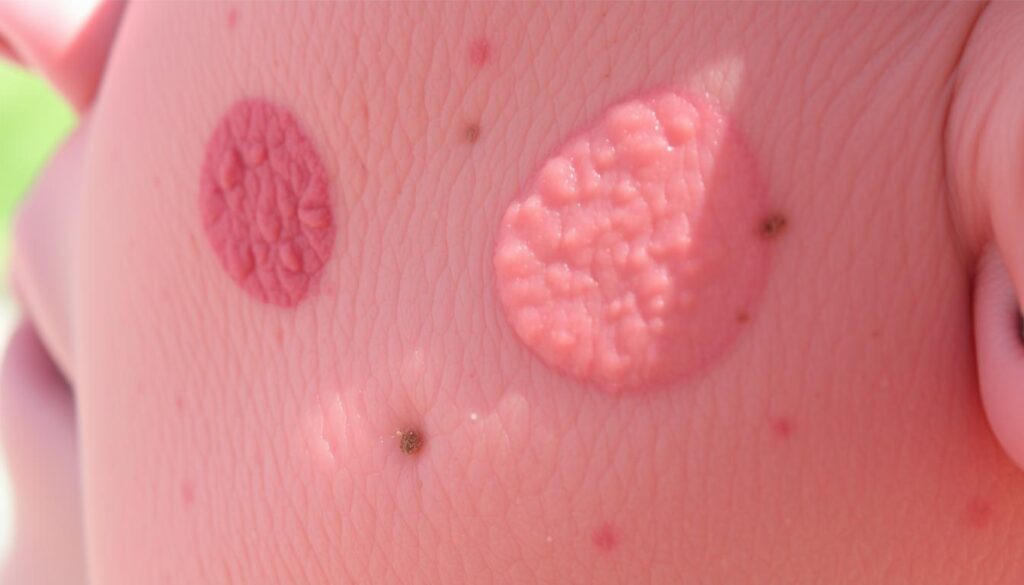
Actinic keratosis is a common precancerous skin condition caused by years of sun exposure. These rough, scaly patches appear on areas often exposed to sunlight1. People over 40 have a higher risk of developing these sun-damaged skin patches1.
Each year, over 40 million Americans deal with this skin issue2. These lesions typically form on sun-exposed areas like the face, ears, hands, and scalp2. If left untreated, they may develop into squamous cell carcinoma1.
Ultraviolet (UV) radiation from sun exposure or tanning beds causes actinic keratosis1. People with fair skin, light-colored eyes, and freckles are most at risk2.
Key Takeaways
- Actinic keratosis is a precancerous skin condition caused by sun damage
- Most common in individuals over 40 with prolonged sun exposure
- Can develop into skin cancer if not addressed
- Affects more than 40 million Americans annually
- Prevention involves protecting skin from UV radiation
What is Actinic Keratosis and Its Common Symptoms
Actinic keratosis is a skin condition caused by long-term sun exposure. It forms rough, scaly patches on areas often exposed to sunlight3. These patches can signal potential skin damage at the cellular level.
Knowing the symptoms and risk factors helps protect your skin. It can also prevent more serious complications.
Identifying Early Warning Signs
Spotting solar keratosis early is key for effective treatment. Be on the lookout for these telltale signs:
- Rough, dry patches less than 1 inch in diameter
- Flat or slightly raised bumps on skin surface
- Color variations including pink, red, or brown
- Potential itching, burning, or bleeding
People with keratinocyte dysplasia often have multiple lesions. These typically appear on sun-exposed areas like hands, face, and forearms4.
Risk Factors and Causes
| Risk Factor | Description |
|---|---|
| Skin Type | Pale skin, blonde/red hair, light-colored eyes |
| Age | More common in people over 40 |
| Sun Exposure | Frequent UV ray interaction increases risk3 |
About 25% of people aged 60 and older may develop actinic keratosis4. Knowing these risk factors helps you protect your skin better.
Early detection is crucial. Take proactive steps to shield your skin from sun damage.
Prevention is always better than cure when it comes to protecting your skin from sun damage.
Treatment Options for Actinic Keratosis
Actinic keratosis has several effective treatment options. The best approach depends on lesion count, location, and your health5. Field cancerization areas need careful attention to prevent skin cancer.
Dermatologists often suggest multiple treatments for actinic cheilitis and widespread lesions6. These include topical medications, surgical procedures, and photodynamic therapy.
- Topical medications (creams and gels)
- Surgical procedures
- Photodynamic therapy
FDA-approved medications for actinic keratosis include:
| Medication Type | Purpose |
|---|---|
| 5-fluorouracil (5-FU) cream | Targets visible and invisible lesions |
| Diclofenac sodium gel | Reduces inflammation and skin lesions |
| Imiquimod cream | Stimulates immune response |
Surgical options like cryosurgery, chemical peels, and laser resurfacing target isolated lesions5. Combining therapies often yields the best results6.
Early detection and consistent treatment are key to managing actinic keratosis effectively.
After treatment, you may experience temporary redness and peeling. Regular skin check-ups are crucial. Protect your skin from sun exposure using recommended dermatological practices5.
Conclusion
Skin cancer prevention starts with knowing your risk and taking action. Your sun protection plan is key to managing actinic keratosis. It also helps reduce skin cancer risks7.
Over 40% of patients with multiple actinic keratosis lesions may develop skin cancer. This can happen within 5-11 years, making protection crucial7.
Protect yourself by wearing the right clothes and using broad-spectrum sunscreen. Avoid the sun between 10 a.m. and 2 p.m. Check your skin often for changes8.
The risk of actinic keratosis becoming squamous cell carcinoma varies. It can range from 0.075% to 16% per year8.
Your doctor can help create a skin protection plan just for you. Some actinic keratosis spots may go away, but many need treatment9.
Patients agree that early action can stop skin cancer. They see effective treatment as a top priority9. Stay informed, protect your skin, and talk to experts about your skin’s health.
FAQ
What exactly is actinic keratosis?
Actinic keratosis is a rough, scaly patch on skin caused by sun exposure. These precancerous lesions appear on sun-exposed areas like face, lips, and hands. They’re common in people over 40 and can potentially turn into skin cancer.
What are the typical symptoms of actinic keratosis?
Look for rough, dry patches less than 1 inch wide. They can be flat or raised, ranging from pink to brown. Some patches might feel hard and cause itching, burning, or bleeding.
Who is most at risk for developing actinic keratosis?
People with fair features, sun exposure history, or over 40 are at higher risk. Sunny locations, outdoor work, and weakened immune systems also increase chances. These factors make you more susceptible to precancerous lesions.
How is actinic keratosis typically treated?
Treatments include medicated creams for multiple lesions. Surgical options like cryotherapy, curettage, laser therapy, and photodynamic therapy are also used. Cryotherapy, the most common method, causes affected skin to blister and peel.
Can actinic keratosis be prevented?
Yes! Limit sun exposure, especially midday. Use broad-spectrum sunscreen and wear protective clothing. Avoid tanning beds and do regular skin self-checks. These steps help prevent and detect actinic keratosis early.
Is actinic keratosis dangerous?
Actinic keratosis isn’t immediately life-threatening. However, it has a 5% to 10% risk of becoming squamous cell carcinoma. Most doctors recommend removing these lesions as a precaution.
How often should I get my skin checked?
Regular skin checks are crucial, especially after treatment. See a doctor if you notice new patches or changes. Prompt evaluation helps catch potential issues early.
Source Links
- Do you know how to prevent rough, scaly skin patches?-Actinic keratosis – Symptoms & causes – Mayo Clinic – https://www.mayoclinic.org/diseases-conditions/actinic-keratosis/symptoms-causes/syc-20354969
- The Basics of Actinic Keratosis – https://www.webmd.com/skin-problems-and-treatments/understanding-actinic-keratosis-basics
- Actinic Keratosis (A Precancerous Condition) – https://www.hopkinsmedicine.org/health/conditions-and-diseases/actinic-keratosis
- Actinic keratoses (Solar keratosis): Diagnosis and Treatment — DermNet – https://dermnetnz.org/topics/actinic-keratosis
- Actinic Keratosis Treatment – https://www.skincancer.org/skin-cancer-information/actinic-keratosis/actinic-keratosis-treatment-options/
- Actinic keratosis: Diagnosis and treatment – https://www.aad.org/public/diseases/skin-cancer/actinic-keratosis-treatment
- Actinic Keratosis Diagnosis and Increased Risk of Developing Skin Cancer: A 10-year Cohort Study of 17,651 Patients in Sweden – https://pmc.ncbi.nlm.nih.gov/articles/PMC9128984/
- Actinic Keratosis: Rationale and Management – https://pmc.ncbi.nlm.nih.gov/articles/PMC4065271/
- Treatment Motivations and Expectations in Patients with Actinic Keratosis: A German-Wide Multicenter, Cross-Sectional Trial – https://www.mdpi.com/2077-0383/9/5/1438

