
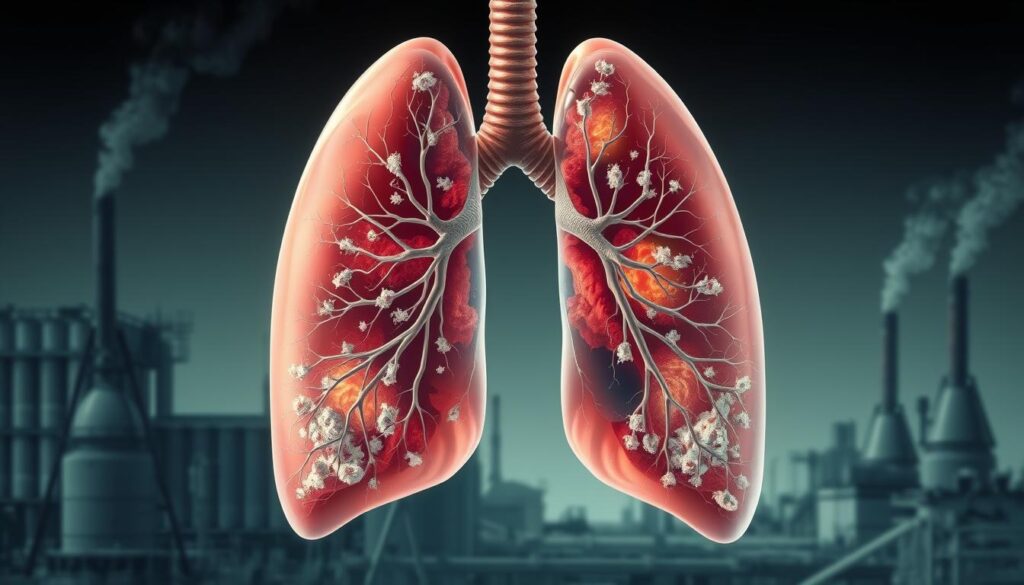
Asbestosis is a severe lung disease caused by long-term asbestos exposure. Tiny asbestos fibers can harm your lungs, leading to scarring and breathing problems1. Symptoms may not appear for decades after exposure1.
Asbestos fibers trapped in lung tissue cause ongoing inflammation and scarring. Construction, mining, and manufacturing workers face the highest risk of this chronic disease1. Longer and more intense exposure increases the danger2.
New safety rules have reduced workplace asbestos risks. However, many old buildings still contain asbestos materials. Some products may still have these harmful fibers1.
Knowing your potential exposure is vital for early detection. Regular check-ups can help manage your respiratory health effectively.
Key Takeaways
- Asbestosis is a progressive lung disease caused by asbestos fiber inhalation
- Symptoms can take 20-30 years to develop after initial exposure
- Certain occupations have higher risks of asbestos-related diseases
- Lung scarring is a primary consequence of long-term asbestos exposure
- Early awareness and medical monitoring are critical for managing respiratory health
Early Warning Signs and Symptoms of Asbestosis
Asbestosis is a serious lung condition caused by long-term asbestos exposure. Knowing its early signs can help you spot health risks quickly. Early detection is key for timely medical care.
Primary Symptoms to Watch For
Asbestosis symptoms appear slowly and affect your breathing. Shortness of breath during activities is often the first sign3. Other common symptoms include:
- Persistent dry cough
- Chest tightness or pain
- Crackling sounds when breathing
- Unexplained weight loss
- Clubbing of fingers and toes
These symptoms may not show up right away. It can take 20 to 30 years for asbestosis signs to appear4. This long delay makes early detection tricky.
Long-term Health Effects
As asbestosis gets worse, it can cause severe breathing problems. The ongoing lung tissue scarring increases risks of:
- Lung cancer
- Mesothelioma
- Respiratory failure
- Pulmonary hypertension
“Early detection and medical monitoring are crucial for managing asbestosis and preventing further lung damage.”
If you’ve been exposed to asbestos and have these symptoms, see your doctor right away3. Chest X-rays and lung function tests can help confirm asbestosis5.
Occupational Exposure and Risk Factors for Asbestosis
Asbestos exposure is a major health risk for workers in various industries. Construction workers, miners, and shipyard workers face high risks of serious lung conditions6. Those who worked with asbestos before the late 1970s are at greatest risk6.
- Construction workers
- Shipyard workers
- Auto mechanics
- Electricians
- Industrial maintenance personnel
The risk of asbestosis depends on several key factors:
| Risk Factor | Impact on Health |
|---|---|
| Exposure Duration | Longer exposure increases disease probability7 |
| Fiber Concentration | Higher concentrations elevate health risks6 |
| Individual Health | Smoking can accelerate lung damage6 |
Genetic factors may influence susceptibility to asbestos-related diseases7. Despite stricter regulations, workers in older buildings or handling vintage equipment still face risks6.
Awareness and proper protection are your best defenses against occupational asbestos exposure.
Conclusion
Understanding asbestos risks is vital for lung health protection. Asbestos management has changed significantly over time. Domestic consumption dropped from 803,000 metric tons in 1973 to 360 metric tons in 20158.
Vigilance is key in preventing asbestos-related diseases. Health issues may appear 10 to 40 years after exposure8. Construction, shipbuilding, and demolition workers face higher risks9.
Stay informed to protect your lung health through careful asbestos management. Minimize risks by being proactive and aware of potential dangers.
Ongoing research is crucial for understanding asbestos hazards. Experts suggest studying fiber dimensions, exposure levels, and health impacts10. Your awareness helps combat this occupational health challenge.
Regular medical check-ups are important for protection. Knowing workplace safety rules can shield you from asbestos-related risks. Stay vigilant to safeguard your health.
FAQ
What is Asbestosis?
Asbestosis is a chronic lung disease caused by long-term asbestos exposure. Tiny asbestos fibers lodge in lung tissue, causing scarring and breathing problems. The disease develops 10-40 years after exposure, leading to serious respiratory issues.
What are the Early Signs of Asbestosis?
Early signs include shortness of breath during activities and a persistent dry cough. You might also experience chest tightness and crackling sounds when inhaling.
As the disease worsens, fatigue and unexplained weight loss may occur. Clubbing of fingers and toes is also possible. If you’ve been exposed to asbestos, see a doctor if these symptoms appear.
Which Occupations are Most at Risk?
High-risk jobs include construction workers, asbestos miners, and shipyard workers. Auto mechanics, electricians, and those in asbestos manufacturing or removal are also at risk.
Workers exposed before the late 1970s face the highest danger. The risk increases with longer and more intense exposure.
Is Asbestosis Curable?
Asbestosis has no cure, but treatments can help manage symptoms and slow its progress. Options include oxygen therapy, medications to thin lung fluids, and pulmonary rehab.
In severe cases, lung transplants may be considered. The main goal is to improve quality of life.
What are the Long-term Health Risks?
Long-term risks include higher chances of lung cancer and mesothelioma. The disease can lead to breathing failure and heart problems.
Median survival is about 10 years, varying by disease progression and overall health.
How Can I Prevent Asbestosis?
Prevention involves reducing asbestos exposure through strict workplace rules and proper safety gear. Safe management of asbestos in old buildings is crucial.
If exposed, monitor your lung health regularly. Avoid smoking and keep your doctor informed about potential risks.
What Factors Increase Asbestosis Risk?
Risk factors include the amount and type of asbestos exposure. The duration of exposure, smoking history, and existing lung conditions also play a role.
Certain genetic factors, like specific DNA changes, might increase disease susceptibility.
Source Links
- Asbestos Exposure & Your Health Risk – https://my.clevelandclinic.org/health/diseases/22245-asbestosis
- A chronic lung disease caused by inhaling asbestos fibers-Asbestosis – Symptoms & causes – Mayo Clinic – https://www.mayoclinic.org/diseases-conditions/asbestosis/symptoms-causes/syc-20354637
- Asbestosis Symptoms, Causes, and Risk Factors – https://www.lung.org/lung-health-diseases/lung-disease-lookup/asbestosis/symptoms-diagnosis
- Asbestosis Symptoms & Signs: Relief, Causes, & Latency – https://www.asbestos.com/asbestosis/symptoms/
- Asbestosis – https://www.nhs.uk/conditions/asbestosis/
- Learn About Asbestosis – https://www.lung.org/lung-health-diseases/lung-disease-lookup/asbestosis/learn-about-asbestosis
- Mesothelioma Causes | Risk Factors & Asbestos Exposure – https://www.asbestos.com/mesothelioma/causes/
- Asbestos Exposure and Cancer Risk Fact Sheet – https://www.cancer.gov/about-cancer/causes-prevention/risk/substances/asbestos/asbestos-fact-sheet
- How can asbestos affect my health? – https://ehs.tamu.edu/how-do-i/can-asbestos-affect-my-health.html
- ATSDR – Asbestos Expert Panel – https://www.atsdr.cdc.gov/hac/asbestospanel/4.0.html

