
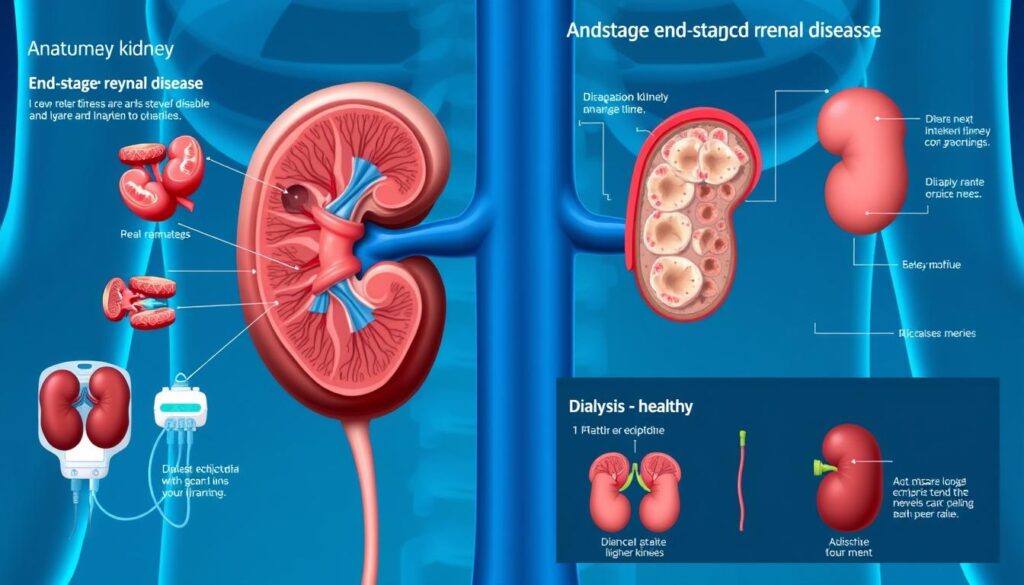
End-stage renal disease (ESRD) is a critical point in kidney health. At this stage, your kidneys can’t function effectively anymore. Medical interventions become necessary for survival1.
Understanding ESRD is key to managing your health. It helps you explore treatment options and make informed decisions2.
Kidney failure happens when your glomerular filtration rate drops significantly. This indicates severe kidney damage2. Your kidneys struggle to remove waste and regulate bodily functions.
Early detection of chronic kidney disease is crucial. It can help prevent progression to end-stage renal disease1.
Many factors can increase your risk of kidney failure. These include diabetes, high blood pressure, and genetic predisposition1. Lifestyle choices also play a role.
Ethnic background and age significantly impact kidney disease progression3. Being aware of these factors can help in prevention and management.
Key Takeaways
- End-stage renal disease requires medical intervention to survive
- Early detection is critical in managing kidney health
- Multiple risk factors contribute to kidney failure
- Lifestyle choices can impact kidney function
- Medical treatments like dialysis can extend life expectancy
What Happens When Kidneys Fail: Understanding End-Stage Renal Disease
Kidneys are vital for your body’s health. When they stop working well, it can cause end-stage renal disease (ESRD). Let’s explore how kidneys work and what happens during kidney failure.
How Healthy Kidneys Function
Healthy kidneys are powerful filters. They clean your blood by removing waste and extra fluids. Each kidney has about a million tiny filters called glomeruli.
These filters work non-stop to keep your body clean and balanced. They control fluid balance, electrolyte levels, blood pressure, and waste removal.
- Fluid balance
- Electrolyte levels
- Blood pressure
- Waste removal
The Process of Kidney Failure
Kidney failure happens when your kidneys work less than 15% of normal4. Diabetes and high blood pressure are the main causes of this problem5.
As kidneys get worse, waste builds up in your blood. This leads to a condition called uremia.
Impact on Body Systems
When kidneys fail, many body systems are affected. Creatinine levels go up, showing poor kidney function. This can cause several problems.
| Body System | Potential Impact |
|---|---|
| Cardiovascular | Increased risk of heart disease |
| Hematologic | Anemia development |
| Skeletal | Mineral and bone disorders |
At this point, renal replacement therapy becomes crucial4. Dialysis or kidney transplant can help manage symptoms and improve life quality4.
Staying active is important for overall health. It can help you manage the condition better4.
“Managing kidney failure requires a comprehensive approach that addresses physical, emotional, and medical needs.”
Common Signs and Risk Factors of Kidney Failure
Chronic kidney disease affects one in seven American adults. Recognizing early warning signs is crucial for taking proactive steps. Your body provides important signals that could indicate kidney problems.
Key signs of potential kidney issues include:
- Unusual changes in urination patterns
- Persistent fatigue
- Unexplained swelling
- Metallic taste in mouth
- Recurring muscle twitches
Risk factors for chronic kidney disease are complex. Diabetes remains the leading cause of kidney failure6. Hypertension is another critical risk factor that can damage kidney function over time6.
Several important risk factors can accelerate kidney disease progression:
- Family history of kidney disease
- Obesity
- Smoking and tobacco use
- Advanced age
- Heart disease
“Early detection and management are key to preserving kidney function and preventing end-stage renal disease.”
Proteinuria and excess weight are strong indicators of potential kidney problems. Research shows these factors have significant hazard ratios7. Regular check-ups with a nephrologist can help monitor these critical health markers.
Personalized prevention strategies can be developed through routine medical visits. This approach helps maintain kidney health and catch issues early.
Treatment Options and Disease Management
Patients with critical kidney function face tough choices about renal replacement therapy. Understanding treatment options is key for managing end-stage renal disease (ESRD) effectively. Learn more about kidney treatment strategies.
Dialysis: A Critical Intervention
Dialysis is a lifeline for kidney failure patients. Nearly 90% of ESRD patients in the U.S. use center-based hemodialysis8.
The two main dialysis methods are:
- Hemodialysis: Blood is filtered through an external machine
- Peritoneal dialysis: Filtering occurs inside the patient’s abdomen
Kidney Transplantation Process
Kidney transplantation offers the best long-term outcome for ESRD patients9. Surprisingly, only 5% of patients are preemptively placed on the kidney transplant waiting list8.
The process involves:
- Comprehensive medical evaluation
- Matching donor kidney
- Surgical transplantation
- Long-term immunosuppression management
Medication and Lifestyle Management
ESRD management goes beyond medical procedures. Your healthcare team will focus on:
| Management Area | Key Strategies |
|---|---|
| Medication Control | Blood pressure regulation, anemia treatment |
| Lifestyle Modifications | Kidney-friendly diet, fluid intake control |
“Patient education is critical – understanding your treatment can significantly improve outcomes”8
Renal replacement therapy requires teamwork with healthcare pros. This collaboration helps optimize your kidney function and overall health. Explore comprehensive kidney care options for better results.
Conclusion
Managing end-stage renal disease (ESRD) demands dedication and support. Over 500,000 Americans face this complex condition10. Your journey involves understanding ESRD, exploring treatments, and maintaining a positive outlook.
Medical advances have improved outcomes for kidney failure patients. Two-thirds of ESRD patients use hemodialysis, while a quarter receive transplants11. The medical research community continues to explore innovative ways to enhance life quality.
Knowing your risk factors is key to effective management. These may include diabetes, hypertension, or age-related changes11.
Your ESRD journey isn’t a solo experience. Team up with nephrologists, dietitians, and support networks. Many patients adapt well, finding strength in medical support and personal resilience10.
Each ESRD patient’s experience is unique. Your commitment to understanding and following medical advice can greatly impact your health. Stay informed and hopeful as you navigate this journey11.
FAQ
What is End-Stage Renal Disease (ESRD)?
ESRD is the final stage of chronic kidney disease. Your kidneys can no longer filter waste and excess fluid from your blood. This condition requires dialysis or a kidney transplant to survive. About 30 million people in the U.S. have ESRD.
What are the primary symptoms of ESRD?
ESRD symptoms include nausea, vomiting, and loss of appetite. You may also experience fatigue, changes in urination, and chest pain.
Other signs are shortness of breath, swelling, and high blood pressure. Headaches, sleep problems, and decreased mental sharpness can occur too.
Some people have muscle twitches, persistent itching, and a metallic taste in their mouth.
What causes End-Stage Renal Disease?
Common causes include poorly controlled diabetes and high blood pressure. Certain kidney diseases and polycystic kidney disease can also lead to ESRD.
Risk factors include smoking, certain ethnic backgrounds, and family history. Older age and frequent use of nephrotoxic medications also increase risk.
What are the treatment options for ESRD?
The main treatments are dialysis and kidney transplantation. These are forms of renal replacement therapy.
Dialysis includes hemodialysis and peritoneal dialysis. Your healthcare team will help choose the best treatment for you.
How can I prevent progression to End-Stage Renal Disease?
Early detection and management of chronic kidney disease are crucial. Have regular check-ups with a nephrologist.
Control conditions like diabetes and high blood pressure. Follow a kidney-friendly diet and stay active.
Avoid tobacco and excessive alcohol. Carefully manage your medications.
What lifestyle changes are recommended for ESRD patients?
Follow a kidney-friendly diet and limit fluid intake. Maintain a healthy weight and stay physically active.
Avoid tobacco and excessive alcohol. Work closely with your healthcare team.
Regular blood tests, including creatinine levels, are essential. These help track kidney function and adjust treatment as needed.
What are the main complications of ESRD?
ESRD can cause fluid retention and high potassium levels. It may also lead to anemia and bone disease.
Decreased immune function is another complication. ESRD can impact multiple body systems.
These issues occur because kidneys can’t filter waste or maintain proper chemical balance.
Can ESRD be cured?
ESRD can’t be completely cured, but it can be managed effectively. Treatments like dialysis and kidney transplantation have improved outcomes.
Work closely with your healthcare team. Follow recommended treatments and lifestyle changes.
These steps are key to managing ESRD and improving quality of life.
Source Links
- End-stage renal disease – Symptoms and causes – https://www.mayoclinic.org/diseases-conditions/end-stage-renal-disease/symptoms-causes/syc-20354532
- What is end stage kidney disease – http://www.davita.com/education/kidney-disease/stages/what-is-end-stage-renal-disease
- Kidney failure (ESRD) – Symptoms, causes and treatment options – https://www.kidneyfund.org/all-about-kidneys/kidney-failure-symptoms-and-causes
- What is Kidney Failure? – NIDDK – https://www.niddk.nih.gov/health-information/kidney-disease/kidney-failure/what-is-kidney-failure
- What Happens If My Kidneys Fail Completely? – https://www.templehealth.org/services/transplant/kidney-transplant/understanding-kidney-disease/when-kidneys-fail-completely
- Risk factors for kidney disease – https://www.kidneyfund.org/all-about-kidneys/risk-factors
- Risk Factors for End-Stage Renal Disease: 25-Year Follow-up – https://pmc.ncbi.nlm.nih.gov/articles/PMC2727643/
- End-Stage Renal Disease: Medical Management – https://www.aafp.org/pubs/afp/issues/2021/1100/p493.html
- End-Stage Renal Disease: Medical Management – PubMed – https://pubmed.ncbi.nlm.nih.gov/34783494/
- End-Stage Renal Disease – StatPearls – https://www.ncbi.nlm.nih.gov/books/NBK499861/
- End-stage renal disease – PMC – https://pmc.ncbi.nlm.nih.gov/articles/PMC3217820/

