
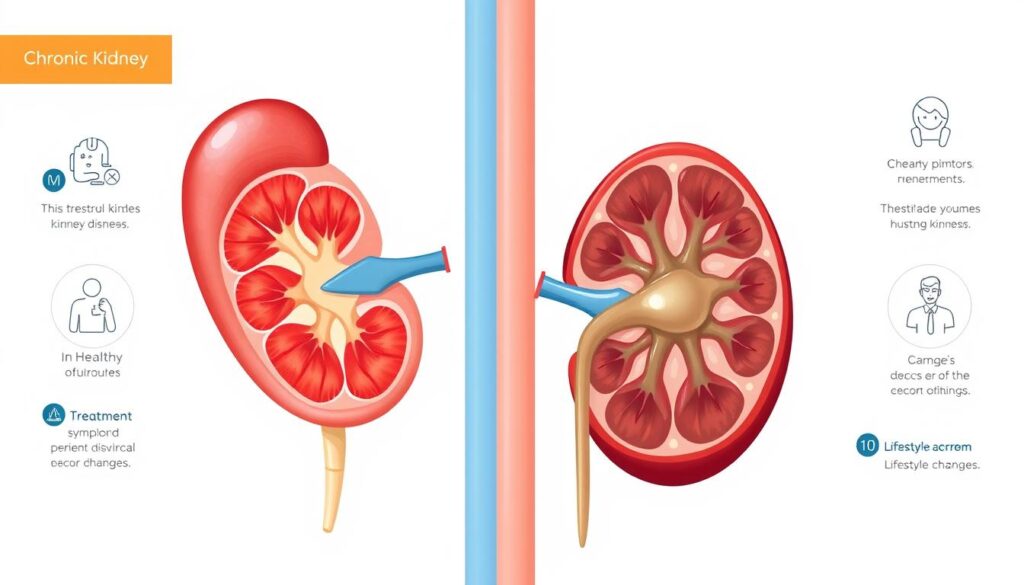
Chronic Kidney Disease (CKD) affects millions worldwide. It occurs when your kidneys can’t filter blood and remove waste properly. This damage leads to serious health issues1.
Your kidneys house about 1.5 million filters called nephrons. These tiny structures work non-stop to keep your body healthy1. Early detection of kidney problems can make a big difference in treatment.
Diabetes and high blood pressure often cause kidney damage2. Without proper care, CKD can worsen through five stages. Each stage shows less kidney function1.
Some people have a higher risk of kidney disease. Age, ethnicity, and family history play a role1. Black Americans, Hispanics, Pacific Islanders, and those over 60 face greater risks1.
Key Takeaways
- Chronic Kidney Disease affects millions of people worldwide
- Early detection is crucial for effective management
- Diabetes and high blood pressure are leading causes of kidney damage
- Regular health checkups can help monitor kidney function
- Lifestyle choices significantly impact kidney health
What is Chronic Kidney Disease?
Chronic kidney disease (CKD) slowly affects your kidneys’ ability to work well. It impacts about one in seven American adults3. Kidneys filter waste, control blood pressure, and keep your body healthy.
Knowing about kidney health helps you spot risks early. You can then take steps to manage your well-being better.
Disease Definition and Progression
CKD happens when kidneys get damaged over time. This leads to worse kidney function. Over 35.5 million American adults might have this condition4.
The disease moves through several key stages:
- Stage 1: Minimal kidney damage with normal filtration
- Stage 2-3: Moderate kidney function decline
- Stage 4: Significant kidney impairment
- Stage 5: End-stage renal disease requiring dialysis or transplant
Critical Symptoms to Recognize
Spotting kidney problems early can be tough. Symptoms often start small. Look out for these possible warning signs:
- Persistent fatigue
- Swollen ankles and feet
- Frequent nighttime urination
- Dry, itchy skin
- Muscle cramps
“Early detection of kidney disease can significantly improve treatment outcomes and quality of life.”
Risk Factors and Detection
| Risk Factor | Impact on Kidney Health |
|---|---|
| Diabetes | Almost 1 in 3 people with diabetes has CKD4 |
| High Blood Pressure | Almost 1 in 5 adults with hypertension develops CKD4 |
| Proteinuria | Indicates potential kidney damage and function decline |
Regular check-ups can catch kidney issues early. This may slow down the disease’s progress3. Don’t skip your doctor visits.
Risk Factors for Chronic Kidney Disease
Protecting your kidneys starts with knowing the risks. Medical conditions, genes, and lifestyle choices can affect kidney health. Learn about these factors to keep your kidneys healthy.
Diabetes and Hypertension: Silent Kidney Destroyers
Diabetes is the top risk for kidney disease in the U.S. High blood pressure follows as the second most common cause. Uncontrolled hypertension can harm kidney blood vessels over time.
This damage may lead to dialysis or kidney transplant. Managing these conditions is key to kidney health.
Genetic Influences and Family History
Your genes play a big role in kidney disease risk. About 23% of dialysis patients have close relatives with end-stage renal disease5.
Some genetic changes, like APOL1 mutations in people of African descent, can raise CKD risk5. Knowing your family history helps assess your risk.
Lifestyle Choices Impacting Kidney Health
- Smoking over 20 cigarettes daily increases CKD risk5
- Obesity is a modifiable risk factor, with overweight individuals experiencing a threefold increase in CKD risk5
- Low income can correlate with higher CKD prevalence5
“Your daily choices can significantly impact your kidney health and long-term well-being.”
Chronic kidney disease affects 10-16% of adults worldwide5. Knowing these risks helps you protect your kidneys and overall health.
| Risk Factor | Impact on Kidney Health |
|---|---|
| Diabetes | Primary cause of kidney failure |
| Hypertension | Damages kidney blood vessels |
| Obesity | Increases CKD risk threefold |
| Smoking | Elevates blood pressure and kidney damage risk |
Remember, early awareness and lifestyle modifications can significantly reduce your risk of developing chronic kidney disease.
Diagnosing Chronic Kidney Disease
Early detection of chronic kidney disease (CKD) can greatly impact health management. Kidney function tests offer vital insights into your kidney health and potential risks6.
Healthcare providers use various tests to check kidney function. These tests look at creatinine levels, proteinuria, and glomerular filtration rate7.
Essential Diagnostic Tests
- Blood tests to measure creatinine levels6
- Urine tests for protein detection6
- Estimated glomerular filtration rate (eGFR) calculation7
Understanding Test Results
Key measurements in kidney function tests include:
| Test Measurement | Indication |
|---|---|
| eGFR below 90 ml/min | Potential kidney disease6 |
| eGFR below 60 ml/min | Confirmed kidney disease7 |
| Albumin:Creatinine Ratio | Assesses kidney damage6 |
High-Risk Groups for Testing
Regular kidney screenings are crucial for certain groups:
- People with diabetes7
- Individuals with high blood pressure6
- Those with cardiovascular disease6
- People with family history of kidney issues6
Early detection is your best defense against progressive kidney disease.
Other tests may include ultrasound, MRI, CT scans, or kidney biopsy. These provide deeper insights into kidney health6.
Always talk to your doctor about your test results. They can explain what they mean for your health.
Remember, knowledge is power when it comes to managing your kidney health.
Living with Chronic Kidney Disease
Managing chronic kidney disease (CKD) needs a full approach to health and lifestyle. It involves diet changes, medication control, and building a strong support system8. Regular exercise and health checks can help maintain life quality and slow kidney damage8.
Dietary Changes and Nutrition
Your diet is key in managing nephropathy. Team up with a dietitian to create a kidney-friendly meal plan8. You’ll need to watch your intake of potassium, phosphorus, and sodium.
Some patients may need to adjust their diet to support kidney function9. This can help prevent further health issues.
Managing Your Health with Medication
Taking your meds is crucial for kidney disease patients. Your doctor may prescribe treatments for blood pressure, diabetes, or to slow kidney damage9.
Be ready for possible future treatments like dialysis or kidney transplant options. Always follow your treatment plan and attend regular check-ups8.
Support Networks and Resources
Living with CKD can be tough, but you’re not alone. Seek out support groups, counseling, and educational resources for help8.
The National Kidney Foundation and local doctors can offer guidance and emotional support. They can help you deal with the mental aspects of kidney disease9.
FAQ
What is Chronic Kidney Disease (CKD)?
Chronic Kidney Disease damages kidneys, reducing their blood-filtering ability. This progressive condition leads to waste buildup in the body. It can cause health issues like high blood pressure and anemia.
What are the primary causes of Chronic Kidney Disease?
Diabetes and high blood pressure are the main causes of CKD. Other risk factors include family history and age over 60.
Certain ethnic backgrounds, obesity, and smoking also increase the risk. Long-term use of specific medications can contribute too.
What are the early signs of Chronic Kidney Disease?
Early CKD often has no noticeable symptoms. As it progresses, you might feel tired and have poor appetite.
Other signs include trouble sleeping, dry and itchy skin, and muscle cramps. Swollen feet and frequent nighttime urination may also occur.
How is Chronic Kidney Disease diagnosed?
Diagnosis involves urine and blood tests. These measure protein and creatinine levels to calculate kidney function.
Doctors use these results to determine your glomerular filtration rate (GFR). Additional tests may include ultrasound or CT scans.
What are the stages of Chronic Kidney Disease?
CKD has five stages based on glomerular filtration rate (GFR). Stage 1 has normal GFR with kidney damage.
Stage 5, or kidney failure, has a GFR less than 15. This stage typically requires dialysis or kidney transplant.
Can Chronic Kidney Disease be prevented or managed?
While not always preventable, you can manage CKD through lifestyle changes. Maintain a healthy diet and limit sodium intake.
Control diabetes and hypertension. Exercise regularly and work closely with your healthcare team for best results.
What treatment options are available for advanced Chronic Kidney Disease?
Advanced CKD treatments include dialysis and kidney transplantation. Dialysis comes in two forms: hemodialysis and peritoneal dialysis.
Your doctor will recommend the best treatment based on your condition and overall health.
Who is at highest risk for Chronic Kidney Disease?
People with diabetes and uncontrolled high blood pressure face the highest risk. Those over 60 are also more susceptible.
Certain ethnic groups have increased risk. These include Black Americans, Asians, Hispanics, Pacific Islanders, and American Indians.
Source Links
- PDF – https://www.kidney.org/sites/default/files/11-50-0160_patientguideCKD.pdf
- Patient education: Chronic kidney disease (Beyond the Basics) – https://www.uptodate.com/contents/chronic-kidney-disease-beyond-the-basics/print
- Chronic kidney disease – Symptoms and causes – https://www.mayoclinic.org/diseases-conditions/chronic-kidney-disease/symptoms-causes/syc-20354521
- What Is Chronic Kidney Disease? – NIDDK – https://www.niddk.nih.gov/health-information/kidney-disease/chronic-kidney-disease-ckd/what-is-chronic-kidney-disease
- Risk factors for chronic kidney disease: an update – https://pmc.ncbi.nlm.nih.gov/articles/PMC4089662/
- Chronic kidney disease – Diagnosis – https://www.nhs.uk/conditions/kidney-disease/diagnosis/
- Chronic Kidney Disease Tests & Diagnosis – NIDDK – https://www.niddk.nih.gov/health-information/kidney-disease/chronic-kidney-disease-ckd/tests-diagnosis
- Chronic kidney disease – Living with – https://www.nhs.uk/conditions/kidney-disease/living-with/
- Just diagnosed with kidney disease – https://www.kidneyfund.org/living-kidney-disease/just-diagnosed-kidney-disease

