
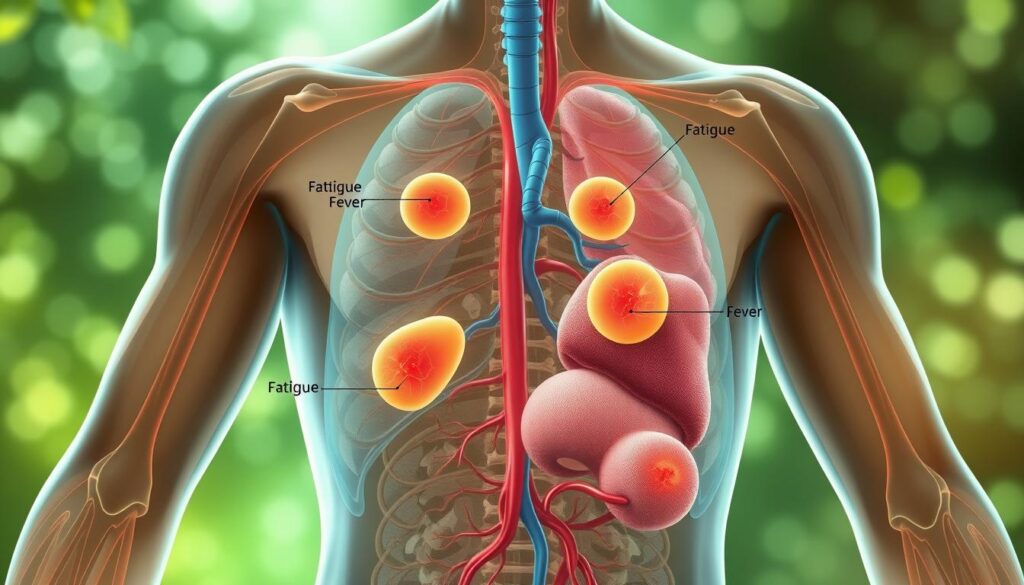
Hodgkin’s lymphoma is a cancer affecting the lymphatic system. It starts when healthy cells grow uncontrollably, disrupting your immune system1. This creates potential health risks that need attention2.
Early detection is key for effective treatment of Hodgkin’s lymphoma. It mostly affects young adults and older individuals2. Males are slightly more likely to be diagnosed than females2.
Despite its challenges, Hodgkin’s lymphoma is highly curable. Modern medicine has greatly improved recovery chances3. Your proactive approach can make a big difference in managing this condition.
Key Takeaways
- Hodgkin’s lymphoma is a cancer of the lymphatic system
- Most commonly diagnosed in people aged 20-39 and over 65
- Early detection dramatically improves treatment success
- Affects the immune system’s normal functioning
- Modern treatments offer high recovery rates
What is Hodgkin’s Lymphoma?
Hodgkin’s lymphoma is a blood cancer affecting the lymphatic system. It presents unique challenges for patients. Learning about this condition can help you handle potential health issues better.
Understanding the Basics
Lymph node cancer develops through specific cellular changes. It’s characterized by distinctive Reed-Sternberg cells. These abnormal B cells play a crucial role in the disease’s progression4.
About 9,000 new cases are diagnosed yearly in the United States5.
Types of Hodgkin’s Lymphoma
The disease includes several subtypes, each with unique features:
- Classic Hodgkin Lymphoma (cHL): Represents over 90% of cases4
- Nodular Sclerosis: Most common type, accounting for 70% of diagnoses4
- Mixed Cellularity: Second most prevalent subtype4
- Nodular Lymphocyte-Predominant: Rare variant representing 5% of cases4
Risk Factors and Prevalence
Your risk of developing Hodgkin’s lymphoma can be influenced by several factors:
- Age: Most common in individuals 15-24 and over 605
- Gender: Slightly more prevalent in males6
- Epstein-Barr virus exposure6
- Weakened immune system5
*”Knowledge is the first step in understanding and managing any health condition.”*
The exact cause of Hodgkin’s lymphoma remains unknown. Understanding B symptoms and genetic factors can help with early detection. Approximately 173,000 individuals in the U.S. are currently living with a history of this lymph node cancer5.
This highlights the importance of awareness and advanced medical treatments. Stay informed to better manage your health.
Recognizing Symptoms of Hodgkin’s Lymphoma
Spotting Hodgkin’s lymphoma signs early can lead to better health outcomes. This cancer type has unique symptoms you shouldn’t ignore7.
Common Symptoms You Should Know
Hodgkin’s lymphoma often shows up through key symptoms. These signs can indicate something’s wrong with your body.
- Swollen lymph nodes in the neck, chest, or under the arms7
- Unexplained weight loss
- Persistent fatigue
- Night sweats
- Recurring fevers
When to See a Doctor
Visit a doctor if your swollen lymph nodes last for weeks. Lymphoma can be treatable when caught early. Quick medical attention is vital.
Diagnostic Tests and Procedures
Doctors use various methods to confirm Hodgkin’s lymphoma. These tests help pinpoint the disease accurately.
| Diagnostic Test | Purpose |
|---|---|
| Physical Examination | Check for swollen lymph nodes and overall health |
| Blood Tests | Assess blood cell counts and immune function |
| Lymph Node Biopsy | Examine tissue for cancer cells7 |
| Imaging Studies | PET, CT, or MRI scans to determine cancer spread7 |
Early detection can significantly improve treatment outcomes and patient prognosis.
Hodgkin’s lymphoma affects about 3 in 100,000 people yearly. It’s most common in ages 20-39 and 65 and older1.
While symptoms can worry you, modern medicine has made this cancer more treatable7. Stay alert and seek help if needed.
Treatment Options for Hodgkin’s Lymphoma
Understanding Hodgkin’s lymphoma treatment options helps you make informed decisions. Your medical team will create a personalized strategy based on your diagnosis. They’ll tailor it to your unique medical needs.
Chemotherapy is a primary treatment approach. It targets cancer cells effectively8. Early-stage lymphoma may require 2 to 4 cycles of ABVD chemotherapy, followed by radiation therapy9.
These treatments aim for remission but can cause side effects. You might experience fatigue, infection risks, and temporary hair loss8.
If initial treatment fails, doctors may suggest a stem cell transplant. They might also explore clinical trial options9. Advanced Hodgkin’s lymphoma often needs more intensive chemotherapy protocols.
Hodgkin’s lymphoma has a high cure rate when treated early8. Your emotional well-being matters during treatment. Seek support from family, friends, and support groups.
Regular follow-ups with your healthcare team are crucial. They’ll monitor your progress and address potential relapses or long-term complications.
FAQ
What exactly is Hodgkin’s Lymphoma?
Hodgkin’s lymphoma is a cancer affecting the lymphatic system. It occurs when healthy cells in the lymphatic system grow uncontrollably. This cancer typically involves lymph nodes, spleen, thymus, and bone marrow.
Two main types exist: classical Hodgkin lymphoma and nodular lymphocyte-predominant Hodgkin lymphoma. Classical Hodgkin lymphoma accounts for 95% of cases.
What are the main symptoms of Hodgkin’s Lymphoma?
Common symptoms include painless swelling of lymph nodes in neck, armpits, or groin. Persistent fever, unexplained fatigue, night sweats, and unexpected weight loss may occur.
Other symptoms are itchy skin, coughing, chest pain, and breathing difficulties. If these symptoms persist, consult your healthcare provider promptly.
Who is at highest risk for developing Hodgkin’s Lymphoma?
Risk factors include age groups of 20-39 and 65+, being male, and having a family history. Past Epstein-Barr virus infection and HIV infection also increase risk.
People with compromised immune systems or certain genetic predispositions may have higher chances of developing this lymphoma.
How is Hodgkin’s Lymphoma diagnosed?
Diagnosis involves a physical exam, blood tests, lymph node biopsy, and bone marrow biopsy. Imaging tests like CT scans and PET scans are also used.
Doctors look for Reed-Sternberg cells, which are larger-than-normal B-cells typical of this cancer.
What are the primary treatment options?
Treatment depends on the type, stage, and your overall health. Standard approaches include chemotherapy, radiation therapy, or a combination of both.
In some cases, immunotherapy might be used. For relapsed cases, high-dose chemotherapy with stem cell transplantation could be recommended.
What is the prognosis for Hodgkin’s Lymphoma?
Hodgkin’s lymphoma is considered one of the most curable cancers. Early diagnosis and treatment significantly improve recovery rates.
Regular follow-up exams are crucial for monitoring recovery. They help detect any potential long-term complications.
Can Hodgkin’s Lymphoma recur after treatment?
Yes, relapse is possible. Some patients may experience a return of the cancer after initial treatment.
Ongoing medical monitoring and regular check-ups are essential. Maintaining a healthy lifestyle is also important for post-treatment care.
How can I support my treatment and recovery?
Focus on managing treatment side effects and maintaining proper nutrition. Stay physically active as recommended by your healthcare team.
Seek emotional support through support groups or counseling. Stay connected with loved ones during your treatment journey.
Source Links
- Hodgkin Lymphoma: Symptoms, Diagnosis, Causes & Treatment – https://my.clevelandclinic.org/health/diseases/6206-hodgkin-lymphoma
- Hodgkin lymphoma (Hodgkin disease) – Symptoms and causes – https://www.mayoclinic.org/diseases-conditions/hodgkins-lymphoma/symptoms-causes/syc-20352646
- Hodgkin lymphoma – https://www.mountsinai.org/health-library/diseases-conditions/hodgkin-lymphoma
- What Is Hodgkin Lymphoma? | Define Hodgkin Lymphoma – https://www.cancer.org/cancer/types/hodgkin-lymphoma/about/what-is-hodgkin-disease.html
- Hodgkin Lymphoma | Dana-Farber Cancer Institute – https://www.dana-farber.org/cancer-care/types/hodgkin-lymphoma
- Hodgkin’s Lymphoma | Find Out About This Cancer – https://www.lls.org/lymphoma/hodgkin-lymphoma
- Lymphoma – Symptoms and causes – https://www.mayoclinic.org/diseases-conditions/lymphoma/symptoms-causes/syc-20352638
- Hodgkin lymphoma – https://www.nhs.uk/conditions/hodgkin-lymphoma/treatment/
- Hodgkin Lymphoma Treatment Protocol by Stage – https://www.cancer.org/cancer/types/hodgkin-lymphoma/treating/by-stage.html

