
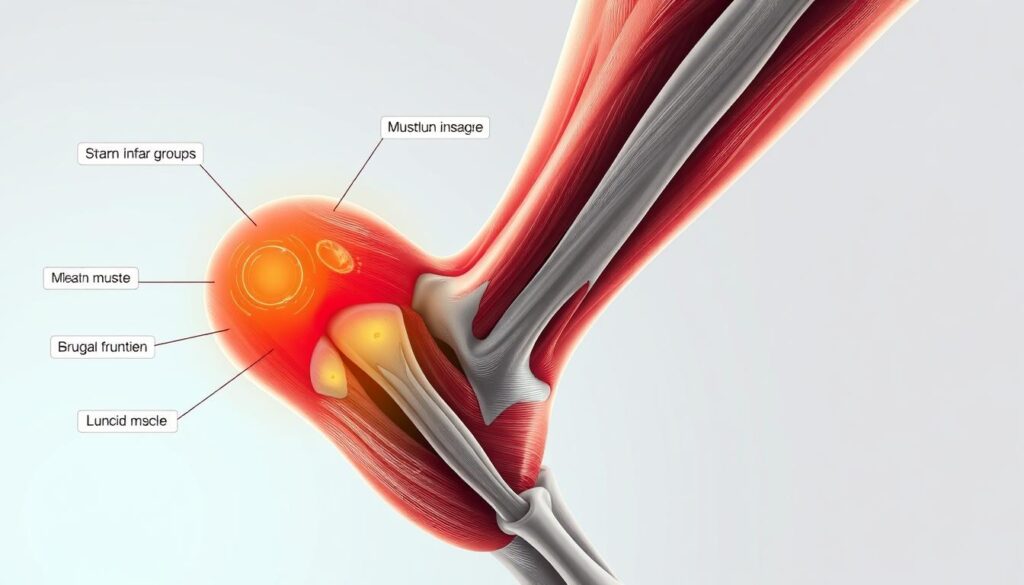
Muscle strains are common injuries affecting athletes and active people. These injuries happen when muscle fibers stretch or tear beyond their normal capacity1. Knowing about muscle strains can help prevent and manage these painful injuries2.
Muscles that cross two joints are often affected by strains. This includes hamstrings, calves, and quadriceps. Athletes face higher risks during explosive movements like sprinting1.
Age, previous injuries, and reduced flexibility increase the risk of muscle strains. Muscle fatigue also plays a role in making you more susceptible1.
The NFL recognizes muscle strains as a major issue. These injuries are the top reason for missed playing time1. Understanding how strains occur can help protect you during physical activities2.
Key Takeaways
- Muscle strains can affect athletes of all skill levels
- Explosive movements increase muscle strain risk
- Proper conditioning helps prevent muscle injuries
- Age and previous injuries impact muscle strain susceptibility
- Early recognition and treatment are crucial for recovery
What Are Muscle Strains?
Muscle strains are painful injuries that can affect anyone. They can impact your physical performance and daily activities3. Knowing about muscle strains helps prevent and manage these common exercise-related injuries.
A muscle strain happens when muscle fibers stretch too far and tear. These injuries often occur during sudden movements in various physical activities3.
Definition and Overview
Muscle strains, or pulled muscles, are common sports injuries. They often affect the lower back and hamstring muscles4.
- Unexpected muscle fiber damage
- Potential impact on physical performance
- Varying levels of severity
Common Symptoms
Knowing muscle strain symptoms is key for proper treatment. Common signs include:
- Sudden pain during physical activity
- Swelling in the affected muscle
- Reduced muscle strength
- Limited range of motion
Grading Muscle Strains
Doctors classify muscle strains into three grades based on severity:
| Grade | Description | Muscle Damage |
|---|---|---|
| Grade 1 | Mild stretching | Minimal damage |
| Grade 2 | Moderate strain | Partial muscle tear |
| Grade 3 | Severe strain | Complete muscle rupture |
Some severe muscle strains may need surgery4. Sports like soccer, football, and hockey increase the risk of these painful injuries4.
Prevention is always better than cure when it comes to muscle strains.
Causes of Muscle Strains
Knowing why muscle strains happen can help you avoid these painful injuries. Muscle strains are complex and can affect your athletic performance. They result from various factors impacting your body’s muscles5.
Athletes and active people are more likely to get muscle strains. These injuries can happen during many physical activities6. Certain key factors increase the risk.
Overexertion and Fatigue
Pushing your muscles too hard can lead to strain. Muscle fatigue makes your muscles less responsive and more likely to get hurt5.
Muscle Rehabilitation strategies are important for managing these risks.
- Recognize early signs of muscle exhaustion
- Implement adequate rest periods during intense activities
- Monitor your body’s response to physical stress
Poor Conditioning
Not being physically prepared can increase your chances of getting a muscle strain6. Weak or stiff muscles are more likely to get hurt.
This is especially true during sudden movements or intense activities.
“Prevention is always better than cure in muscle health” – Sports Medicine Expert
Inadequate Warm-Up
Skipping Stretching Exercises before physical activity can leave your muscles unprepared. This makes them more likely to get strained5.
A good warm-up helps make your muscles more flexible. It reduces injury risk through targeted muscle preparation.
- Dynamic stretching
- Gradual intensity increase
- Sport-specific movement patterns
Learning about these causes can help you protect yourself from muscle strains. You can develop strategies to maintain your best physical performance6.
Treatment and Recovery Tips
Muscle strain recovery needs a smart plan. Quick action can speed up healing and stop more injuries. The R.I.C.E. method is key for managing strains.
Ice the area for 15-20 minutes every few hours. This helps reduce swelling and pain. Drink plenty of water and eat fruits and veggies to support recovery.
Physical therapy can be vital for regaining strength. It offers custom programs for your specific needs. Be careful with pain meds in the first 48 hours.
About 70% of strain pain can be managed with exercises or supportive gear. If pain lasts more than a few days, see a doctor. This can prevent long-term issues789.
FAQ
What exactly is a muscle strain?
A muscle strain happens when muscle fibers stretch too far and tear. It often occurs during intense movements or when muscles are overworked. Strains commonly affect muscles crossing two joints, like hamstrings, quadriceps, and calf muscles.
How do I know if I have a muscle strain?
Muscle strain symptoms include sudden pain, swelling, and bruising. You may also experience loss of muscle strength and limited range of motion. A sharp pain during activity is common, followed by ongoing discomfort.
What are the different grades of muscle strains?
Muscle strains are classified into three grades:
• Grade 1: Mild stretching with minimal damage
• Grade 2: More extensive damage with partial muscle fiber tear
• Grade 3: Complete rupture of the muscle or tendon
The severity determines the treatment approach and recovery time.
What causes muscle strains?
Muscle strains often result from overexertion during physical activity. Sudden increases in exercise intensity and fatigue can also lead to strains. Poor muscle conditioning and lack of flexibility are common factors.
Inadequate warm-up and starting a new sport can increase the risk. Dramatically increasing exercise load may also cause muscle strains.
How should I treat a muscle strain immediately?
Follow the R.I.C.E. protocol:
• Rest: Stop the activity and avoid putting weight on the injured muscle
• Ice: Apply cold compress to reduce swelling
• Compression: Use an elastic bandage to minimize swelling
• Elevation: Keep the injured area raised above heart level
How long does it take to recover from a muscle strain?
Recovery time varies depending on the strain’s severity. Grade 1 strains may heal in a few days to 2-3 weeks. Grade 2 strains can take several weeks to heal.
Grade 3 strains might require several months and possibly surgical intervention. Proper rest, rehabilitation, and following medical advice are crucial for recovery.
When should I see a doctor for a muscle strain?
Seek medical help if symptoms worsen over time or if you have severe, intolerable pain. Numbness, tingling, or complete loss of muscle function are also reasons to see a doctor.
If there’s no improvement after home treatment or you suspect a complete muscle rupture, consult a professional.
How can I prevent muscle strains?
Prevent muscle strains by warming up properly before exercise. Maintain good overall fitness and gradually increase exercise intensity. Stay hydrated and practice regular stretching.
Use proper technique during physical activities. Get enough rest between workouts to allow your muscles to recover.
Source Links
- Muscle Strain: What You Need to Know About Pulled Muscles – https://www.hss.edu/conditions_muscle-strain.asp
- The Sports Medicine Guide to Muscle Strains: Causes, Treatment, and Complications – ROC PDX – https://rocpdx.com/sports-medicine-guide-to-muscle-strains/
- Muscle Strains: Causes, Symptoms, Treatment & FAQs – https://my.clevelandclinic.org/health/diseases/22336-muscle-strains
- Muscle strains – Symptoms and causes – https://www.mayoclinic.org/diseases-conditions/muscle-strains/symptoms-causes/syc-20450507
- Muscle strain injury: diagnosis and treatment – PubMed – https://pubmed.ncbi.nlm.nih.gov/10434080/
- Muscle strain: Symptoms, diagnosis, treatment, and recovery – https://www.medicalnewstoday.com/articles/324642
- Muscle strains – Diagnosis and treatment – https://www.mayoclinic.org/diseases-conditions/muscle-strains/diagnosis-treatment/drc-20450520
- 10 Muscle Strain Recovery Tips to Speed Up Healing | SOL PT – https://solpt.com/10-tips-to-make-your-muscle-strain-recovery-move-faster/
- The Best Way to Treat Muscle Strains | Princeton Orthopaedics – https://www.princetonorthopaedic.com/treating-muscle-strains/

