
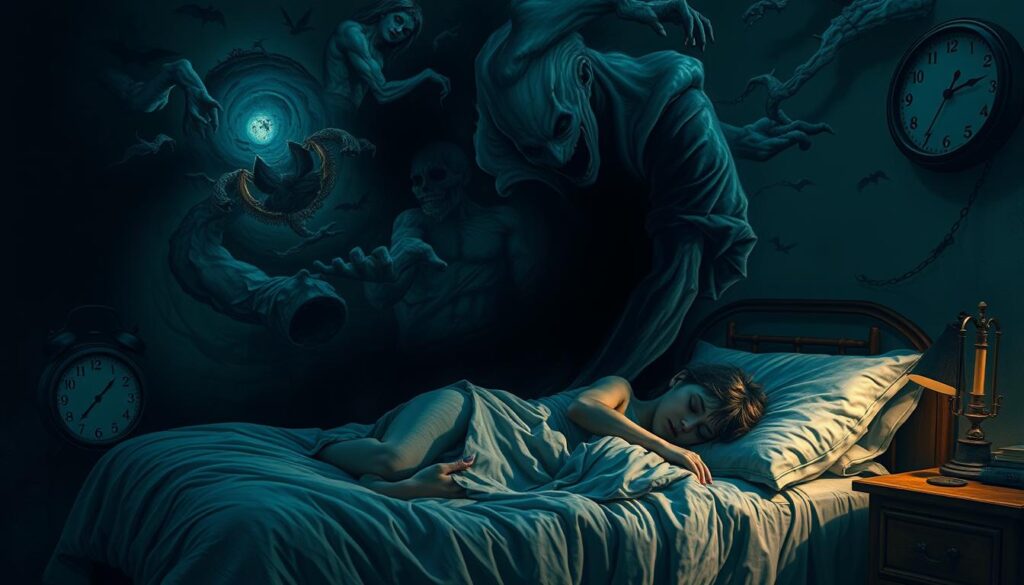
Nightmares aren’t just scary dreams. They can be a serious sleep disorder affecting daily life. About 85% of adults have at least one nightmare yearly. Some face recurring vivid dreams that disrupt their sleep1.
Nightmare disorder impacts 2% to 5% of U.S. adults1. It’s more than occasional bad dreams. These intense experiences can trigger emotional and psychological challenges.
Nightmare disorder often links with PTSD, depression, and anxiety1. Night terrors and recurring nightmares can create sleep anxiety. This prevents you from getting needed rest.
Understanding this disorder is key to managing its impact. Recognizing symptoms and seeking treatment can help. You can regain control over your sleep and overall well-being.
Key Takeaways
- Nightmare disorder affects 2-5% of adults in the United States
- 85% of adults experience at least one nightmare per year
- The disorder can be linked to underlying mental health conditions
- Vivid dreams can significantly disrupt sleep quality
- Professional treatment options are available to manage symptoms
What is Nightmare Disorder: Symptoms and Characteristics
Nightmare disorder is more than just bad dreams. It involves recurring nightmares that disrupt sleep and daily life. These dreams cause intense distress and can affect mental health.
The disorder affects 2% to 6% of adults. Women aged 20-39 are more likely to experience it. Nightmares reveal our deep psychological experiences.
“Nightmares are more than just bad dreams—they’re a window into our deepest psychological experiences.”
Key characteristics of nightmare disorder include:
- Frequent, vivid dreams causing significant emotional distress
- REM sleep disturbances that interrupt normal sleep patterns
- Intense dream recall with realistic threat scenarios
- Experiencing sleep anxiety upon waking
Nightmare disorder affects more than just sleep. It can cause daytime fatigue and concentration problems. It may also increase stress and impact work or school performance.
- Daytime fatigue
- Concentration difficulties
- Increased stress levels
- Potential work or school performance issues
Nightmare frequency changes with age. About 20% of college students have regular nightmares. This drops to 4% in older adults. By age 60, occurrence is similar across genders2.
Recognizing these symptoms is important for addressing nightmare disorder. If distressing dreams affect your life, consult a sleep specialist. They can provide targeted support and treatment strategies.
Common Causes and Risk Factors of Nightmares
Nightmares can greatly affect your mental and physical health. They’re complex sleep experiences with various triggers and risk factors. Learning about these can help you manage and reduce nightmares.
Medical and Psychological Triggers
Psychological conditions play a key role in causing nightmares. Stress, anxiety, and sleep fears can increase disturbing dreams. People with PTSD often face recurring nightmares3.
- Mental health disorders like depression
- Certain medications affecting brain chemistry
- Sleep disorders such as parasomnia
- Neurological conditions disrupting sleep patterns
“Nightmares are not just bad dreams, they’re signals from our subconscious mind about underlying psychological distress.”
Lifestyle and Environmental Factors
Your daily habits and surroundings impact dream recall and nightmare frequency. Irregular sleep, substance misuse, and alcohol can trigger intense nightmares4.
About 85% of adults have nightmares at least once a year. Around 2-6% report weekly nightmares3. Several factors can raise your nightmare risk.
- Exposure to frightening media content
- High-stress life changes
- Family history of lucid dreaming or sleep disorders
- Irregular sleep patterns
Knowing these triggers can help you reduce nightmares. You can develop strategies to improve your overall sleep quality. This knowledge empowers you to take control of your sleep experiences.
Treatment Options and Management Strategies
Nightmare disorder treatment involves a mix of psychological and physiological approaches. Your plan may include several methods to reduce night terrors and vivid dreams5.
Cognitive-behavioral therapies are key in managing nightmare disorder. Image Rehearsal Therapy (IRT) is highly recommended. It helps you reimagine and rewrite scary scenarios that disrupt your sleep5.
- Cognitive-Behavioral Techniques
- Medication Management
- Sleep Hygiene Improvements
For sleep paralysis or PTSD-related nightmares, prazosin can be very effective5. Your doctor might suggest other meds too.
These could include trazodone, atypical antipsychotics, and other targeted medications5.
| Treatment Category | Recommended Interventions |
|---|---|
| Behavioral Therapies | Image Rehearsal Therapy, Exposure Therapy |
| Medication Options | Prazosin, Trazodone, Atypical Antipsychotics |
| Supplementary Strategies | Stress Management, Sleep Hygiene |
Effective treatment is not just about managing symptoms, but understanding and addressing the root causes of your nightmares.
Lifestyle changes can greatly improve your sleep quality. Set a regular sleep schedule and manage stress with relaxation techniques.
Tackle any underlying mental health issues. These steps can help reduce night terrors and boost overall sleep health6.
Everyone’s experience with nightmare disorder is different. Work closely with your doctors to create a plan that fits your needs.
This approach offers the best chance for restful sleep5.
Conclusion
Nightmare disorder is a complex sleep issue that affects mental health. It impacts 2% to 8.3% of adults and up to 11.3% of children78. Understanding REM sleep disturbances is key to managing this condition.
Persistent nightmares can cause mental distress and reduced cognitive function. They may also link to other mental health issues7. Professional help can offer strategies to improve sleep patterns.
Managing nightmare disorder requires a holistic approach. This includes addressing both mental and physical aspects. Seeking expert advice is crucial for effective treatment.
Stress-reduction techniques can help in dealing with nightmares. Maintaining a regular sleep schedule is also important. Remember, you’re not alone in facing these challenges.
Many people experience similar sleep issues. Effective treatments are available to help you achieve peaceful sleep. With the right approach, you can overcome nightmare disorder and rest better.
FAQ
What is Nightmare Disorder?
Nightmare Disorder is a sleep parasomnia causing frequent, distressing nightmares. These nightmares disrupt sleep and daily functioning significantly. They affect about 2-5% of adults in the United States.
How are Nightmare Disorder nightmares different from regular bad dreams?
Nightmare Disorder involves recurring, vivid dreams during REM sleep. They wake you up with intense fear, anxiety, and physical symptoms. These nightmares are more frequent and disturbing than occasional bad dreams.
They significantly impact sleep quality and daytime performance. Symptoms include sweating and a pounding heartbeat.
What are the primary triggers for Nightmare Disorder?
Psychological factors like stress, anxiety, PTSD, and depression can trigger Nightmare Disorder. Medical conditions and medications may also contribute. Lifestyle factors such as irregular sleep and substance misuse can play a role.
Can medications cause Nightmares?
Yes, certain medications can trigger or increase nightmare frequency. These include antidepressants, blood pressure medications, and Parkinson’s disease drugs. Consult your doctor if you suspect your medication is causing nightmares.
How is Nightmare Disorder diagnosed?
Diagnosis involves a comprehensive medical and psychological evaluation. This includes a detailed sleep history and assessment of mental health conditions. Your doctor will examine the frequency and impact of your nightmares.
What treatment options are available for Nightmare Disorder?
Treatment may include Cognitive-Behavioral Therapy, specifically Image Rehearsal Therapy. This helps you reimagine and rewrite nightmare endings. Medications like prazosin might be prescribed for PTSD-related nightmares.
Improving sleep hygiene and managing stress are crucial strategies. Addressing underlying mental health issues is also important.
Can Nightmare Disorder be prevented?
Nightmare Disorder isn’t always preventable, but you can reduce your risk. Maintain a consistent sleep schedule and manage stress through relaxation techniques. Avoid scary media before bedtime and address any mental health concerns.
When should I seek professional help?
Consult a healthcare professional if your nightmares are frequent and severely disruptive. Seek help if they cause significant daytime distress or interfere with daily life. Persistent nightmares could indicate an underlying condition requiring professional intervention.
Source Links
- Nightmare Disorder – https://www.sleepfoundation.org/nightmares/nightmare-disorder
- What to Know About Nightmare Disorder – https://www.verywellmind.com/nightmare-disorder-definition-symptoms-causes-treatment-5220095
- Nightmares and nightmare disorder in adults – https://www.uptodate.com/contents/nightmares-and-nightmare-disorder-in-adults/print
- Nightmare disorder – Symptoms and causes – https://www.mayoclinic.org/diseases-conditions/nightmare-disorder/symptoms-causes/syc-20353515
- Best Practice Guide for the Treatment of Nightmare Disorder in Adults – https://pmc.ncbi.nlm.nih.gov/articles/PMC2919672/
- Overcoming Nightmare Disorder: Symptoms, Causes, and Effective Treatments – https://assuredhopehealth.com/glossary/overcoming-nightmare-disorder-symptoms-causes-and-effective-treatments/
- Aetiology and treatment of nightmare disorder: State of the art and future perspectives – https://pmc.ncbi.nlm.nih.gov/articles/PMC6850667/
- Nightmares in adults: Symptoms, causes, and innovative, science-backed therapies – https://www.apa.org/monitor/2024/10/science-of-nightmares

