
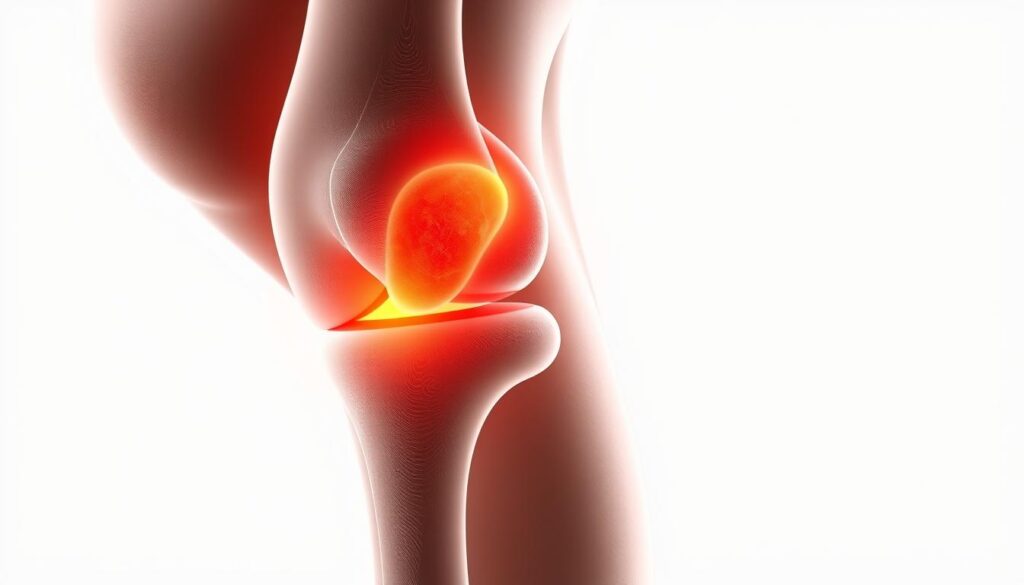
Osteoarthritis is a tough joint condition affecting millions worldwide1. It occurs when protective cartilage breaks down, causing joint pain. This disease often targets joints in hands, knees, hips, and spine12.
Your risk of osteoarthritis goes up as you age. It develops slowly, causing stiffness and less flexibility1. Learning about cartilage breakdown can help you manage symptoms better.
Many middle-aged and older adults deal with this chronic condition2. You can’t fully prevent osteoarthritis. But spotting early signs and using good management strategies can boost your life quality.
Key Takeaways
- Osteoarthritis affects millions globally
- Joint pain can occur in hands, knees, hips, and spine
- Symptoms develop slowly over time
- Age is a significant risk factor
- Management strategies can improve daily functioning
What is Osteoarthritis and Why Does it Happen?
Osteoarthritis is a chronic joint disease affecting millions worldwide. It can impact your joint health significantly. Knowing about this condition helps spot early warning signs3.
Definition and Overview
Osteoarthritis causes cartilage breakdown and joint stiffness. It mostly affects older adults, with women at higher risk4.
The condition occurs when protective cartilage wears down. This leads to bone-on-bone friction in your joints5.
Common Symptoms
- Joint pain during movement
- Reduced joint flexibility
- Swelling and tenderness
- Grating sensation when joints move
- Development of bone spurs
Risk Factors
Several key factors contribute to this chronic joint disease:
| Risk Factor | Impact |
|---|---|
| Age | Over 70% of individuals are 55 or older3 |
| Gender | Women more susceptible5 |
| Weight | Excess weight increases joint stress5 |
| Genetics | Family history increases risk5 |
Knowing these risk factors can help protect your joints. It may also slow down osteoarthritis progression4.
“Knowledge is the first step in managing any chronic condition” – Health Expert
You can’t control factors like age and genetics. However, lifestyle changes can greatly impact your joint health3.
Exploring the Causes of Osteoarthritis
Osteoarthritis is a complex condition with multiple factors causing joint deterioration. Knowing these causes can help manage and prevent this common joint disorder6.
Age and Joint Wear
Joints naturally wear down as you age. Osteoarthritis is common in people over 50, with cartilage breaking down over time5.
Weight-bearing joints like knees and hips face more stress. This ongoing pressure speeds up the wear and tear process7.
Genetics and Family History
Your genes play a key role in joint health. Hereditary factors can raise your chances of getting osteoarthritis6.
If joint problems run in your family, you might be more likely to develop this condition.
Lifestyle and Environmental Factors
Several lifestyle choices can increase your risk of joint injuries and osteoarthritis:
- Obesity puts extra stress on joints7
- Repetitive movements in certain occupations
- Previous joint injuries
- Lack of regular exercise
“Every pound of weight lost removes four pounds of pressure from lower-body joints”5.
By managing these risk factors, you can lower your chances of severe joint damage7.
Treatment Options for Managing Osteoarthritis
Osteoarthritis management requires a tailored approach based on your needs. Your doctor can help create a plan to ease pain and improve joint function. This strategy aims to boost your quality of life8.
Pain Management and Medications
Anti-inflammatory treatments are key in managing osteoarthritis symptoms. Your doctor may suggest various pain relief options.
- Over-the-counter pain medications
- Prescription NSAIDs
- Topical pain relief creams
- Corticosteroid injections for severe pain8
Physical Therapy and Exercise Strategies
Physical therapy is vital for maintaining joint flexibility and muscle strength. Regular exercise can greatly improve your symptoms, no matter your age or fitness level8.
| Exercise Type | Benefits |
|---|---|
| Low-impact aerobics | Improves cardiovascular health |
| Strength training | Supports joint stability |
| Stretching | Increases flexibility |
Surgical Interventions
Joint replacement may be needed if other treatments fail. Surgery can provide significant relief and improve mobility9.
Hip and knee replacements are common procedures for advanced osteoarthritis9.
Weight management is crucial – every pound lost reduces four pounds of pressure on weight-bearing joints9.
Your osteoarthritis journey is unique. Talk to your doctor about the best ways to manage your symptoms.
Explore effective treatment options for managing your symptoms with your healthcare professional.
Living Well with Osteoarthritis
Osteoarthritis management requires a holistic approach to lifestyle changes. Weight control is key to easing joint stress and boosting mobility10. Shedding just 10% of your weight can greatly reduce knee strain and pain10.
Enhance your daily routine with adaptive equipment for joint health. Use canes, walkers, or reaching tools to maintain independence and lessen joint stress11.
Gentle exercises like Tai Chi and Yoga can improve function and promote relaxation10. A balanced diet helps manage weight, boosts energy, and supports your immune system10.
Before trying supplements, talk to your doctor to ensure they fit your treatment plan12. Online forums and helplines offer guidance and community for those dealing with osteoarthritis12.
FAQ
What exactly is osteoarthritis?
Osteoarthritis is the most common type of arthritis. It’s a chronic joint disease that happens when cartilage wears down over time. This causes pain, stiffness, and less joint movement.
It often affects hands, knees, hips, and spine. While the damage can’t be reversed, treatments can help manage symptoms.
Who is most at risk for developing osteoarthritis?
The risk of osteoarthritis goes up with age. Women are more likely to get it than men. Other risk factors include obesity and past joint injuries.
Repeated joint stress and genetic factors play a role too. Bone deformities and diseases like diabetes can also increase the risk.
What are the primary symptoms of osteoarthritis?
Osteoarthritis symptoms develop slowly. They include joint pain, stiffness, and tenderness. You might also lose flexibility and hear grating sounds when moving.
Swelling around joints and less range of motion can occur. Symptoms may come and go, often getting worse with activity or after rest.
How can I manage osteoarthritis pain?
Managing osteoarthritis involves several approaches. Medications like pain relievers and anti-inflammatory drugs can help. Physical therapy improves flexibility, while regular exercise strengthens muscles.
Keeping a healthy weight is crucial. Heat treatments can ease pain. In severe cases, doctors might suggest injections or surgery.
Can lifestyle changes really help with osteoarthritis?
Yes! Lifestyle changes can greatly impact osteoarthritis management. Maintaining a healthy weight reduces stress on joints. Eating anti-inflammatory foods can also help.
Use assistive devices to reduce joint strain. Alternate between activity and rest. Adaptive equipment can make daily tasks easier.
Is osteoarthritis preventable?
You can’t completely prevent osteoarthritis, but you can lower your risk. Keep a healthy weight and do regular low-impact exercise. Protect your joints from injury.
Avoid repetitive stress movements. Strength training supports muscles. Good posture and managing health conditions can also help minimize risk.
When should I see a doctor about joint pain?
See a doctor if you have ongoing joint pain or stiffness lasting weeks. Get help if swelling or limited movement affects daily activities.
Early diagnosis and treatment can manage symptoms better. Regular check-ups help monitor your condition and adjust treatment as needed.
Source Links
- Osteoarthritis-Osteoarthritis – Symptoms & causes – Mayo Clinic – https://www.mayoclinic.org/diseases-conditions/osteoarthritis/symptoms-causes/syc-20351925
- Osteoarthritis – https://www.hopkinsmedicine.org/health/conditions-and-diseases/arthritis/osteoarthritis
- Osteoarthritis – https://www.who.int/news-room/fact-sheets/detail/osteoarthritis
- No title found – https://www.urmc.rochester.edu/encyclopedia/content?contenttypeid=85&contentid=p00061
- No title found – https://www.arthritis.org/diseases/osteoarthritis
- What is Osteoarthritis? – Osteoarthritis Action Alliance – https://oaaction.unc.edu/what-is-osteoarthritis/
- What You Need to Know About Osteoarthritis (OA) – https://www.healthline.com/health/osteoarthritis
- Osteoarthritis – Treatment and support – https://www.nhs.uk/conditions/osteoarthritis/treatment/
- No title found – https://www.arthritis.org/health-wellness/treatment/treatment-plan/disease-management/treatments-for-osteoarthritis
- Osteoarthritis Self-Management – Exercise, Diet, Pain management – https://arthritis.ca/about-arthritis/arthritis-types-(a-z)/types/osteoarthritis/osteoarthritis-self-management
- Living Well With Osteoarthritis | Montefiore Nyack – https://www.montefiorenyack.org/health-blog/living-well-osteoarthritis
- Osteoarthritis – Living with – https://www.nhs.uk/conditions/osteoarthritis/living-with/

