
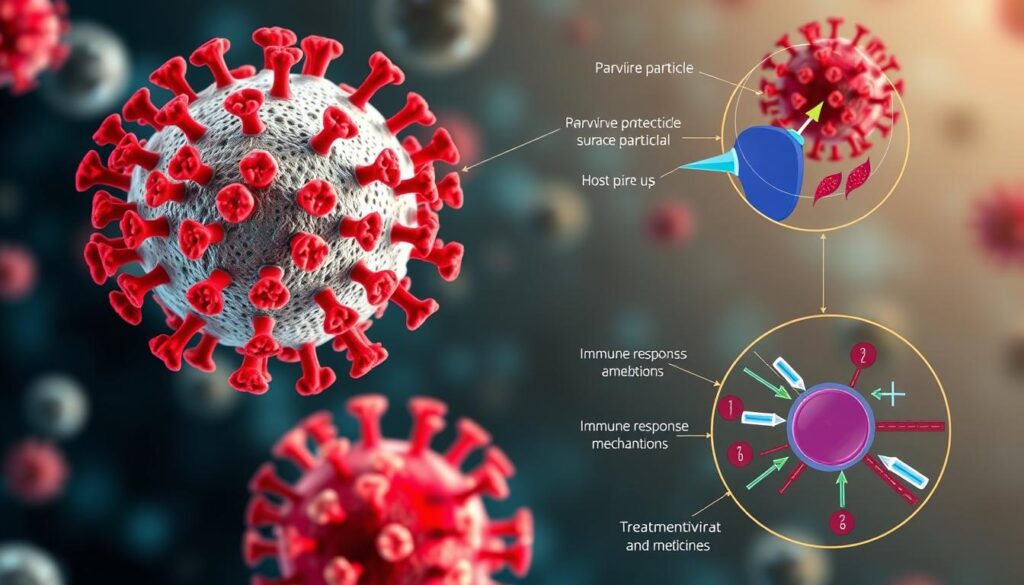
Parvovirus is a complex viral condition affecting humans and animals. It’s highly contagious and spreads quickly, especially among children and puppies1. The virus can have serious consequences for those infected.
Human parvovirus B19 usually causes fifth disease, a childhood illness. Most people only get this virus once in their life1. For dogs, canine parvovirus is a major health risk, particularly for young and unvaccinated animals2.
The virus can lead to various health issues. In people with certain blood disorders, it may cause an aplastic crisis. This can result in severe anemia by stopping red blood cell production1.
Symptoms of parvovirus can include weakness, tiredness, pale skin, and a fast heartbeat1. The severity of these symptoms can vary widely among those infected.
Key Takeaways
- Parvovirus is a highly contagious viral infection affecting humans and dogs
- Most people experience the virus only once in their lifetime
- Potential complications vary from mild symptoms to serious medical conditions
- Vaccination is critical for preventing dog virus transmission
- Early detection and proper medical care can significantly improve outcomes
What is Parvovirus Infection and Its Common Signs
Parvovirus is a complex viral infection affecting humans and animals. It presents unique challenges across different populations. Recognizing its symptoms can help you respond quickly to potential infections.
Parvovirus infections show up differently depending on the host. In humans, the virus spreads through respiratory droplets. It can cause various symptoms3:
- Fever
- Headache
- Respiratory complications
- Distinctive skin rashes
Early Warning Signs and Symptoms
Children often get a bright red facial rash, called “slapped cheek” syndrome4. This rash can spread to the chest, back, and limbs. It may become itchy4.
Adults might have joint pain in their hands, feet, and knees. These symptoms can last from 1 to 3 weeks4.
Infection Progression in Different Populations
Parvovirus affects humans and dogs differently. Human infections often go away on their own. However, canine parvovirus can be much more dangerous5.
In dogs, parvo symptoms include:
- Vomiting in dogs
- Diarrhea in dogs
- Lethargy
- Severe dehydration
Puppies between 6 and 20 weeks are very vulnerable to parvovirus. Some breeds like Rottweilers and German shepherds are more likely to get it5.
“Early recognition of parvo symptoms can be critical for successful treatment and recovery.” – Veterinary Experts
Risk Factors and Complications
Some groups are at higher risk from parvovirus. Pregnant women, people with weak immune systems, and those with blood disorders should be extra careful34.
| Population | Parvovirus Risk Level |
|---|---|
| Children | High (most common transmission) |
| Pregnant Women | Critical (potential fetal complications) |
| Immunocompromised Adults | Severe |
| Puppies | Extremely High |
Understanding these differences helps in detecting and treating parvovirus early.
Transmission and Risk Factors of Parvovirus Infection
Parvovirus is a highly contagious dog virus that spreads through various ways. Knowing how it transmits is key for protecting puppies and at-risk dogs. Effective prevention starts with understanding these transmission routes.
The main ways dog Virus spreads include:
- Direct contact with infected dogs
- Exposure to contaminated feces
- Contact with virus-laden surfaces
- Indirect transmission through clothing or shoes
Puppies are most at risk for this Puppy Illness. Dogs aged 6-20 weeks face the highest danger, especially without vaccines6. Some breeds, like Rottweilers and German Shepherds, are more likely to get severe infections.
“Prevention is always better than cure when it comes to protecting your furry friend from parvovirus.” – Veterinary Infectious Disease Specialist
The environment plays a big role in how long the virus survives. Parvovirus can live on surfaces for a long time. Thorough cleaning with bleach-based products is crucial to kill the virus7.
Factors that increase the chance of infection include:
- Unvaccinated status
- Weak immune systems
- Crowded living conditions
- Poor sanitation
To protect your dog, get regular vaccines and keep their surroundings clean. Limit contact with potentially sick animals. Regular vet visits help spot and reduce risks early on.
Treatment Options and Medical Interventions
Understanding the right treatment for parvovirus is crucial for your dog’s recovery. Early intervention and comprehensive care significantly improve survival chances. Proper care can make all the difference in your pet’s battle against parvo.
Parvo treatment requires a tailored medical strategy for each dog. With basic treatment principles, the survival rate can reach 75-80%. This multi-faceted approach addresses various aspects of the infection.
Immediate Medical Care Requirements
Immediate veterinary intervention is critical for dogs with parvovirus. Key medical approaches include:
- Fluid therapy to combat dehydration
- Medication to control nausea and vomiting
- Antibiotics to prevent secondary infections
- Nutritional support and monitoring
Supportive Treatment Methods
Your veterinarian might recommend several supportive treatments for parvo, which can include:
- Plasma transfusions to provide antibodies8
- Electrolyte and glucose level monitoring
- White blood cell count tracking
- Potential use of Neupogen for white blood cell stimulation
Managing Complications in Special Cases
Some dogs may require advanced interventions. Specialized treatments can include monitoring for potential surgical needs. These may involve intussusception and targeted medication protocols8.
Early detection and aggressive treatment are key to improving survival rates.
| Treatment Aspect | Details |
|---|---|
| Survival Rate | 75-80% with proper treatment8 |
| Potassium Supplementation | Required in 60% of cases8 |
| Glucose Supplementation | Needed in 75% of treatments8 |
Prevention through the Parvo Vaccine is always the most effective strategy. Consult your veterinarian about proper vaccination and care for your dog9. Regular check-ups can help ensure your pet’s ongoing health and well-being.
Conclusion
Parvovirus infection is a complex medical issue requiring careful management. Your knowledge can greatly impact prevention and treatment strategies. The virus’s effects range from mild symptoms to serious complications1011.
Preventing parvo starts with understanding the virus. For pregnant women, the risks are unique. About 40% are vulnerable to parvovirus B1911.
Vaccines and good hygiene can significantly lower transmission risks. It’s vital to understand how parvo affects those with weak immune systems10.
Your doctor can offer personalized advice on handling potential exposure. Early detection and proper medical care are crucial. Stay informed to protect yourself and others from parvovirus infection.
Remember, knowledge is your best defense against this viral threat1011.
FAQ
What is Parvovirus and How Does it Affect Dogs?
Parvovirus is a highly contagious disease that attacks dogs’ digestive systems. It causes severe symptoms like bloody diarrhea, vomiting, and dangerous dehydration. Unvaccinated puppies aged 6-20 weeks are most at risk.
How is Parvovirus Transmitted in Dogs?
The virus spreads through contact with infected dogs or contaminated surfaces. It’s tough and can survive for long periods in the environment. Unvaccinated dogs have the highest risk of catching and spreading it.
What Are the Most Common Symptoms of Parvovirus in Dogs?
Key symptoms include severe tiredness, loss of appetite, and constant vomiting. Bloody diarrhea, stomach pain, and fever are also common signs. These symptoms can worsen quickly, leading to serious health issues within days.
How Can I Prevent Parvovirus in My Puppy?
Vaccination is the best way to prevent parvovirus. Start your puppy’s shots at 6-8 weeks old. Keep your pup away from unknown dogs and potentially dirty areas.
Practice good hygiene until your puppy is fully vaccinated. This helps protect them from the virus.
What is the Treatment for Parvovirus in Dogs?
Treatment usually involves intensive vet care with IV fluids and various medications. Vets use antibiotics to prevent other infections and provide nutritional support. Quick action is key to improving survival chances.
Are Some Dog Breeds More Susceptible to Parvovirus?
Yes, breeds like Rottweilers and German Shepherds face higher risks from parvovirus. They may suffer worse infections and need extra careful prevention strategies. Special attention to vaccination is crucial for these breeds.
Can Humans Catch Parvovirus from Dogs?
No, dog parvovirus can’t infect humans. Humans have their own type called B19. It causes different symptoms and spreads differently from the canine version.
How Long Does Parvovirus Recovery Take?
Recovery time depends on how bad the infection is and how fast treatment starts. With quick, strong vet care, puppies might start getting better in 5-7 days.
Full recovery can take several weeks. Some dogs might have long-lasting health effects from the infection.
Source Links
- Parvovirus B19 Infection – https://together.stjude.org/en-us/conditions/infectious-diseases/parvovirus-infection.html
- Parvo in Dogs: What To Know About Canine Parvovirus – https://www.petmd.com/dog/conditions/infectious-parasitic/parvo-in-dogs
- Parvovirus infection: Common illness produces distinctive rash in kids-Parvovirus infection – Symptoms & causes – Mayo Clinic – https://www.mayoclinic.org/diseases-conditions/parvovirus-infection/symptoms-causes/syc-20376085
- About Parvovirus B19 – https://www.cdc.gov/parvovirus-b19/about/index.html
- Canine parvovirus – https://www.avma.org/resources-tools/pet-owners/petcare/canine-parvovirus
- Parvovirus B19 infection transmitted by transfusion of red blood cells confirmed by molecular analysis of linked donor and recipient samples – https://pmc.ncbi.nlm.nih.gov/articles/PMC5547753/
- Current Trends Risks Associated with Human Parvovirus B19 Infection – https://www.cdc.gov/mmwr/preview/mmwrhtml/00001348.htm
- Parvovirus Infection: Physical Illness and Treatment – https://veterinarypartner.vin.com/doc/?id=4951460
- Parvovirus in Dogs | VCA Canada Animal Hospitals – https://vcahospitals.com/know-your-pet/parvovirus-in-dogs
- Parvovirus B19 Infection: Practice Essentials, Background, Pathophysiology – https://emedicine.medscape.com/article/961063-overview
- Department of Health and Aged Care – https://www1.health.gov.au/internet/main/publishing.nsf/Content/cda-pubs-cdi-2000-cdi2403s-cdi24msa.htm

