
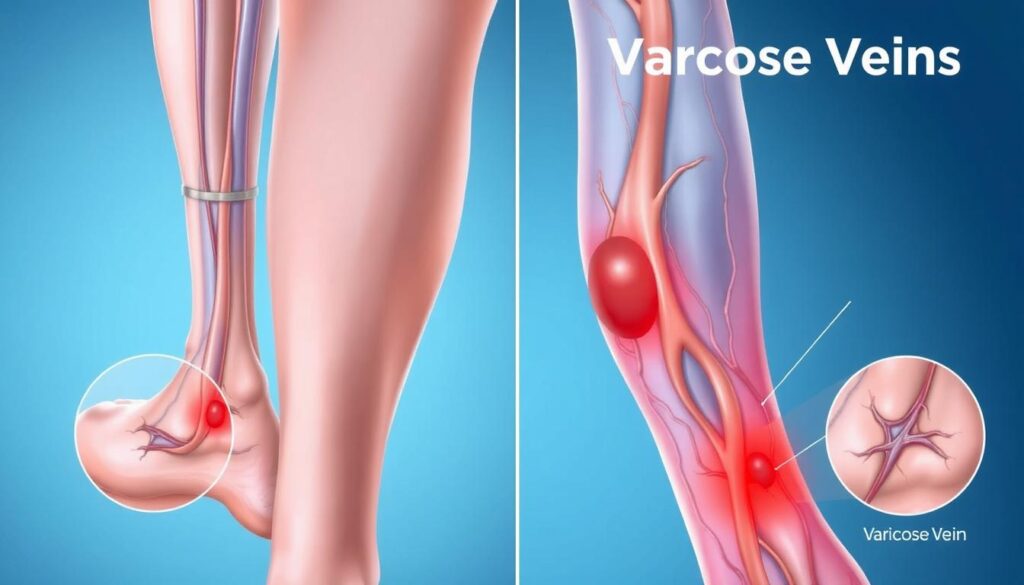
Varicose veins are more than just a cosmetic issue. These swollen, bulging veins can affect your overall health. They often show up in your legs as blue and purple twisted networks under the skin1.
Understanding the causes and treatments is key to managing venous disease. Varicose veins happen when vein walls weaken and valves stop working properly. This causes blood to pool and create noticeable swellings2.
Chronic venous insufficiency can cause discomfort and health problems if not treated. Your risk goes up with age, pregnancy, and certain lifestyle choices312.
Key Takeaways
- Varicose veins are common and can affect both men and women
- Multiple factors contribute to vein health deterioration
- Early recognition and management are crucial
- Lifestyle changes can help prevent and manage symptoms
- Professional medical consultation is recommended for persistent issues
Understanding Varicose Veins and Their Causes
Varicose veins affect millions worldwide. These twisted, enlarged veins can be managed effectively with proper understanding. Learn how to take care of your vein health4.
What Are Varicose Veins?
Varicose veins are enlarged, twisted blood vessels near the skin’s surface. They appear as blue or purple rope-like cords bulging from the skin. These veins often cause leg swelling and discomfort5.
Common Risk Factors
- Genetics play a significant role in vascular treatment potential4
- Women are at higher risk of developing spider veins4
- Pregnancy increases varicose vein likelihood4
- Age contributes to valve weakening5
How Lifestyle Choices Impact Your Veins
Your daily habits greatly affect vein health. Obesity, lack of exercise, and prolonged sitting increase varicose vein risk4.
| Risk Factor | Impact on Veins |
|---|---|
| Obesity | Increases pressure on veins |
| Sedentary Lifestyle | Reduces blood circulation |
| Prolonged Standing | Increases vein pressure |
Prevention is always better than cure when it comes to your vascular health.
Maintain a healthy weight and exercise regularly. Avoid sitting for long periods to prevent spider veins and reduce leg swelling6.
Recognizing Symptoms of Varicose Veins
Varicose veins are more than just a cosmetic issue. They can signal underlying health problems. Knowing the signs helps you take action for better vein health7.
Common Signs to Look Out For
Varicose veins have several key indicators. Look for these signs on your legs:
- Dark purple or blue veins7
- Twisted and bulging veins resembling cords8
- Aching or heavy feeling in legs7
- Burning and throbbing sensations8
- Muscle cramping and swelling in lower legs7
When to Seek Medical Advice
See a doctor if you have ongoing leg discomfort. Big changes in your veins are also a reason to seek help.
Sclerotherapy and endovenous ablation can help with advanced varicose veins. These treatments may be options for managing your condition9.
Complications from Untreated Varicose Veins
Ignoring varicose veins can lead to serious health risks:
- Potential ulcer formation7
- Risk of blood clots9
- Potential bleeding episodes7
- Leg swelling and potential lymphedema9
“Early detection and professional evaluation can prevent long-term vascular complications”
Get regular vein checks, especially after age 30. This helps catch problems early. Your vein health matters, so stay on top of it9.
Exploring Treatment Options for Varicose Veins
Varicose veins need a thorough vascular treatment approach. Discover the medical options for healthier legs. Treatments range from simple methods to advanced vein removal techniques10.
Conservative treatments often start with lifestyle changes and compression therapy. Compression stockings can ease pain and swelling for many patients11. Endovenous ablation uses heat to redirect blood flow and close problem veins10.
Sclerotherapy is an outpatient option using chemical injections to collapse faulty veins10. Radiofrequency Ablation offers a minimally invasive solution with high success rates11. It uses heat to contract and close veins with few complications.
VenaSeal™ uses medical adhesive to seal veins without heat. It works well for surface-level vein issues10. Microphlebectomy removes problem veins through tiny skin punctures without stitches10.
Your treatment plan should fit your specific condition. Modern vascular treatments have improved, offering many non-invasive options10. Talk to a doctor to find the best approach for your varicose veins.
FAQ
What exactly are varicose veins?
Varicose veins are swollen, enlarged veins under your skin. They usually appear in legs, feet, or ankles. These veins occur when vein walls weaken and valves malfunction.
Blood pools in the veins, causing blue and purple bulges. These bulges may look twisted or cord-like through your skin.
Are varicose veins dangerous?
Varicose veins can be more than just a cosmetic issue. They may cause discomfort, pain, and lead to complications like ulcers or blood clots.
If you have severe symptoms or ongoing leg pain, see a doctor. A healthcare provider can give you a professional evaluation.
What are the main risk factors for developing varicose veins?
Family history, obesity, age, and gender can increase your risk of varicose veins. Pregnancy, prolonged standing or sitting, and hormonal changes are also factors.
Genetics play a big role in vein health. However, your lifestyle choices can also impact vein health.
Can I prevent varicose veins?
You can’t completely prevent varicose veins, but you can reduce your risk. Maintain a healthy weight, exercise regularly, and avoid sitting or standing for long periods.
Wearing compression stockings and eating a balanced diet can help. These habits can improve your overall vein health.
What symptoms should I watch out for?
Look for dark purple or blue veins that are twisted and bulging. You might feel aching, heaviness, burning, or cramping in your legs.
Swelling in the lower legs and itching around veins are also common. Changes in skin color may occur. If symptoms persist, see a doctor.
What treatment options are available for varicose veins?
Treatments range from home remedies to medical procedures. Elevating your legs and wearing compression stockings can help at home.
Medical treatments include sclerotherapy, thermal ablation, and vein stripping surgery. The best treatment depends on how severe your condition is.
What’s the difference between varicose veins and spider veins?
Spider veins are milder than varicose veins. They appear as thin, red lines or weblike networks on the skin’s surface.
Spider veins are smaller and less noticeable than varicose veins. They’re usually less painful and need different treatments.
Can varicose veins come back after treatment?
Yes, varicose veins can return even after treatment. To prevent this, maintain a healthy lifestyle. Follow your doctor’s advice and take preventive steps.
These actions are key in managing veins and reducing the chance of them coming back.
Source Links
- Varicose Veins – https://www.hopkinsmedicine.org/health/conditions-and-diseases/varicose-veins
- Spider and Varicose Veins Causes, Symptoms, and Treatments – https://www.upmc.com/services/heart-vascular/conditions/varicose-spider-veins
- Varicose veins: MedlinePlus Medical Encyclopedia – https://medlineplus.gov/ency/article/001109.htm
- The Basics of Varicose Veins – https://www.webmd.com/skin-problems-and-treatments/understanding-varicose-veins-basics
- Varicose veins and their management – https://pmc.ncbi.nlm.nih.gov/articles/PMC1526945/
- Woodlands Heart and Vascular Institute: Cardiologists – https://www.woodlandsheartinstitute.com/blog/what-problems-can-my-varicose-veins-cause
- Varicose veins – Symptoms and causes – https://www.mayoclinic.org/diseases-conditions/varicose-veins/symptoms-causes/syc-20350643
- Top 3 Signs and Symptoms of Varicose Veins – Vantage Radiology – https://www.vrads.com/blog/top-3-signs-and-symptoms-of-varicose-veins/
- Varicose Veins | Sign of Something Serious? | Vein Centre – https://veinreliever.com/when-to-worry-about-varicose-veins/
- Non-Surgical Varicose Vein Treatments – https://www.froedtert.com/stories/most-varicose-veins-can-be-treated-without-surgery
- Varicose Veins Treatment – https://www.uclahealth.org/medical-services/surgery/venous-care/conditions-treatments/varicose-veins/varicose-veins-treatment

