
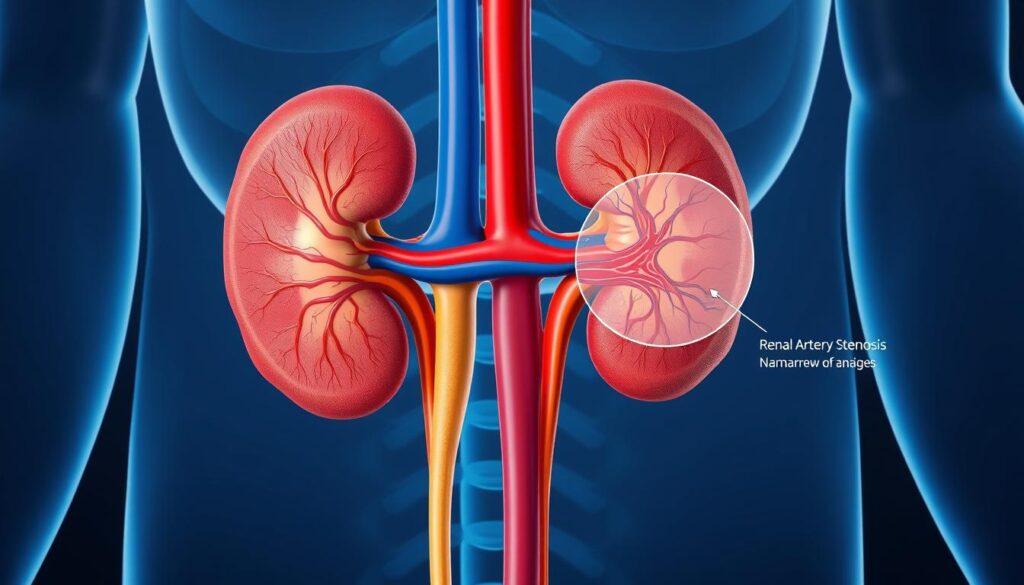
Renal artery stenosis is a serious kidney disease that can quietly harm your health. It happens when the arteries supplying blood to your kidneys narrow. This can lead to renovascular hypertension1.
Early detection of renal artery stenosis is vital. Many people don’t know they have it until it’s advanced1. Sudden high blood pressure or unexplained changes could signal this condition1.
Several factors increase your risk. These include aging, high cholesterol, diabetes, obesity, and not exercising enough1. Knowing these risks can help you take preventive steps.
Renal artery stenosis can cause serious health problems. It may lead to kidney failure, fluid buildup, and trouble breathing1. Your body faces significant stress from this condition.
Proactive medical care is crucial. It can help prevent complications and manage the disease effectively. Regular check-ups and a healthy lifestyle are key to kidney health.
Key Takeaways
- Renal artery stenosis often goes undetected until advanced stages
- Sudden high blood pressure can be a warning sign
- Multiple lifestyle factors contribute to kidney artery narrowing
- Early detection is crucial for managing the condition
- Comprehensive medical evaluation can prevent serious complications
What is Renal Artery Stenosis and Its Main Causes
Renal artery stenosis narrows blood vessels to your kidneys. It affects kidney function and heart health. This condition can have serious impacts2.
Two main causes lead to renal artery stenosis. These are atherosclerosis and fibromuscular dysplasia. Knowing these causes helps prevent and treat the condition early3.
Understanding Atherosclerosis in Renal Arteries
Atherosclerosis is the top cause of renal artery stenosis. It accounts for 60% to 90% of cases. Plaque builds up in renal arteries, narrowing them2.
- Primarily affects men over 45 years old2
- Caused by factors such as:
- High cholesterol
- High blood pressure
- Smoking
- Diabetes
- Obesity
The Role of Fibromuscular Dysplasia
Fibromuscular dysplasia (FMD) also causes renal artery stenosis. This condition involves abnormal cell growth in the artery walls. It typically affects women under 503.
Risk Factors Contributing to Kidney Artery Narrowing
Several factors raise your risk of renal artery stenosis:
- Advanced age
- Family history of cardiovascular disease
- Sedentary lifestyle
- Chronic conditions like diabetes
“Early detection and understanding of renal artery stenosis can significantly improve patient outcomes and prevent serious complications.”
This condition’s prevalence varies widely. It affects less than 1% of mild hypertension cases. In severe hypertension, it can affect up to 40% of cases2.
Identifying and Treating Renal Artery Stenosis
Renal artery stenosis detection requires a thorough understanding of kidney health. Persistent high blood pressure that resists standard medications may signal this condition4. Diagnostic methods are vital for identifying artery occlusion and determining treatment strategies.
- Arterial Doppler ultrasound to assess plaque buildup4
- Magnetic resonance angiography (MRA) with 90% sensitivity for proximal renal artery stenosis5
- Spiral CT angiography with 91% predictive accuracy5
- Renal arteriogram using X-rays and contrast dye4
Treatment options range from conservative approaches to invasive interventions. Renal revascularization techniques include renal stenting and renal artery angioplasty. These methods can effectively restore blood flow6.
| Treatment Approach | Key Characteristics |
|---|---|
| Lifestyle Changes | Heart-healthy diet, physical activity, weight management |
| Medication | Blood pressure regulation, cholesterol management |
| Renal Angioplasty | Nonsurgical procedure to restore arterial blood flow |
| Surgical Options | Renal artery bypass, endarterectomy for severe cases |
Your doctor will create a personalized treatment plan based on your condition’s severity. Talking to a medical professional is crucial for managing renal artery stenosis effectively.
Early detection and appropriate management are key to preventing potential kidney complications.
Conclusion
Knowing about renovascular disease helps protect your kidney function and overall health. Renal artery stenosis can greatly affect your heart and blood vessels. Atherosclerosis causes about 90% of cases78.
Being aware and proactive can make a big difference in managing kidney artery narrowing. It can also help prevent possible complications9. Early detection is key in managing this condition.
Regular medical check-ups can spot potential risks, especially if you have heart problems. Studies show that acting quickly can stop renovascular disease from getting worse8. It can also lower the risk of serious health issues.
Dealing with renal artery stenosis needs a full approach. Team up with your doctors and stick to your treatment plan. Keep up a healthy lifestyle too.
Stay informed and take action to manage your kidney health effectively. This can help reduce the long-term effects of this condition9.
FAQ
What is renal artery stenosis?
Renal artery stenosis occurs when arteries to your kidneys narrow, reducing blood flow. This can lead to high blood pressure and kidney damage. It’s often caused by plaque buildup or abnormal cell growth in artery walls.
What are the primary symptoms of renal artery stenosis?
The main symptom is sudden or worsening high blood pressure, especially in people under 30 or over 50. Many people don’t experience obvious symptoms until the condition becomes advanced. Regular medical check-ups are crucial for early detection and management.
What are the main risk factors for developing renal artery stenosis?
Key risk factors include aging, high blood pressure, high cholesterol, and diabetes. Obesity, smoking, lack of exercise, and family history of heart disease also increase risk. Rare conditions like Takayasu’s arteritis can contribute to developing this condition.
How is renal artery stenosis diagnosed?
Diagnosis typically involves imaging tests and blood work. Your doctor may use ultrasound, CT scans, or angiography to examine blood flow. These tests help identify narrowing or blockages in your renal arteries.
What treatment options are available for renal artery stenosis?
Treatment varies based on the severity of your condition. Options range from lifestyle changes to medications and surgical interventions. Your doctor will recommend the best approach for your health and specific condition.
Can renal artery stenosis be prevented?
You can’t prevent all cases, but you can reduce your risk with a healthy lifestyle. Regular exercise, maintaining a healthy weight, and managing blood pressure help. Avoiding smoking and eating a balanced diet are also important.
What complications can arise if renal artery stenosis is left untreated?
Untreated renal artery stenosis can lead to chronic kidney disease and kidney failure. It may cause persistent high blood pressure and increased risk of heart problems. Early detection and proper management are critical to preventing these severe outcomes.
How often should I get checked for renal artery stenosis?
If you have risk factors like diabetes or high blood pressure, discuss regular screenings with your doctor. The frequency of check-ups depends on your individual health profile and risk factors.
Source Links
- Renal artery stenosis – Symptoms and causes – https://www.mayoclinic.org/diseases-conditions/renal-artery-stenosis/symptoms-causes/syc-20352777
- Renal Artery Stenosis – StatPearls – https://www.ncbi.nlm.nih.gov/books/NBK430718/
- Renal Artery Stenosis – NIDDK – https://www.niddk.nih.gov/health-information/kidney-disease/renal-artery-stenosis
- Diagnosing Renal Artery Stenosis – https://nyulangone.org/conditions/renal-artery-stenosis/diagnosis
- Renal Artery Stenosis Workup: Laboratory Studies, Imaging Studies – https://emedicine.medscape.com/article/245023-workup
- Renal Artery Stenosis: Symptoms & Treatment – https://www.massgeneralbrigham.org/en/patient-care/services-and-specialties/heart/conditions/renal-artery-stenosis
- Renal artery stenosis: epidemiology and treatment – https://pmc.ncbi.nlm.nih.gov/articles/PMC4027852/
- Current Insights and Advances in Management – https://juniperpublishers.com/jojun/JOJUN.MS.ID.555754.php
- Endovascular Management of Atherosclerotic Renal Artery Stenosis: Post-Cardiovascular Outcomes in Renal Atherosclerotic Lesions Era Winner or False Alarm? – https://www.vsijournal.org/journal/view.html?doi=10.5758/vsi.2017.33.1.1

