
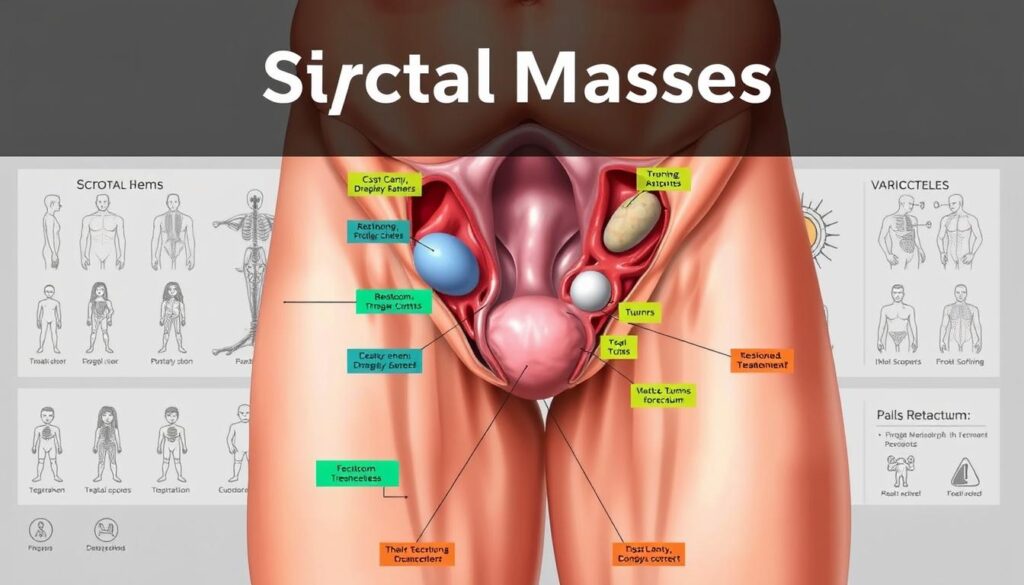
Scrotal masses are unusual growths in the testicle area. They can be harmless fluid-filled sacs or more serious conditions1. These testicular lumps might appear suddenly or develop slowly over time.
Most scrotal masses are harmless. However, some can point to serious issues like infections or cancer. Your body often gives warning signs you shouldn’t ignore.
Scrotal swelling can stem from various causes. These include hernias, infections, or tissue abnormalities1. Catching these masses early is vital for proper treatment.
Regular self-checks help spot changes quickly2. If you notice anything unusual, see a doctor right away. This can prevent complications and ensure proper care1.
Key Takeaways
- Scrotal masses can be benign or potentially serious
- Early detection is crucial for effective treatment
- Monthly self-examinations can help identify changes
- Not all masses are painful or immediately dangerous
- Professional medical evaluation is essential
What Are Scrotal Masses?
Scrotal masses are unusual growths or changes in the testicle or nearby tissues. They can point to various health issues. Knowing about these masses helps spot potential problems early.
Common Types of Scrotal Masses
Several kinds of scrotal masses can form. Each type has its own features.
- Testicular Cancer: A rare but serious condition most common in young men3
- Epididymal Cysts: Fluid-filled sacs near the testicle
- Varicocele: Enlarged veins in the scrotum
- Hydrocele: Fluid accumulation around the testicle
How They Form
Scrotal masses can arise from many factors. These include genetic tendencies, infections, and tissue problems.
Testicular cancer is only 1% of male cancers. Yet, it’s the most common tumor in males aged 15-35 years3.
| Mass Type | Typical Characteristics |
|---|---|
| Varicocele | Enlarged veins, potential fertility impact |
| Hydrocele | Fluid accumulation, usually painless |
| Testicular Cancer | Abnormal cell growth, potential malignancy |
When to Seek Medical Attention
Quick medical checks are vital for scrotal masses. Painful masses need urgent assessment4.
Look out for these warning signs:
- Sudden scrotal pain
- Unusual lumps or swelling
- Changes in testicle size or texture
- Persistent discomfort
Early detection can significantly improve treatment outcomes and potentially prevent serious complications.
Remember, not all scrotal masses are cancerous. In fact, 75% of testicular tumors in prepubertal patients are benign3.
Symptoms You Might Experience
Scrotal masses can show up in various ways. Spotting these signs early helps you get quick medical help. Knowing your body’s signals is key to prevent serious issues.
Visible Changes in Your Scrotum
Your scrotum can reveal hidden health problems. Look out for these visual clues:
- Unusual lumps or swelling5
- Changes in skin color or texture
- Noticeable asymmetry between testicles
Pain and Discomfort Signals
Scrotal pain can be mild or severe. Testicular torsion causes sudden, intense pain that needs quick medical help6.
The pain might spread to your groin or lower back. You may also feel sick or throw up.
Potential Fertility Implications
Some scrotal masses can affect your ability to have kids. Varicoceles can hurt sperm production and lead to fertility problems7.
Spermatocele might not cause pain but can still affect how your testicles work.
| Condition | Symptoms | Potential Impact |
|---|---|---|
| Testicular Torsion | Sudden, severe pain | Potential testicle loss if untreated |
| Spermatocele | Painless mass | Possible fertility reduction |
| Varicocele | Dull ache, visible veins | Potential sperm production issues |
“Early detection and professional medical evaluation are your best defenses against serious scrotal health complications.”
If you have ongoing scrotal pain or notice odd lumps, see a doctor right away5. Your health matters most.
Treatment Options Available
Your doctor will create a personalized treatment plan for scrotal masses. This often starts with a physical exam and ultrasound imaging8. Blood tests can detect protein levels and potential testicular cancer markers8.
Some conditions may require surgery. For testicular cancer, doctors might recommend removing the affected testicle7. Advanced cases could need chemotherapy or radiation therapy9. Stage I seminomas and non-seminomas have high cure rates with proper treatment9.
Treatment may involve antibiotics for bacterial infections. Viral conditions might need supportive care8. Some masses require monitoring, while others need specific medical procedures.
Your doctor will consider factors like discomfort and fertility impact when planning treatment7. Follow-up care is essential after treatment. Regular self-exams help catch recurring issues early.
Good hygiene and quick medical attention for abnormalities are crucial7. These steps will help you manage your health effectively.
FAQ
What exactly are scrotal masses?
Scrotal masses are lumps or swellings in the scrotum, the skin bag holding your testicles. They can be fluid buildups, irregular growths, or swollen areas inside.
These masses result from various conditions like infections, injuries, or abnormal tissue growth. They may include testicular cancer, spermatoceles, hydroceles, or varicoceles.
Are all scrotal masses dangerous?
Not all scrotal masses are dangerous, but any lump or swelling needs professional examination. Some masses are benign, like fluid-filled cysts.
Others could indicate serious conditions such as testicular cancer. Even painless masses should be checked by a doctor to ensure reproductive health.
What symptoms should make me worried about a scrotal mass?
Be concerned if you have sudden or persistent scrotal pain, unusual lumps, or swelling. Changes in skin color, heaviness in the scrotum, or pain spreading to the groin are worrying signs.
Additional warning signs include fever, frequent urination, or blood in your urine. Any sudden, severe pain could indicate testicular torsion and needs immediate medical attention.
How are scrotal masses diagnosed?
Diagnosis typically includes a physical exam, transillumination, ultrasound, urine tests, and blood tests. CT scans might also be used if needed.
Your doctor will assess the mass’s characteristics, size, and potential causes. This helps determine the most appropriate diagnostic approach.
What treatment options are available for scrotal masses?
Treatment depends on the specific cause. Infections are usually treated with antibiotics. Non-cancerous masses might be monitored, surgically removed, repaired, or drained.
For testicular cancer, treatment often involves radical inguinal orchiectomy (surgical testicle removal). This may be followed by chemotherapy or radiation therapy.
Can scrotal masses affect my fertility?
Some scrotal masses, like varicoceles, can impact fertility by affecting sperm production or testicular function. Certain conditions might reduce sperm quality or quantity.
It’s essential to discuss fertility concerns with a doctor during diagnosis and treatment. They can provide guidance on potential impacts.
How often should I perform a testicular self-exam?
Perform a self-exam monthly, ideally after a warm shower when the scrotum is relaxed. Check for lumps, changes in size or texture.
Report any abnormalities to your doctor promptly. Early detection can significantly improve treatment outcomes for potential issues.
Are children at risk for scrotal masses?
Children can experience scrotal masses, including conditions like undescended testicles. Parents should consult a pediatrician for any scrotal symptoms or concerns.
Some childhood scrotal conditions are developmental. They can be effectively managed with proper medical guidance and timely intervention.
Source Links
- Scrotal masses – https://www.mountsinai.org/health-library/diseases-conditions/scrotal-masses
- Scrotal masses – Diagnosis and treatment – https://www.mayoclinic.org/diseases-conditions/scrotal-masses/diagnosis-treatment/drc-20352609
- PIR20140004 450..451 – https://renaissance.stonybrookmedicine.edu/system/files/Testicular and Scrotal Masses.pdf
- Evaluation of scrotal masses – PubMed – https://pubmed.ncbi.nlm.nih.gov/24784335/
- Scrotal masses – Augusta Health – https://www.augustahealth.com/disease/scrotal-masses/
- Scrotal Masses – https://www.aafp.org/pubs/afp/issues/2022/0800/scrotal-masses.html
- What You Need to Know About Scrotal Masses – https://www.healthline.com/health/scrotal-masses
- Scrotal Masses | The Urology Group – https://www.urologygroup.com/condition/scrotal-masses/
- Treatment Options for Testicular Cancer, by Type and Stage – https://www.cancer.org/cancer/types/testicular-cancer/treating/by-stage.html

