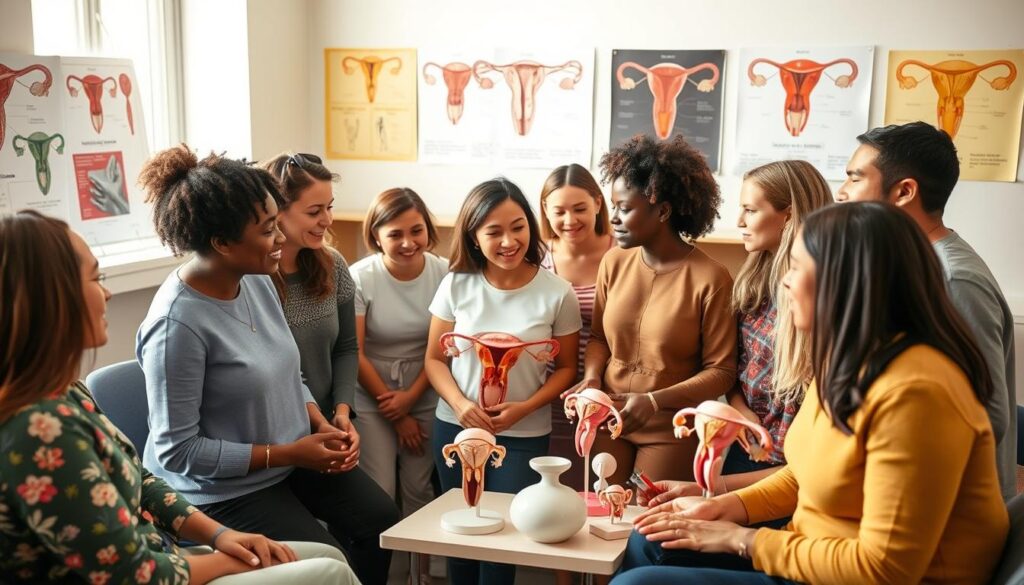
Sexual education helps you understand your body, relationships, and health. It goes beyond biology, creating a supportive learning environment1. The UN suggests starting sex ed early to empower young people’s decision-making1.
LGBTQ+ inclusive curricula promote understanding, respect, and safety. Research shows it reduces school-based victimization and sexual health risks2. A sex-positive approach ensures all students feel valued and supported.
Reproductive health requires open, honest talks. About 1 in 5 girls worldwide face sexual abuse1. Quality sex ed helps young people develop skills to recognize and prevent risks3.
Key Takeaways
- Comprehensive sex education starts early and supports all students
- Inclusive approaches reduce risks and promote understanding
- Education is a powerful tool for personal safety and health
- Supportive learning environments protect vulnerable populations
- Knowledge empowers students to make informed decisions
Overview of the Reproductive System
Understanding your reproductive system is crucial for maintaining sexual health. Comprehensive consent education helps develop a positive approach to sexual well-being. It empowers individuals to make informed decisions about their bodies4.
Sexual health resources provide essential information about the human body’s complex functions. Learning about reproductive anatomy helps you make responsible choices. It also aids in understanding your personal development5.
Key Functions of the Reproductive System
The reproductive system serves several critical purposes beyond just reproduction. It’s responsible for:
- Producing reproductive cells (gametes)
- Facilitating sexual reproduction
- Generating hormones that influence physical and emotional development
- Supporting gender diversity education and understanding
Major Components of Human Reproductive System
Knowing the major components helps you grasp the complexity of human reproduction6:
| Male Components | Female Components |
|---|---|
| Testes | Ovaries |
| Penis | Uterus |
| Prostate | Fallopian Tubes |
“Sexual health is more than the absence of disease. It is a state of physical, emotional, mental, and social well-being related to sexuality.” – World Health Organization
Engaging with comprehensive sexual health resources builds a deeper understanding of your body. It helps you navigate relationships and personal growth. This knowledge is key to overall well-being4.
Male Reproductive Anatomy
Male reproductive anatomy is key to sexual health education. It helps young people understand their bodies scientifically. The male reproductive system is complex and vital for human reproduction and health7.
Structural Components of Male Reproductive Organs
The male reproductive system has several key components. These parts work together to support sexual and reproductive functions.
- Penis: An organ with varying size. Average flaccid length is about 3.5 inches. Erect length is slightly over 5 inches8.
- Testicles: Crucial for sperm production. They need temperatures between 97°F and 99°F for best sperm growth8.
- Spermatic cord: Supports testicles and provides blood supply
Reproductive Fluid Dynamics
The reproductive system involves complex fluid production and transport. Seminal vesicles make up to 80% of ejaculatory fluid. This fluid contains fructose to fuel sperm energy and movement8.
Bulbourethral glands produce a clear, lubricating fluid. It prepares the reproductive tract for possible fertilization.
| Reproductive Organ | Primary Function | Key Characteristic |
|---|---|---|
| Testicles | Sperm Production | Temperature-sensitive |
| Seminal Vesicles | Fluid Production | 80% of ejaculatory volume |
| Bulbourethral Glands | Lubrication | Neutralizes acidic environment |
Hormonal Influences in Male Reproduction
Hormones play a big role in male reproduction. Testosterone is key for sexual growth, sperm production, and male traits. Understanding these processes is vital for thorough sexual health education7.
Knowledge of reproductive anatomy empowers individuals to make informed health decisions.
Female Reproductive Anatomy
Knowing your female reproductive anatomy is key for good health. The system is complex, supporting potential pregnancy and overall wellness9. Women start with about 1 million eggs, which decrease to 300,000 by puberty9.
Female reproductive growth usually begins between ages 11 and 16. The body prepares for possible pregnancy through hormonal changes9. These changes differ from person to person.
The Sexual and Reproductive Anatomy Supplement offers deep insights into these biological processes10. It’s a great resource for learning more.
The menstrual cycle, about 28 days long, readies the body for reproduction9. Ovulation happens around day 14, when an egg is released9. If fertilized, the egg and sperm join in the fallopian tubes9.
Anatomical differences are normal and nothing to be ashamed of. Every body is unique. Good sex ed celebrates this diversity while teaching accurate facts10.
FAQ
What is comprehensive sex education?
Comprehensive sex education provides accurate, age-appropriate information about sexual health and relationships. It covers consent, gender identity, and sexual orientation. This approach helps you develop a positive view of sexuality and make informed choices.
Why is inclusive sex education important?
Inclusive sex education supports all students, including LGBTQIA+ youth. It goes beyond heteronormative perspectives, reducing school-based victimization. This approach lowers STI risks and supports healthy identity development for everyone.
At what age should sex education begin?
Sex education should start before sexual activity begins. It continues throughout childhood and adolescence. The content should be age-appropriate, introducing more complex topics as you grow.
Schools, clinics, community organizations, and homes can deliver sex education. This ensures a well-rounded approach to learning about sexual health.
How does comprehensive sex education benefit young people?
Comprehensive sex education reduces risky behaviors and lowers teen pregnancy rates. It improves your sexual health knowledge and communication skills. You’ll learn about consent, healthy relationships, and making informed decisions.
Why should sex education be inclusive of all gender identities?
Gender-separated sex education reinforces harmful stereotypes and excludes LGBTQIA+ students. Inclusive classrooms allow exploration of diverse identities and experiences. This approach creates a safe, supportive environment for all students.
Where can I find reliable sexual health resources?
Look for resources from reputable organizations like SIECUS and Planned Parenthood. Local sexual health clinics also provide trustworthy information. Digital platforms offer additional support and safe spaces.
Always verify online sources and consult healthcare professionals for personalized guidance. This ensures you receive accurate and reliable information.
What topics are covered in comprehensive sex education?
Comprehensive sex education covers anatomy, consent, sexual development, and gender identity. It also includes sexual orientation, healthy relationships, and sexual health. Contraception, STI prevention, and emotional well-being are important topics too.
The curriculum is age-appropriate and culturally responsive. It helps you develop a complete understanding of sexual health.
Source Links
- Comprehensive sexuality education – https://www.who.int/news-room/questions-and-answers/item/comprehensive-sexuality-education
- The Importance of Access to Comprehensive Sex Education – https://www.aap.org/en/patient-care/adolescent-sexual-health/equitable-access-to-sexual-and-reproductive-health-care-for-all-youth/the-importance-of-access-to-comprehensive-sex-education/?srsltid=AfmBOoo8l1MvHpfNdJ_145fTHCkVoua7AvETUTokdRRstQ_yoEyZX-ES
- Comprehensive Sexuality Education – https://www.acog.org/clinical/clinical-guidance/committee-opinion/articles/2016/11/comprehensive-sexuality-education
- PDF – https://www.plannedparenthood.org/uploads/filer_public/da/67/da67fd5d-631d-438a-85e8-a446d90fd1e3/20170209_sexed_d04_1.pdf
- Sexual Health Education – https://www.cdc.gov/healthy-youth/what-works-in-schools/sexual-health-education.html
- Sexuality Education – Advocates for Youth – https://www.advocatesforyouth.org/resources/fact-sheets/sexuality-education-2/
- The Importance of Access to Comprehensive Sex Education – https://www.aap.org/en/patient-care/adolescent-sexual-health/equitable-access-to-sexual-and-reproductive-health-care-for-all-youth/the-importance-of-access-to-comprehensive-sex-education/?srsltid=AfmBOoo0sEdayB31k27o6Shb3JudGC0mYFMnkvvMOM7v8wanJUiFATGX
- Male Reproductive System – https://my.clevelandclinic.org/health/body/9117-male-reproductive-system
- Female Reproductive System: Structure & Function – https://my.clevelandclinic.org/health/articles/9118-female-reproductive-system
- PDF – https://mainefamilyplanning.org/wp-content/uploads/Sexual-Reproductive-Anatomy-Supplement.pdf