
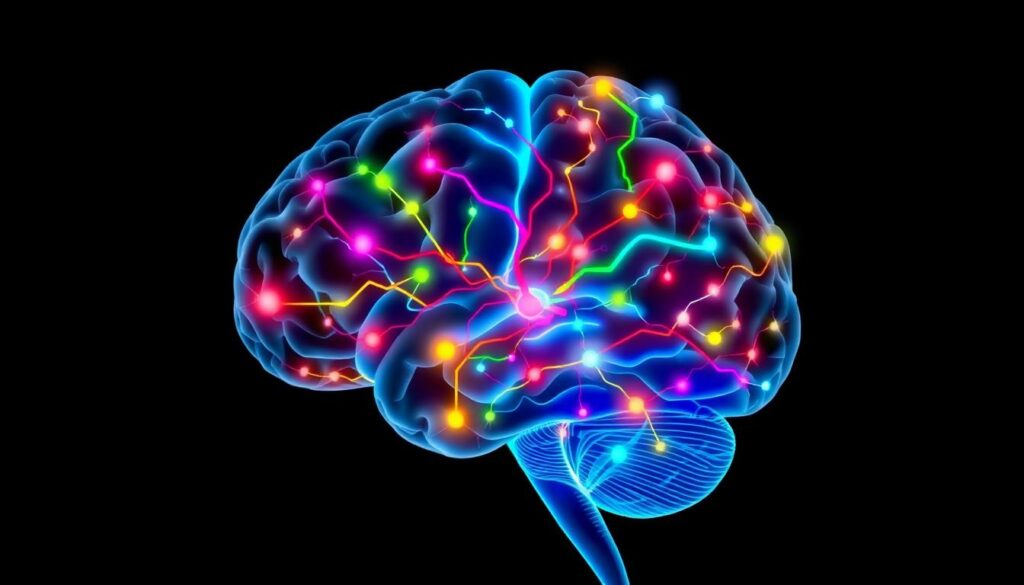
ADHD involves complex brain connections that shape how we process information. Your brain’s wiring creates a unique approach to handling thoughts and emotions1. In ADHD, neuroplasticity affects cognitive functions differently than in typical brains2.
ADHD minds can juggle multiple thoughts at once1. This neural network brings both challenges and amazing abilities. Salif Mahamane sees ADHD as a potential superpower, highlighting its creative and innovative aspects2.
The ADHD brain manages neurotransmitters like dopamine based on interest. This creates unique patterns of focus and engagement2. These neural dynamics can lead to hyperfocus, where people become deeply absorbed in captivating activities2.
Key Takeaways
- ADHD involves unique brain connection patterns
- Neuroplasticity influences cognitive functions differently
- Multiple thoughts can occur simultaneously in ADHD brains
- Interest levels significantly impact neural processing
- ADHD can be viewed as a distinctive cognitive approach
Understanding ADHD: Symptoms and Diagnosis
ADHD is a complex brain disorder affecting millions worldwide. Recognizing symptoms and getting an accurate diagnosis can change lives. It’s a key step in managing this condition effectively.
Common Symptoms of ADHD
ADHD symptoms show up in different ways. They often cause problems in daily life. The disorder has three main symptom categories:
- Inattention: Difficulty focusing, easily distracted, struggling to complete tasks
- Hyperactivity: Constant movement, restlessness, talking excessively
- Impulsivity: Interrupting others, making hasty decisions without thinking3
Diagnostic Criteria for ADHD
Diagnosing ADHD requires a full evaluation. Experts identify three types of ADHD:
- Inattentive Type
- Hyperactive-Impulsive Type
- Combined Type3
“Understanding ADHD is the first step towards effective management and support.”
Importance of Early Diagnosis
Early ADHD detection can greatly improve life quality. Children up to 16 need six symptoms. Those over 16 need five or more.
Symptoms must start before age 12. They should last for at least 6 months3.
Recognizing ADHD is not about labeling, but understanding and supporting individual strengths and challenges.
The Brain’s Anatomy: Key Areas Involved in ADHD
ADHD brain anatomy shows complex interactions between different brain regions. Your brain’s network manages attention, emotions, and behavior4. Several key areas show unique traits in people with ADHD.
Prefrontal Cortex: The Executive Function Center
The prefrontal cortex is the brain’s command center for executive function. People with ADHD often have weaker prefrontal cortex circuits, especially in the right hemisphere5.
This region handles key cognitive processes like:
- Attention regulation
- Decision-making
- Impulse control
- Problem-solving
Amygdala: Emotional Regulation
The amygdala processes emotions in your brain. With ADHD, this area may struggle to control emotions well4. This can lead to strong emotional responses.
Basal Ganglia: Motor Control and Learning
The basal ganglia help with motor control and learning. In ADHD brains, this region works differently4. It affects movement and behavior patterns.
“Understanding brain anatomy helps us comprehend the unique challenges faced by individuals with ADHD.” – Neuroscience Research Team
| Brain Region | Primary Function | ADHD Impact |
|---|---|---|
| Prefrontal Cortex | Executive Function | Weaker circuit activation |
| Amygdala | Emotional Processing | Intense emotional responses |
| Basal Ganglia | Motor Control | Altered movement patterns |
Knowing these brain regions helps explain ADHD’s neurological basis. This knowledge can help support people facing ADHD challenges6.
How Brain Connections Impact ADHD
ADHD is closely linked to brain connections and neural pathways. These networks shape how people with ADHD face cognitive and behavioral challenges.
Advanced brain imaging has revealed new insights about ADHD. Researchers studied over 10,000 brain scans of young people with ADHD. This led to crucial findings about neural connectivity7.
Neural Pathways and Their Function
Neural pathways act like information highways in the brain. In ADHD, these pathways show unique traits:
- Heightened connectivity between deep brain structures and frontal areas7
- Reduced crosstalk between different brain regions8
- Altered communication patterns affecting attention and impulse control
The Role of Synaptic Plasticity
Synaptic plasticity is the brain’s ability to change neural connections. In ADHD, this process can be significantly affected. This leads to challenges in learning and adaptive behaviors8.
Disrupted Communication Between Brain Areas
In ADHD, brain regions for executive function often struggle to communicate well. Many adults who had ADHD as children still face these neural issues. About 60 to 75 percent continue to experience these challenges8.
“The brain’s complexity is both its greatest strength and its most intricate challenge in understanding conditions like ADHD.” – Neuroscience Research Team
Grasping these neural dynamics helps create better ADHD interventions. It also improves support strategies for those living with ADHD.
Genetics and ADHD: What’s the Connection?
ADHD genetics reveal a complex mix of inherited traits and brain disorders. Scientists have found fascinating links between genes and this neurological condition.
Inherited Traits and Neurobehavioral Disorders
ADHD has a strong genetic component that affects the likelihood of developing it9. Studies show a genetic contribution of 70-90%10. If a family member has ADHD, you might face similar challenges.
Key Genes Associated with ADHD
Scientists have found several genetic markers linked to ADHD. Research shows:
- Multiple genetic variants contribute to the disorder
- No single gene determines ADHD development
- Complex interactions between genes play a crucial role
Family Studies and Twin Studies
Twin studies have shed light on ADHD genetics. Researchers found:
| Study Type | Heritability Percentage |
|---|---|
| Twin Studies | 74%9 |
| Childhood Heritability | 77-88%9 |
| Adult Heritability | 30-40%9 |
“ADHD is as heritable as height,” says Dr. Philip Shaw11.
About one-third of kids with ADHD carry it into adulthood11. This genetic link highlights the need to understand ADHD at different life stages.
Neurotransmitters: The Chemical Messengers
Neurotransmitters are vital chemical messengers in the brain’s communication system. These tiny molecules are crucial for understanding ADHD and brain function12. At least 100 different neurotransmitters help regulate various mental and physical processes.
Dopamine: The Motivation Molecule
Dopamine is a key neurotransmitter in ADHD that impacts your brain’s reward system. It influences focus, concentration, memory, motivation, and mood regulation.
People with ADHD often struggle with dopamine levels. This can affect their ability to stay motivated and engaged12. Research links dopamine dysfunctions to ADHD, possibly explaining some core symptoms13.
- Focus and concentration
- Memory processes
- Motivation levels
- Mood regulation
Norepinephrine: Attention’s Messenger
Norepinephrine is critical for attention and the body’s stress response. It helps you stay alert, maintain focus, and respond to environmental stimuli.
This neurotransmitter triggers the fight-or-flight response. It helps your body react quickly to different situations12.
- Stay alert
- Maintain focus
- Respond to environmental stimuli
Serotonin: Mood and Emotional Balance
Serotonin regulates mood and emotional well-being. It impacts sleep patterns, anxiety levels, appetite control, and pain perception.
Eating tryptophan-rich foods might increase serotonin levels14. Physical activities can also boost serotonin and dopamine production14.
- Sleep patterns
- Anxiety levels
- Appetite control
- Pain perception
Understanding these neurotransmitters can help you better manage ADHD symptoms and develop effective treatment strategies.
Environmental Factors Influencing ADHD
Environmental factors can greatly impact ADHD development. They work alongside genetics to affect brain growth and ADHD symptoms15. Knowing these factors helps parents and doctors manage potential risks better.
Prenatal Exposures: Critical Early Influences
What happens before birth can shape a child’s brain development. Alcohol and tobacco use during pregnancy can raise ADHD risks15.
These substances may disrupt important brain processes. This disruption can lead to long-term neurological problems in children.
- Alcohol consumption during pregnancy
- Tobacco use in prenatal period
- Caffeine intake
Neurological Impact of Chemical Exposures
Lead exposure is a major concern for brain health. Even small amounts can harm synapse formation and contribute to ADHD symptoms15.
Other chemicals pose risks too. These include manganese, mercury, and organochlorine compounds from industrial and household sources16.
Nutrition’s Crucial Role in Brain Health
Diet and ADHD are closely linked. Not getting enough copper, folate, iron, or omega-3 fatty acids can increase ADHD risk15.
Eating foods rich in these nutrients supports brain function. A balanced diet may help reduce some environmental impacts on ADHD16.
“Environmental factors can significantly influence neurodevelopmental trajectories, making early awareness crucial.” – Neurodevelopmental Research Institute
Learning about these factors helps you make smart choices. You can support brain health and possibly lower ADHD risks1516.
The Development of Brain Connections in ADHD
Brain connections are vital in understanding ADHD development. Your child’s neural pathways change constantly. Critical periods shape cognitive functioning significantly17.
ADHD brains mature differently than typical ones. Some brain regions may develop slower in ADHD individuals17. The frontal lobe, controlling attention and impulses, is often affected18.
How Brain Connections Evolve with Age
As children grow, brain connections become more complex. Neural networks change significantly during key developmental stages.
- Early childhood: Rapid neural network formation
- Adolescence: Refinement of cognitive connections
- Young adulthood: Stabilization of neural pathways
Critical Periods for Brain Development
Critical periods are times of peak brain plasticity. During these phases, early experiences greatly influence neural wiring19.
| Age Range | Neural Development Characteristics |
|---|---|
| 0-3 years | Foundational neural connections form |
| 4-10 years | Rapid cognitive network expansion |
| 11-18 years | Pruning and optimization of neural pathways |
Impact of Early Experiences on Brain Wiring
Your child’s environment shapes brain connections. Early interventions can change neural network patterns19.
Targeted support during key stages may improve outcomes. The latest research offers hope for effective ADHD management.
Understanding brain development is key to supporting children with ADHD.
Neuroimaging Studies: Insights into ADHD Brain Activity
Neuroimaging has transformed our understanding of ADHD. It offers unique views of brain structure and function. These techniques provide crucial insights beyond traditional diagnostic methods.
ADHD neuroimaging research has grown rapidly. In 2001, there were 26 brain imaging studies. By 2010, this number jumped to 14120.
PubMed contained 1,962 papers on ADHD and MRI studies by September 202021. This shows the field’s explosive growth.
MRI Studies of Brain Structure in ADHD
Structural MRI studies reveal interesting brain differences in ADHD individuals. Researchers found small but significant variations in brain structures.
- Reduced gray matter volume in the right basal ganglia20
- Smaller surface areas in specific brain regions21
- Slightly thinner cortex compared to controls21
fMRI Studies of Brain Function During Tasks
Functional MRI (fMRI) studies show dynamic brain activity. Researchers explored various network interactions in ADHD brains. This supports a triple network model in understanding ADHD brain functioning21.
| Imaging Technique | Key Findings |
|---|---|
| Structural MRI | Small effect size differences in brain structure |
| Functional MRI | Altered network connectivity during cognitive tasks |
“Neuroimaging is transforming our understanding of ADHD, revealing the complex neural mechanisms underlying this neurodevelopmental disorder.”
What Imaging Reveals about ADHD
Large-scale projects like ENIGMA are advancing ADHD neuroimaging research. These studies show brain differences exist, but with small effect sizes (0.10 1.
These subtle brain variations can guide targeted interventions. They may help create personalized treatments for people with ADHD.
Treatments: Enhancing Brain Connections
ADHD management requires a multi-faceted approach to address brain connectivity challenges. Various strategies can improve focus, reduce symptoms, and boost cognitive functioning. Your treatment plan should be tailored to your specific needs.
ADHD treatment options aim to optimize brain performance. A personalized strategy works best for individual needs. Let’s explore some effective approaches.
Medication Options and Their Impact
Psychostimulant medications are a key ADHD treatment. They show impressive results in about 70% of patients22. These drugs target brain neurotransmitter imbalances to improve attention and focus.
Behavioral Therapies: Changing Brain Patterns
Behavioral therapies offer powerful alternatives for managing ADHD symptoms. Brain training exercises can boost critical cognitive skills. These include memory, attention, impulse control, and executive functioning.
Neurofeedback has shown remarkable potential in ADHD treatment. Studies indicate it can reduce 80-85% of symptoms after 30-40 sessions23.
Alternative Approaches: Mindfulness and Exercise
Mindfulness and exercise provide holistic support for brain health. Programs like Brain Balance report significant improvements. Up to 75% of children show a 25% symptom reduction23.
| Treatment Type | Potential Benefit | Success Rate |
|---|---|---|
| Medication | Neurotransmitter Regulation | 70% |
| Neurofeedback | Symptom Reduction | 80-85% |
| Brain Training | Cognitive Skill Improvement | 75% |
“The key to managing ADHD is finding the right combination of treatments that work uniquely for you.” – ADHD Research Institute
Every ADHD journey is unique. Consult healthcare professionals to create an effective treatment plan. They can help tailor strategies to your specific needs.
Coping Strategies for Those with ADHD
ADHD can make life tough, but good coping methods can really help. Using the right approaches can ease symptoms and boost life quality.
Organizational Skills and Tools
For people with ADHD, staying organized is often hard. But having a clear system can make daily tasks easier to handle24.
Here are some useful organizing tips:
- Use digital or physical planners to track commitments
- Create designated spaces for important items
- Implement color-coded filing systems
- Break large tasks into smaller, manageable steps25
Time Management Techniques
Managing time well is key for those with ADHD. The Pomodoro Technique is a great way to stay focused25:
- Work in 25-minute intense focus intervals
- Take short 5-minute breaks
- Reset and repeat
“Habit formation can be a powerful coping skill because it eliminates the need to consciously think about beneficial behaviors”26.
Support Systems: Friends and Family
Having a strong support network is crucial. Ask loved ones for understanding and consider getting expert help.
Not everyone needs meds – about 15% of kids with ADHD use behavior changes alone26.
| Coping Strategy | Benefits |
|---|---|
| Body Doubling | Increases productivity through shared focus |
| Reward Systems | Motivates task completion |
| Professional Support | Provides personalized management techniques |
Finding the right ADHD coping strategies is personal. Try different methods and be patient with yourself25.
The Future of ADHD Research and Insights
ADHD research is set to transform our understanding of this complex disorder. Neuroscience advances promise groundbreaking insights into brain functioning and potential treatments. These discoveries could significantly improve the lives of those with ADHD27.
Scientists are exploring new paths to understand and support individuals with ADHD. Recent findings are changing how researchers approach emerging ADHD technologies. This shift could lead to more effective treatments and better outcomes28.
Breakthrough Neuroscience Advances
- Detailed brain connectivity mapping
- Advanced neuroimaging techniques
- Genetic marker identification
A study of brain images from nearly 10,000 youths revealed fascinating neural connectivity patterns. These findings provide critical insights into brain circuitry changes linked to ADHD. Such discoveries could pave the way for targeted interventions28.
Emerging Technologies in ADHD Treatment
New technologies are changing how we approach ADHD treatment. A deeper understanding of neurology is making personalized interventions more feasible. This tailored approach could lead to more effective management of ADHD symptoms27.
“The future of ADHD research lies in understanding individual brain variations and developing targeted interventions.”
The Importance of Continued Research
Ongoing research is vital for developing better ADHD management strategies. Researchers are focusing on key areas to advance our knowledge.
- Longitudinal brain connectivity studies
- Genetic exploration
- Treatment outcome investigations
Your understanding and support of ongoing ADHD research can contribute to remarkable breakthroughs in neuroscience and patient care.
Conclusion: Embracing Understanding and Support
ADHD requires compassion and awareness. Your journey is unique, with challenges that support and knowledge can help navigate29. Success comes from personal growth, happiness, and self-acceptance30.
ADHD awareness creates supportive environments. Teamwork between professionals, families, and individuals can turn challenges into opportunities30. Tools, therapies, and treatments offer powerful strategies for managing ADHD29.
People with ADHD have incredible strengths. Many successful entrepreneurs and artists have used their neurodiversity as an asset29. Your ADHD enhances your unique way of seeing the world30.
Groups like CHADD and ADDA offer valuable resources29. Embrace your experience and seek understanding. Your well-being matters most in living with ADHD30.
FAQ
What is ADHD and how does it affect brain connections?
ADHD is a complex neurological condition that changes how your brain processes information. It affects focus, impulse control, and emotional regulation. Your brain’s neural pathways work differently, causing unique challenges with concentration and executive functioning.
What are the most common symptoms of adult ADHD?
Adult ADHD symptoms include difficulty concentrating, chronic forgetfulness, and impulsivity. You might struggle with disorganization, persistent restlessness, and maintaining relationships. These symptoms can greatly impact your personal and professional life.
Time management issues, missed deadlines, and trouble staying focused are common challenges. You may also experience frequent emotional fluctuations.
How important is early diagnosis of ADHD?
Early diagnosis is crucial for developing targeted management strategies and accessing appropriate treatments. It helps you understand your unique neurological profile. With early identification, you can implement coping mechanisms and explore effective treatment options.
Are ADHD symptoms genetic?
Yes, ADHD has a strong genetic component. Having a family member with ADHD increases your likelihood of having the condition. Multiple genes contribute to ADHD, influencing neurotransmitter function and brain development.
What role do neurotransmitters play in ADHD?
Neurotransmitters like dopamine, norepinephrine, and serotonin are crucial in ADHD. Dopamine affects motivation, norepinephrine influences attention, and serotonin regulates mood. Imbalances in these chemical messengers contribute to ADHD symptoms.
Can environmental factors influence ADHD development?
Environmental factors can significantly impact ADHD risk. These include prenatal exposure to alcohol or tobacco, lead exposure, and nutrition. Early childhood experiences can also play a role in ADHD development.
What treatment options are available for ADHD?
ADHD treatments include medication to address neurotransmitter imbalances and behavioral therapies for coping strategies. Alternative approaches like mindfulness and exercise can also be helpful. Personalized treatment plans often combine multiple strategies to manage symptoms effectively.
How can individuals with ADHD improve their daily functioning?
Effective coping strategies include developing strong organizational skills and using time management techniques. Creating structured routines and utilizing digital tools can be helpful. Practicing mindfulness and building a supportive network are also beneficial.
Is ADHD a lifelong condition?
ADHD is typically a lifelong neurodevelopmental condition, but symptoms can change with age. Many people learn to manage their symptoms through treatments, therapy, and personal strategies. With proper support, individuals with ADHD can lead successful, fulfilling lives.
Source Links
- Secrets of Your ADHD Brain – https://www.additudemag.com/secrets-of-the-adhd-brain/
- Unraveling – https://www.goblinxadhd.com/blog/unraveling-the-mystery-of-adhd-insights-from-a-te/
- Attention-Deficit/Hyperactivity Disorder: What You Need to Know – https://www.nimh.nih.gov/health/publications/attention-deficit-hyperactivity-disorder-what-you-need-to-know
- ADHD & the Brain – https://www.aacap.org/AACAP/Families_and_Youth/Facts_for_Families/FFF-Guide/ADHD_and_the_Brain-121.aspx
- The Emerging Neurobiology of Attention Deficit Hyperactivity Disorder: The Key Role of the Prefrontal Association Cortex – https://pmc.ncbi.nlm.nih.gov/articles/PMC2894421/
- The brain anatomy of attention-deficit/hyperactivity disorder in young adults – a magnetic resonance imaging study – https://pmc.ncbi.nlm.nih.gov/articles/PMC5391018/
- NIH researchers identify brain connections associated with ADHD in youth – https://www.nih.gov/news-events/news-releases/nih-researchers-identify-brain-connections-associated-adhd-youth
- Face It — People with ADHD Are Wired Differently – https://www.additudemag.com/current-research-on-adhd-breakdown-of-the-adhd-brain/
- Genetics of attention deficit hyperactivity disorder – https://pmc.ncbi.nlm.nih.gov/articles/PMC6477889/
- Genetic variations influence brain changes in patients with attention-deficit hyperactivity disorder – Translational Psychiatry – https://www.nature.com/articles/s41398-021-01473-w
- Linking genes to ADHD by mapping connections in the brain – https://www.genome.gov/news/news-release/Linking-genes-to-ADHD-by-mapping-connections-in-brain
- Neurotransmitters: What They Are, Functions & Types – https://my.clevelandclinic.org/health/articles/22513-neurotransmitters
- How Is the ADHD Brain Different? – Child Mind Institute – https://childmind.org/article/how-is-the-adhd-brain-different/
- Neurotransmitters Involved in ADHD – https://psychcentral.com/adhd/neurotransmitters-involved-in-adhd
- Update on Environmental Risk Factors for Attention-Deficit/Hyperactivity Disorder – https://pmc.ncbi.nlm.nih.gov/articles/PMC3277258/
- Does the Environment Have an Enduring Effect on ADHD? A Longitudinal Study of Monozygotic Twin Differences in Children – https://pmc.ncbi.nlm.nih.gov/articles/PMC5027180/
- ADHD brain vs. normal brain: Function, differences, and more – https://www.medicalnewstoday.com/articles/adhd-brain-vs-normal-brain
- NIH researchers identify heritable brain connections linked to ADHD – https://www.genome.gov/news/news-release/NIH-researchers-identify-heritable-brain-connections-linked-to-ADHS
- Key Brain Connection Slow To Develop In Kids With ADHD – https://www.npr.org/sections/health-shots/2014/09/15/348652297/key-brain-connection-slow-to-develop-in-kids-with-adhd
- Neuroimaging of Attention-Deficit/Hyperactivity Disorder: Current Neuroscience-Informed Perspectives for Clinicians – https://pmc.ncbi.nlm.nih.gov/articles/PMC3876939/
- Neuroimaging in attention-deficit/hyperactivity disorder – PMC – https://pmc.ncbi.nlm.nih.gov/articles/PMC7879851/
- Neurotherapeutics for Attention Deficit/Hyperactivity Disorder (ADHD): A Review – https://pmc.ncbi.nlm.nih.gov/articles/PMC8394071/
- Can Brain Training Provide Support for ADHD? – https://www.healthline.com/health/adhd/adhd-brain-training
- Tips for Managing Adult ADHD – HelpGuide.org – https://www.helpguide.org/mental-health/adhd/managing-adult-adhd
- 22 ADHD Coping Skills That You Need to Learn – https://www.beyondbooksmart.com/executive-functioning-strategies-blog/adhd-coping-skills
- 6 Coping Skills for ADHD – https://www.healthline.com/health/adhd/adhd-coping-skills
- Future Directions in ADHD Etiology Research – https://pmc.ncbi.nlm.nih.gov/articles/PMC4321791/
- ADHD linked to unusual brain connectivity patterns in large-scale neuroimaging study – https://www.psypost.org/adhd-linked-to-unusual-brain-connectivity-patterns-in-large-scale-neuroimaging-study/
- Understanding the ADHD Brain: Insights & Support for Parents – https://www.healingpsychiatryflorida.com/blogs/understanding-the-adhd-brain/
- Embracing Potential and Personal Triumphs in ADHD – Dr Jared Ng – https://connectionsmind.com/not-just-a-label-embracing-potential-and-personal-triumphs-in-adhd/

