
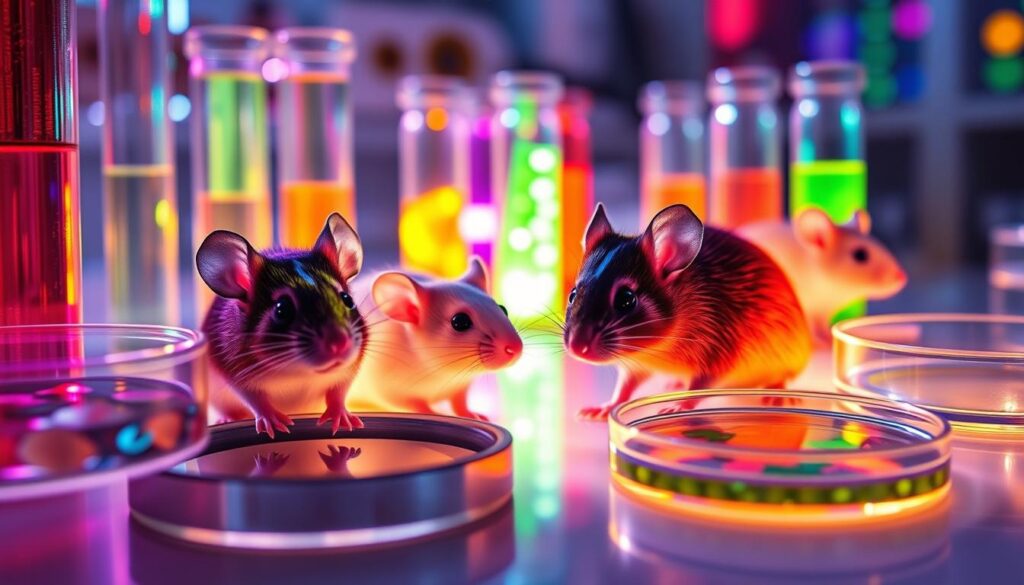
Genetically altered mice are revolutionizing color vision research. These advanced models offer new insights into visual perception1. Scientists can now explore how we see and interpret colors by tweaking genetic pathways.
These special mice reveal fascinating details about retinal dynamics. Intense light exposure causes unique changes in retinal structures. Albino mice show more pronounced transformations in retinal derivatives1.
These breakthroughs are reshaping our understanding of color vision. Genetically altered mice help unravel visual perception mysteries. Their unique modifications allow scientists to examine how genes impact color vision.
Researchers gain critical insights by studying these mice. This knowledge may improve our understanding of human visual systems. These advanced mouse models are driving color vision research forward.
Key Takeaways
- Genetically altered mice provide unique insights into color vision mechanisms
- Intense light exposure reveals complex retinal transformations
- Genetic modifications help scientists understand visual perception
- Color vision research benefits from advanced mouse models
- Innovative studies are expanding our knowledge of visual science
Introduction to Genetically Altered Mice
Gene editing has transformed scientific research. Scientists now modify mouse genes using advanced methods. These mouse models of human disease offer deep insights into genetic mechanisms.
Genetically altered mice are a game-changer in medical science. They allow researchers to study complex biological processes. These processes were previously impossible to examine directly.
What Are Genetically Altered Mice?
Genetically altered mice are lab animals with modified genes. Scientists can add, remove, or change specific genes for research. Most mammals, including mice, have dichromatic vision with two types of light-sensitive eye molecules2.
- Precise genetic modifications
- Targeted gene editing
- Controlled experimental conditions
The Purpose of Genetic Alteration
The main aim is to create mouse models of human disease. By changing specific genes, researchers can mimic human genetic conditions. This allows them to study potential treatments more effectively.
“Genetically altered mice provide a window into understanding complex genetic interactions and disease mechanisms.”
| Research Focus | Genetic Modification Technique | Potential Outcomes |
|---|---|---|
| Vision Research | Photopigment Gene Editing | Color Perception Studies |
| Neurological Disorders | Specific Gene Knockout | Disease Mechanism Understanding |
| Cancer Research | Oncogene Manipulation | Treatment Development |
Gene editing has opened new doors in genetic research. Scientists can now explore how genetic changes affect biological functions. This precision allows for groundbreaking discoveries in various fields3.
The Science Behind Color Vision
Color perception is a fascinating biological process. Your visual system uses complex mechanisms to show you a vibrant world. Scientists are intrigued by visual perception in mice and other animals.
How Color Vision Develops in Living Organisms
Photoreceptors in the retina are key to color vision. These special cells contain visual pigments that change light into neural signals. Researchers have made exciting discoveries about color vision through innovative studies.
- Photoreceptors contain opsin proteins that capture light
- Chromophores play a critical role in light absorption
- Neural pathways translate light signals into color perception
Key Components of Perceiving Color
Different species show amazing variations in color vision. Genetically altered mice have provided new insights into these complex visual mechanisms4. In tests, these special mice showed an 80% success rate in telling colored panels apart4.
The complexity of color vision reveals nature’s extraordinary design in sensory perception.
Genetic variations greatly affect color perception. About 40% of people with normal color vision have specific genetic markers that influence their sight5. Some animals, like birds, have even more advanced visual systems with multiple cone classes5.
Genetic Influences on Visual Perception
Genetic changes can greatly improve color discrimination. Mice with human photopigment genes show better chromatic sensitivity6. This flexibility in mammal vision suggests new color abilities could be developed through genetic alterations6.
The Role of Genetics in Color Vision
Genetic factors shape how we see and interpret colors. Our visual perception is deeply influenced by complex genetic mechanisms. These mechanisms determine our ability to perceive different hues and shades.
Genetic modifications have transformed our understanding of color perception. Scientists found that adding human genes can change how mice see colors. These engineered mice could identify colors with 80% accuracy in tests7.
Genetic Basis of Color Perception
Color vision is rooted in genetic complexity. Different genes control our sensitivity to various light wavelengths:
- S-cone genes (Short wavelength)
- M-cone genes (Medium wavelength)
- L-cone genes (Long wavelength)
Mutations and Their Impact on Vision
Genetic changes can alter how we perceive colors. Dichromatic mammals often have limited color vision compared to trichromatic primates8. Color vision evolved about 540 million years ago, highlighting its importance for survival8.
“Genetic modifications offer unprecedented insights into sensory system evolution” – Research Perspectives
Gene therapy shows promise for treating color vision problems. About 200 million people worldwide have congenital color vision issues. This makes genetic research crucial for potential treatments9.
| Genetic Factor | Impact on Color Vision |
|---|---|
| X-linked Gene Duplication | Enables Trichromatic Vision |
| Opsin Gene Mutations | Potential Color Perception Alterations |
| Cone Photoreceptor Variations | Influences Color Sensitivity |
Genetic modification in mice reveals fascinating insights about color vision. This research offers hope for understanding and treating visual perception disorders. The future of color vision research looks bright and promising.
Genetically Altered Mice: A Valuable Research Tool
Genetic engineering in mice has opened new doors for understanding complex biological systems. These small lab animals are key to advancing our knowledge of visual processes10.
Rodent models offer unique insights into genetic factors affecting visual perception. Mice are prized for their short breeding cycles and genetic similarity to humans. They’re also easy to manipulate genetically.
- Short breeding cycles that enable rapid generational studies
- Genetic similarity to human biological systems
- Ease of genetic manipulation
Why Mice Are Exceptional Research Subjects
Mice offer special advantages in scientific research. Their nervous system allows for precise investigations10.
In recent years, mice have become ideal subjects for visual processing studies10. Their unique traits make them perfect for this type of research.
Benefits of Genetic Alterations
Genetic engineering helps create specialized mouse models for studying complex visual mechanisms. Scientists can now explore specific gene functions with amazing accuracy11.
| Research Advantage | Specific Benefit |
|---|---|
| Genetic Similarity | 85% reproducible transgenic construct expression11 |
| Visual Pathway Study | Unique circuit manipulation capabilities10 |
| Cost-Effectiveness | Safer and less expensive than primate research10 |
Genetic engineering for mouse research continues to revolutionize our understanding of biological systems, opening new frontiers in scientific discovery.
Mice are not just small animals, but powerful tools that unlock the mysteries of genetic complexity.
Discoveries in Color Vision Research
Genetic modifications in mice have revealed new insights into color perception. Scientists have uncovered fascinating details about visual capabilities through these studies. This research has opened new frontiers in understanding how we see color.
Researchers have made significant progress in enhancing color vision in mice. These discoveries have shed light on the complex mechanisms of visual perception. Genetic alterations have played a key role in these breakthroughs.
Breakthrough Findings in Mouse Color Vision
- Researchers discovered a unique ganglion cell in mice that responds specifically to green light while being suppressed by UV light12
- Experimental trials showed mice could correctly identify colored panels in 80 percent of tests after genetic modifications13
- The studies suggest potential implications for understanding human color vision deficiencies
Most mammals have limited color vision, with only two types of cone cells13. Genetically modified mice help us understand how visual systems can be enhanced. This research provides valuable insights into color perception mechanisms.
“Our research opens new possibilities for understanding and potentially correcting color vision limitations.” – Leading Vision Researcher
Implications for Human Vision Research
These studies offer hope for addressing color vision challenges. About 7-8 percent of human males experience color vision deficiencies13. The genetic modifications in mice suggest promising avenues for future treatments.
Prestigious institutions like the National Eye Institute supported this research. The findings were published in leading scientific journals12. This underscores the significance of these studies in advancing visual science.
The Methods of Genetic Alteration
Gene editing technologies offer fascinating ways to understand complex biological systems. Researchers use advanced techniques to manipulate mouse genes. These powerful mouse models provide critical insights into genetic mechanisms.
Scientists use several methods to alter mouse genes with remarkable precision:
- Gene knockout techniques
- Transgenic approaches
- CRISPR-Cas9 gene editing
- Knock-in strategies
Cutting-Edge Gene Modification Techniques
CRISPR-Cas9 has transformed genetic research by enabling precise modifications in mouse models14. Researchers can now target specific genes with incredible accuracy. This technology could address genetic conditions affecting vision and other crucial biological functions14.
“Genetic modification opens new frontiers in understanding complex biological systems” – Dr. Elena Rodriguez, Genetic Research Institute
Ethical Considerations in Genetic Research
Gene editing technologies offer immense potential, but researchers must navigate ethical boundaries carefully. Responsible scientific practice demands:
- Minimizing animal suffering
- Ensuring rigorous research protocols
- Maintaining transparent reporting
- Prioritizing potential medical breakthroughs
| Genetic Modification Method | Precision Level | Research Applications |
|---|---|---|
| CRISPR-Cas9 | High | Vision Research |
| Transgenic Approach | Medium | Disease Modeling |
| Gene Knockout | Targeted | Functional Studies |
Gene editing technologies continue to improve our understanding of genetic mechanisms. These advancements offer hope for breakthrough treatments in mouse models of human disease.
The Future of Color Vision Research
Groundbreaking advances in mice visual perception are transforming our understanding of color vision research. Scientists use innovative gene editing technologies to revolutionize comprehension of color vision disorders. These advancements promise potential new treatments for visual impairments.
Color vision research is rapidly evolving, with promising areas of exploration emerging. Researchers are developing sophisticated approaches to understand and improve color perception. These methods could lead to significant breakthroughs in the field.
Potential Advancements from Genetically Altered Mice
Genetically altered mice are crucial tools in unlocking color vision mysteries. These research models offer unprecedented insights into visual perception mechanisms. They help scientists explore new frontiers in understanding how we see color.
- Developing targeted gene therapies for color vision deficiencies15
- Mapping neural pathways responsible for color processing
- Exploring genetic interventions to enhance visual capabilities
Upcoming Studies to Watch
Exciting research directions are on the horizon for visual perception in mice. These studies could lead to major advancements in our understanding of color vision.
| Research Focus | Potential Impact |
|---|---|
| Gene Therapy Interventions | Potential to restore color vision in individuals with genetic disorders15 |
| Neural Mechanism Mapping | Understanding complex color processing pathways |
| Advanced Gene Editing | Creating more precise genetic models of visual perception |
The future of color vision research lies in our ability to understand and manipulate the genetic foundations of visual perception.
Gene editing technologies continue to advance at a rapid pace. These tools may soon lead to remarkable breakthroughs in color vision research. Such advancements could change how we approach and treat color vision challenges16.
Challenges and Limitations of Current Research
Genetic modification in mice poses unique challenges for vision researchers. Rodent models offer valuable insights but have significant limitations. Researchers must carefully navigate these obstacles in their studies.
Technological Constraints in Genetic Studies
Creating precise genetic modifications requires advanced techniques with potential complications. Researchers face multiple obstacles when manipulating mouse genes:
- Complex genetic engineering processes
- Potential unintended genetic alterations17
- Limited precision in genetic modification techniques
Limitations of Mouse Models in Vision Research
The differences between mouse and human visual systems create significant research barriers. Genetic modification in mice doesn’t always translate perfectly to human visual experiences18.
| Research Limitation | Impact on Vision Studies |
|---|---|
| Retinal Structure Differences | Reduced direct comparability |
| Visual Processing Variations | Potential misinterpretation of results |
| Genetic Complexity | Challenges in precise modeling |
“Rodent models in vision research provide glimpses, not mirrors, of human visual perception.” – Dr. Vision Research
Scientists are working to refine genetic techniques and overcome these limitations. The future of vision research relies on developing more sophisticated approaches.
Understanding genetic influences on color perception is crucial for advancing the field. Ongoing research aims to bridge the gap between mouse models and human vision.
Conclusion: The Importance of Genetically Altered Mice in Science
Genetically modified mice have revolutionized vision studies. These models have transformed our understanding of visual perception and genetic mechanisms19. Scientists can now explore complex neural pathways and genetic interactions in color vision research20.
CRISPR/Cas9 has expanded researchers’ abilities to modify mouse genes precisely. Scientists can now induce multiple mutations simultaneously. This creates more comprehensive models of visual processing21.
These advancements offer new opportunities for understanding vision disorders. They also open doors for potential therapeutic interventions. Genetically modified mice are crucial for advancing scientific knowledge.
Martin Evans’ groundbreaking work established these models as invaluable tools19. As technology evolves, we’ll see more sophisticated genetic modification techniques. These will further illuminate the complex mechanisms of human vision.
Key Takeaways from Color Vision Studies
These studies reveal the remarkable plasticity of genetic systems. They also show the potential for targeted interventions in visual processing. Genetically modified mice are powerful platforms for transformative scientific discoveries.
Future Perspectives on Research and Application
Genetically modified mice will continue to advance vision research. We can expect more refined gene editing techniques. These may lead to breakthrough treatments for visual impairments.
Future research will deepen our understanding of color perception’s genetic foundations. The potential for scientific breakthroughs in this field is truly exciting.
FAQ
What are genetically altered mice?
Genetically altered mice are lab mice with modified genes. Scientists use advanced techniques to change specific genes. These mouse models help study biological processes, diseases, and potential treatments.
How do genetically altered mice contribute to color vision research?
These mice help scientists understand the genetic basis of visual perception. Researchers can modify genes related to photoreceptors and visual pigments. This allows them to explore color perception mechanisms and potential therapies for vision disorders.
What techniques are used to modify mouse genes?
Scientists use advanced gene editing technologies like CRISPR-Cas9 and gene knockout. They also use knock-in and transgenic approaches. These methods allow precise genetic modifications to create specific mouse models.
Why are mice used in genetic vision research?
Mice are ideal for genetic studies due to their similarity to humans. They have short breeding cycles and are easy to manipulate genetically. Mice provide a controlled environment for studying complex visual processes.
What are the key components of color vision in mice?
Color vision in mice involves specialized neurons called photoreceptors in the retina. These cells contain visual pigments made of opsin proteins and light-absorbing chromophores. Light triggers a cascade of events known as phototransduction in these pigments.
Are there ethical considerations in genetically altering mice?
Yes, ethical considerations are crucial in genetic research with mice. Researchers must ensure animal welfare and minimize suffering. They need to weigh potential benefits against ethical concerns.
Proper oversight and following established guidelines are essential. This helps conduct responsible genetic research with mice.
What challenges exist in using genetically altered mice for vision research?
Creating genetic modifications can be complex and may have unintended effects. Mouse and human retinal structures differ, making comparisons challenging. The subjective nature of color perception also complicates cross-species comparisons.
What future possibilities exist for color vision research with genetically altered mice?
Future research may develop treatments for color vision deficiencies. Scientists could explore neural mechanisms of color processing and potential gene therapies. Creating more sophisticated mouse models that better reflect human visual systems is also possible.
Source Links
- Unraveling the mystery of ocular retinoid turnover: Insights from albino mice and the role of STRA6 – https://pmc.ncbi.nlm.nih.gov/articles/PMC10950888/
- Gene-modified mice see new colors – https://www.nbcnews.com/id/wbna17749226
- Curing Color Blindness—Mice and Nonhuman Primates – https://pmc.ncbi.nlm.nih.gov/articles/PMC4208712/
- Genetically Altered Mice See a More Colorful World – https://www.nih.gov/news-events/nih-research-matters/genetically-altered-mice-see-more-colorful-world
- The Causes and Consequences of Color Vision – Evolution: Education and Outreach – https://evolution-outreach.biomedcentral.com/articles/10.1007/s12052-008-0088-x
- Emergence of novel color vision in mice engineered to express a human cone photopigment – PubMed – https://pubmed.ncbi.nlm.nih.gov/17379811/
- Genetic Modification Enables Mice to See New Colors – https://news.ucsb.edu/2007/012233/genetic-modification-enables-mice-see-new-colors
- Frontiers | The Genetic and Evolutionary Drives behind Primate Color Vision – https://www.frontiersin.org/journals/ecology-and-evolution/articles/10.3389/fevo.2017.00034/full
- Gene therapy for color blindness – https://en.wikipedia.org/wiki/Gene_therapy_for_color_blindness
- What can mice tell us about how vision works? – https://pmc.ncbi.nlm.nih.gov/articles/PMC3371366/
- Genetically manipulated mice: a powerful tool with unsuspected caveats – https://pmc.ncbi.nlm.nih.gov/articles/PMC2075346/
- New color vision pathway unveiled – https://www.nih.gov/news-events/nih-research-matters/new-color-vision-pathway-unveiled
- Color Vision for Mice – https://www.colormatters.com/color-and-vision/color-vision-for-mice
- With single gene insertion, blind mice regain sight – Berkeley News – https://news.berkeley.edu/2019/03/15/with-single-gene-insertion-blind-mice-regain-sight/
- Gene Therapy Corrects Monkey Color Blindness – https://www.nih.gov/news-events/nih-research-matters/gene-therapy-corrects-monkey-color-blindness
- Frontiers | The mechanism of human color vision and potential implanted devices for artificial color vision – https://www.frontiersin.org/journals/neuroscience/articles/10.3389/fnins.2024.1408087/full
- Generating mouse models for biomedical research: technological advances – https://pmc.ncbi.nlm.nih.gov/articles/PMC6361157/
- Human Cone Pigment Expressed in Transgenic Mice Yields Altered Vision – https://www.jneurosci.org/content/19/8/3258
- The Nobel Prize in Physiology or Medicine 2007 – https://www.nobelprize.org/prizes/medicine/2007/advanced-information/
- Transgenic or Knockout Mouse? – http://ko.cwru.edu/info/strategies.html
- Production of genetically engineered mice with higher efficiency, lower mosaicism, and multiplexing capability using maternally expressed Cas9 – Scientific Reports – https://www.nature.com/articles/s41598-020-57996-7

