
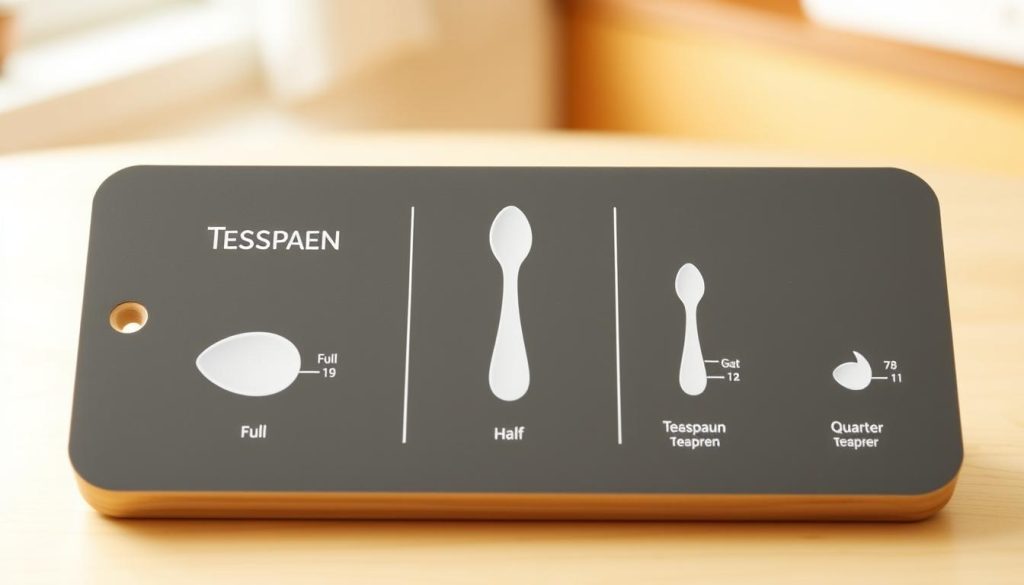
Mastering kitchen measurements is vital for cooking success. Half a teaspoon equals 2.5 ml in US Customary volume measurements1. This small amount can significantly impact your culinary creations.
Precise measurements are crucial in cooking. Even tiny variations in ingredient quantities can change a dish dramatically. Accurate measuring helps home cooks achieve tasty results consistently.
Exact measurements are especially important in delicate recipes. Half teaspoon measurements play a key role in recipes requiring precise proportions1. Understanding these small measurements can elevate your cooking skills.
Key Takeaways
- Half a teaspoon equals 2.5 ml in US measurements
- Precise measurements are critical in cooking and baking
- Small measurement variations can significantly impact recipe results
- Understanding kitchen measurements improves cooking skills
- Accuracy is key in creating consistent culinary experiences
Understanding Basic Kitchen Measurements and Conversions
Mastering spoon measurements and culinary units is crucial for cooks and chefs. Precise baking measurements can make or break a dish. Converting between different unit measurements is an essential skill in cooking.
Cooking and baking require accuracy, starting with understanding standard measurement tools. Common kitchen measuring tools include measuring cups, spoons, and kitchen scales.
- Measuring cups (dry and liquid)
- Measuring spoons
- Kitchen scale
Common Kitchen Measurement Terms
Culinary units come in various sizes and types. Standard measuring spoon sizes range from 1/4 teaspoon to 1 tablespoon. Remember, 1 tablespoon equals 3 teaspoons2.
Standard vs Metric Measurements
The U.S. uses standard measurements, while most countries use the metric system. A US legal cup holds 240 ml, standardized for nutrition labels3.
Ingredient weights can vary significantly:
- 1 cup of butter weighs 226 grams
- 1 cup of flour weighs 140 grams
- 1 cup of almond flour weighs 96 grams
Why Accurate Measurements Matter
Precision in unit conversions is critical for recipe success. A kitchen scale provides the most accurate measurements by weighing ingredients. Small measurement differences can greatly impact your dish’s texture and taste3.
“Cooking is an art, but baking is a science” – Unknown Chef
Chefs and bakers know that accurate measurements are key to creating delicious recipes. Mastering these skills will improve your cooking and baking results.
Half Teaspoon Measurement: Complete Breakdown
A half teaspoon is vital for precise cooking and baking. It equals 2.5 milliliters, a key measure in many recipes. Chefs and home cooks rely on accurate half teaspoon measurements for success.
Precision is crucial when measuring half teaspoons. Here are some important tips for perfect measurements:
- Standard conversion: 1 tablespoon equals 3 teaspoons, so a half teaspoon is one-sixth of a tablespoon4
- Metric equivalent: A half teaspoon is approximately 2.5 ml5
- Visual reference: Roughly the size of a fingertip
Bakers suggest using specific tools for accurate half teaspoon measurements. Precise measuring spoons can greatly impact recipe outcomes. This is especially true in baking, where small changes affect texture and taste.
Don’t guess when a recipe asks for a half teaspoon. Use a proper measuring spoon for accuracy. Level it off with a straight edge for best results.
This attention to detail can transform your cooking. It’s what sets apart great cooks from good ones.
Essential Tips for Recipe Scaling and Measurement
Mastering food measurements is key to cooking success. Precise measurements ensure consistency in your recipes. Understanding culinary units is vital when scaling recipes for perfect results6.
Digital kitchen scales are essential for accurate measurements. They help you scale recipes with incredible precision. Professional chefs prefer weight over volume for more reliable outcomes6.
Recipe scaling needs careful planning. Be mindful of ingredient proportions when doubling or halving recipes. It’s usually safe to double baking recipes, but quadrupling can cause issues6.
Specific techniques can help maintain recipe integrity. For half a large egg, use 1.5 tablespoons of lightly beaten egg. This equals about 26-28 grams7.
Knowing conversion techniques allows for confident experimentation. You can adjust cookie yields or modify cake recipes with ease. Scaling ingredients precisely will improve your cooking skills6.
FAQ
What exactly is a half teaspoon measurement?
A half teaspoon equals 2.5 milliliters or 1/16 of a cup. It’s half of a standard measuring teaspoon. This small amount is key for precise cooking and baking.
How can I measure a half teaspoon without a proper measuring spoon?
You can estimate using common items like a pinch of salt (about 1/8 teaspoon). Visually splitting a full teaspoon in half also works. For best results, use accurate measuring spoons.
Why are precise measurements so important in cooking?
Exact measurements matter, especially in baking. Ingredients interact chemically, so small changes can affect taste and texture. Even a half teaspoon difference can impact a recipe’s success.
What’s the difference between volume and weight measurements?
Volume measures space an ingredient takes up. Weight measures its actual mass. Volume can vary with ingredient density. Weight measurements often give more consistent cooking results.
How do I convert half teaspoon to metric measurements?
A half teaspoon is about 2.5 milliliters (ml) in metric. For exact conversions, use a digital kitchen scale. You can also use a conversion chart for specific ingredients.
Are measuring spoons universal across all countries?
No, measuring spoon sizes can differ between countries. The U.S. uses slightly different volumes than the UK or metric countries. Check recipe origins and use proper conversion tools.
Can I use a half teaspoon for both dry and liquid ingredients?
Yes, but dry and liquid ingredients may settle differently. Level off the spoon for dry ingredients like spices. For liquids, use a clear spoon at eye level.
What kitchen tools are best for precise measurements?
Get a set of graduated measuring spoons and a digital kitchen scale. Clear liquid measuring cups are also helpful. Stainless steel or heavy-duty plastic spoons with clear markings work best.
Source Links
- Measurement Equivalents | Exploratorium – https://www.exploratorium.edu/food/measurements
- Cooking Measurement Conversion – https://www.webstaurantstore.com/guide/582/measurements-and-conversions-guide.html?srsltid=AfmBOopEaUyL24zSziGe8CDLFG3ywx8CaMzaSJBKTuiKkL0GH8SfqWmB
- Basic Cooking Conversions and Measurements – https://www.asaucykitchen.com/basic-cooking-conversions-and-measurements/
- Breaking Down Ingredient Measurements – http://www.cuisineathome.com/how-to/breaking-down-ingredient-measurements/
- This Chart Shows You How to Convert Cooking Measurements – https://www.tasteofhome.com/article/cooking-measurement-conversion/?srsltid=AfmBOooxTW5_VeNdEjEkBMTxYCZEi9TB01dyZ1qNSArg8m8G_ojnRNI7
- How to Scale Recipes Like a Professional | Begin with Butter – https://beginwithbutter.com/how-to-scale-recipes-like-a-professional/
- How to Scale Any Recipe to Make it a Small Batch Recipe · i am a food blog – https://iamafoodblog.com/how-to-scale-any-recipe-to-make-it-a-small-batch-recipe/

