
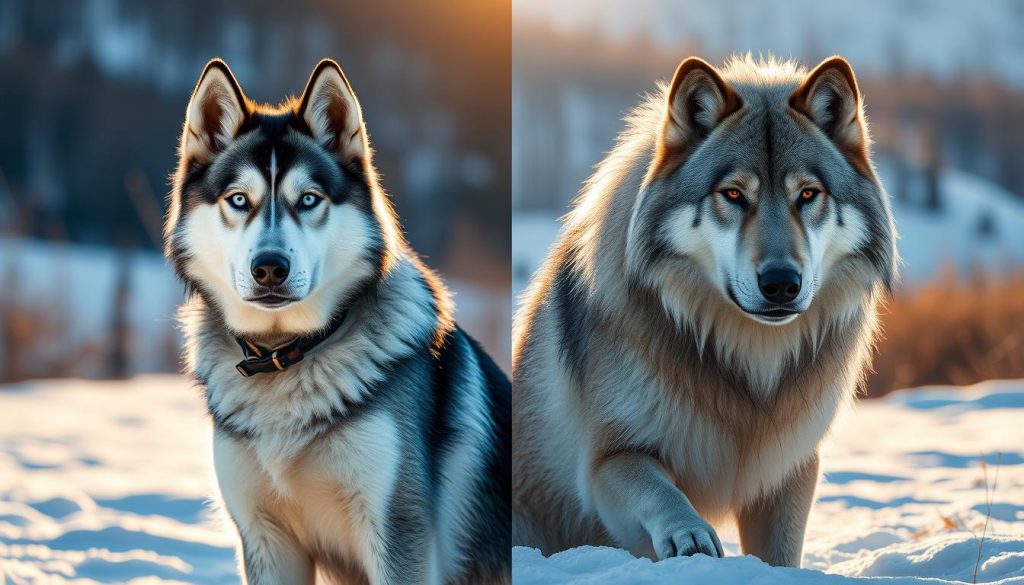
Dog breeds and wild canines have fascinating differences. Siberian Huskies and wolves share genetic traits, but their development paths differ greatly1. These two species represent distinct branches in the canine family tree2.
Huskies are bred to work with humans. Wolves, however, are untamed predators with complex social structures. Their survival instincts set them apart from domesticated dogs.
The Chukchi people in Siberia developed Huskies as working dogs3. These dogs played key roles in transportation and survival. Wolves, on the other hand, have roamed wild across continents for millennia2.
Key Takeaways
- Huskies share 85% genetic similarity with wolves
- Wolves are wild predators, while Huskies are domesticated companions
- Huskies stand 20-24 inches tall, wolves range 26-31 inches
- Huskies have a life expectancy of 12-15 years
- Wolves have limited trainability compared to Huskies
Physical Characteristics and Appearance Comparison
Siberian Huskies and wolves have fascinating physical differences. These distinctions stem from evolution and selective breeding. Let’s explore the unique traits of each species.
Size and Body Structure
Size is a key difference between Huskies and wolves. Siberian Huskies stand 20-23.5 inches tall and weigh 35-65 pounds4.
Wolves are much larger. They reach heights of 26-32 inches and weigh 50-110 pounds4. This size gap shows how selective breeding affects domestic dogs.
Coat and Color Patterns
Wolves usually have gray or brown fur. Huskies, however, come in many colors. Their thick double coat is a result of careful breeding5.
- Wolves: Typically gray or brown fur
- Huskies: Multiple color variations
- Coat thickness: Both have dense fur for temperature regulation
Facial Features
Huskies often have striking blue eyes and friendly expressions. Wolves have intense yellow eyes with a wild, predatory gaze. These differences highlight the effects of domestication4.
The physical differences between Huskies and wolves are remarkable. They show nature’s adaptability and the impact of human breeding practices.
Siberian Husky vs wolf difference
Siberian Huskies and wolves show fascinating differences in behavior. Wolves have strict pack hierarchies, while Huskies adapt to human families6. Dogs descended from wolves long ago, creating unique genetic paths7.
Domestication greatly changed canine behavior. Wolves have strong prey drives and hunt large animals together6. Huskies have less hunting instinct and prefer human interaction.
Wolves keep tight family units to teach survival skills6. Huskies live 12-15 years, much longer than wolves’ 6-8 years in the wild6.
Despite sharing 99% of DNA, they have big behavioral differences. Canine research explores these variations in.
Huskies are bred for human companionship and endurance. Wolves remain wild with complex survival strategies8. Both show nature’s amazing ability to adapt.
FAQ
Are Siberian Huskies and wolves the same species?
No, Siberian Huskies and wolves are different species. Huskies are domesticated dogs, while wolves are wild animals. They have distinct behaviors, genetics, and adaptability to human environments.
Can Siberian Huskies live in the wild like wolves?
Huskies can’t survive in the wild like wolves. They depend on humans for food, shelter, and protection. Huskies lack the survival skills and instincts of wild wolves.
Why do Huskies look so similar to wolves?
Huskies and wolves share genetic ancestry. The Chukchi people bred Huskies for sledding and companionship. Selective breeding kept some wolf-like traits while adapting Huskies for human interaction.
Do Huskies have wolf DNA?
Yes, Huskies share DNA with wolves. Domestication has led to genetic changes that set them apart. These differences affect behavior, temperament, and physical traits.
Are Huskies more dangerous than other dog breeds?
Huskies aren’t more dangerous than other breeds. They’re friendly, social dogs with high energy levels. Huskies need experienced owners who understand their needs for exercise, mental stimulation, and training.
Can Huskies and wolves interbreed?
Interbreeding Huskies and wolves is possible but not recommended. It can create animals with unpredictable behaviors. Responsible breeding focuses on maintaining the distinct traits of each species.
How long do Huskies live compared to wolves?
Huskies typically live 12-15 years with proper care. Wild wolves have a shorter lifespan of 6-8 years. Domesticated dogs benefit from veterinary care, good nutrition, and protection from environmental challenges.
Do Huskies have the same pack behavior as wolves?
Huskies keep some pack-like behaviors but see human families as their pack. Unlike wolves, Huskies are more flexible. They’ve been bred to work closely with humans.
Source Links
- ARE HUSKIES PART WOLF? – https://wolf-stuff.com/blogs/wolf-facts/are-huskies-part-wolf
- Husky vs. Wolf: What’s the Difference? Are They Related? | Hepper – https://www.hepper.com/husky-vs-wolf/
- How Are Siberian Huskies Related to Wolves? – https://bamahuskies.com/siberian-huskies-related-wolves/
- Siberian Husky vs Wolf: Are They Related? (Differences & More) | Canine Journal – https://www.caninejournal.com/siberian-husky-vs-wolf/
- 8 Differences Between Dogs and Wolves – https://www.petmd.com/8-differences-between-dogs-and-wolves-0
- Siberian Husky vs Wolf: Key Differences and Myths Debunked – https://citizenshipper.com/blog/siberian-husky-vs-wolf-key-differences-and-myths-debunked/
- Misconceptions and More: Dogs vs. Wolves – https://iditarod.com/edu/misconceptions-and-more-dogs-vs-wolves/
- Husky vs Wolf: Vet-Verified Differences (With Pictures) – Dogster – https://www.dogster.com/dog-breeds/husky-vs-wolf

