
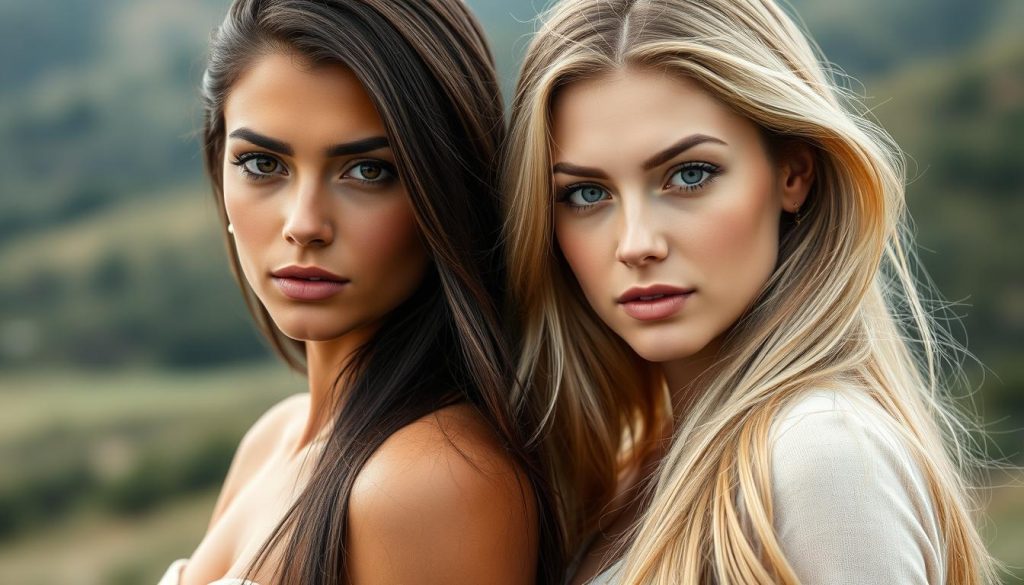
Hair color preferences have sparked endless debates in our society. Blonde and brunette beauty standards keep changing, challenging how we view attractiveness. This shift creates an interesting mix of opinions about hair color12.
Studies show surprising results about blonde and brunette appeal. Most blonde women think their hair color is ideal. Yet, only a third of men agree with this view1.
In fact, 60% of men prefer dark-haired women2. This shows that hair color preferences are more complex than we might think.
Hair color affects how people see women’s traits. Brunettes are often thought to be smarter and more independent2. A study found that men approached blondes more, but found brunettes more attractive and intelligent1.
Views on blonde and brunette beauty keep changing. Hair color influences how women are seen at work and in social settings3. These perceptions can affect how people value and treat women.
Key Takeaways
- Hair color significantly impacts societal perceptions of attractiveness
- Blonde and brunette women each have unique perceived attributes
- Men’s preferences for hair color are complex and varied
- Cultural beauty standards continuously evolve
- Individual confidence transcends hair color stereotypes
The Evolution of Hair Color Beauty Standards Through History
Hair color has been a powerful symbol of femininity and beauty ideals. Society’s view of hair color has changed dramatically over time. These changes reflect shifts in social attitudes and personal expression4.
The hair dye industry has seen remarkable growth. By 2025, the global hair color market may reach $28 billion. This shows the huge impact of hair color choices4.
In the 1950s, only 4-7% of American women dyed their hair. By 2015, about 70% were using hair color products4. Hair dyeing has become a mainstream practice.
The Marilyn Monroe Effect
Marilyn Monroe changed beauty standards with her platinum blonde hair. Her image challenged ideas of natural vs artificial beauty. The “blonde bombshell” stereotype became a powerful Hollywood archetype5.
Changing Perceptions in Modern Society
Research has shown complex dynamics in hair color preferences. Scientific studies suggest some interesting trends.
- Blonde women were approached more often in nightclubs6
- Brunettes were often seen as more intelligent and competent6
- Only 2% of people worldwide are naturally blonde5
Cultural and Regional Beauty Preferences
Beauty ideals vary greatly across different regions. South Korea prefers darker hair colors. Middle Eastern markets have seen growth in hair colorant sales4.
These variations show the complex link between cultural identity and personal style choices. Hair color remains a powerful form of self-expression worldwide.
Blonde vs Brunette Women Beauty: Scientific Research and Studies
Hair color greatly affects social interactions and perceived attractiveness. Studies show light-haired women are seen as more attractive and younger. Blonde women are approached more often in nightclubs.
Men rate brunettes as more intelligent and competent. A study found that men saw brunette women as more approachable and smart. These findings challenge simple beauty norms and show how complex attraction is.
Beauty is subjective, despite statistical differences. Only 2% of women are natural blondes, making this hair color rare. Research continues to explore these social patterns7.
Personal confidence and individual traits matter more than hair color. True attractiveness goes beyond stereotypes and hair shade preferences.
FAQ
Are blondes really considered more attractive than brunettes?
Beauty is subjective, and preferences vary widely. Historical stereotypes often favored blonde hair, but recent studies challenge this idea. Attractiveness depends on many factors, not just hair color.
How have beauty standards related to hair color changed over time?
Beauty standards have evolved dramatically over the years. The 1950s saw a rise in platinum blonde popularity. Today, society celebrates diversity and natural beauty more than ever before.
There’s growing appreciation for various hair colors. Narrow beauty stereotypes are being rejected in favor of inclusivity.
Do hair color preferences differ across cultures?
Yes, beauty ideals vary significantly across different regions and cultures. What’s attractive in Hollywood might differ from beauty standards in Asia or Europe. Local media, history, and cultural identity shape regional preferences.
Is there scientific research about hair color attractiveness?
Studies have explored hair color preferences, but results are often complex. Research shows that attractiveness involves many factors beyond just hair color. These include symmetry, skin tone, and individual facial features.
How do artificial hair coloring and extensions impact beauty perceptions?
Hair dye and extensions have changed beauty standards dramatically. They allow people to experiment with different looks and express themselves creatively. These tools challenge traditional ideas of natural beauty.
Are there psychological stereotypes associated with blonde and brunette hair?
Long-standing stereotypes exist about hair colors. Blondes are often seen as fun, while brunettes are perceived as serious. However, these generalizations are harmful and don’t reflect individual complexity.
How do racial beauty norms influence hair color preferences?
Racial beauty norms greatly impact hair color perceptions. Historically, Eurocentric standards favored certain hair colors and textures. Modern discussions challenge these narrow definitions of beauty.
There’s a growing movement to promote inclusive and diverse beauty representations.
Can hair color affect professional or social opportunities?
Research suggests subtle biases might influence first impressions based on hair color. However, professional skills and personal qualities are far more important. These factors truly determine social and career success.
Source Links
- Blonde versus brunette rivalry – https://en.wikipedia.org/wiki/Blonde_versus_brunette_rivalry
- There’s A Scientific Reason Why Men Are Either Into Brunettes Or Blondes – https://www.elitedaily.com/life/culture/theres-scientific-reason-men-either-brunettes-blondes/949394
- Blonde vs brunette: 11 celebrities help you decide – https://www.marieclaire.co.uk/beauty/hair/blonde-vs-brunette-441155
- From rainbow to gray: The evolution of hair dye | CNN – https://www.cnn.com/style/article/hair-dye-evolution/index.html
- Being Blonde Has Never Been Just About Hair Color – https://www.allure.com/story/history-of-blonde-hair
- Do Men Really Prefer Blondes? – https://www.psychologytoday.com/us/blog/why-bad-looks-good/202002/do-men-really-prefer-blondes
- Do blondes have more fun? Here’s what science has to say. – https://catrinaprager.medium.com/do-blondes-have-more-fun-heres-what-science-has-to-say-b2325bd879b2

