
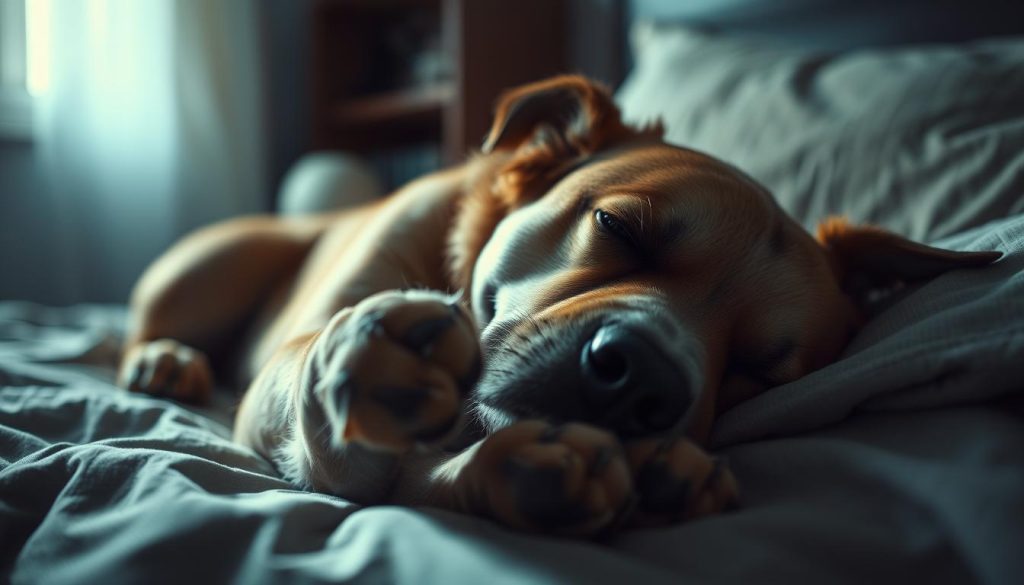
Dog nightmares can upset both pets and owners. Learning about canine sleep patterns helps manage these anxious moments. Dogs, like us, have vivid dreams that can turn into scary nightmares1.
Dogs sleep a lot, about 12 to 14 hours daily. Puppies need even more rest, sleeping around 19 hours a day1. Their sleep cycles differ from ours, lasting only 15 minutes1.
These unique patterns can lead to more sleep disturbances2. Canine nightmares may result from past trauma, physical pain, or anxiety. About half of dog owners have seen nightmare signs in their pets2.
Small dogs often dream more often, but their dreams are usually shorter1. During nightmares, dogs might growl, whimper, or twitch.
Key Takeaways
- Dogs experience complex sleep patterns with multiple dream cycles
- Nightmares can be triggered by past trauma or current stress
- Different dog breeds and ages experience dreams differently
- Most dogs show recognizable signs during nightmare episodes
- Understanding canine sleep can help manage pet nighttime anxiety
Understanding Dog Sleep Patterns and Dreams
Dogs have a fascinating sleep world that mirrors human dreaming. Their sleep cycles are complex, revealing intricate neurological processes. This captivates animal behaviorists and pet owners alike3.
Canines experience various sleep stages that affect their dream patterns. Dogs typically enter REM sleep about 10 minutes after dozing off. Breed and age can cause interesting variations in this process3.
How Dogs Enter REM Sleep
Dogs’ sleep patterns are unique and influenced by many factors. Studies show that active dogs have longer REM sleep cycles than less active ones3.
A dog’s restless sleep can stem from several key elements:
- Daily activity levels
- Age of the dog
- Sleeping environment
- Breed characteristics
The Science Behind Canine Dreams
To grasp dog night whimpering, we need to understand their sleep science. Young dogs, especially those under one year old, are more likely to have sleep disorders4.
These disorders can show up as:
- Violent limb movements
- Unexpected vocalizations
- Apparent distress during sleep
Differences Between Dog and Human Sleep Cycles
Humans and dogs share similar REM sleep traits, but there are key differences. Small dogs dream more often but have shorter episodes than larger breeds3.
Age plays a crucial role in a dog’s ability to control muscle movements during sleep4.
Veterinarians recommend monitoring sleep patterns and consulting professionals if frequent disturbances occur.
Knowing these sleep dynamics helps pet owners support their furry friends’ brain health. It also contributes to their emotional well-being.
Dog Nightmares Causes and Common Triggers
Dog panic during sleep involves complex emotional and physiological factors. Rescue dogs and puppies often have nightmares from past trauma. Signs include growling, twitching, and whining during sleep5.
Dog insomnia often stems from psychological stress and environmental changes. Anxious dogs may have more puppy night, especially those with difficult pasts6. Small breeds tend to dream more intensely, increasing sleep disturbances6.
Vets suggest creating a structured sleep routine to reduce nighttime anxiety. Regular exercise, calm sleeping areas, and addressing medical issues can help6. During nightmares, use vocal reassurance instead of touching to avoid startling them5.
Animal behaviorists recommend desensitization and counter-conditioning for sleep-related anxieties5. Understanding your pet’s triggers and offering emotional support can improve their sleep. This approach can help reduce nightmares and develop healthier sleep patterns.
FAQ
Do dogs really have nightmares?
Yes, dogs experience nightmares like humans do. Their brains go through REM sleep, where dreams happen. Dogs may whimper, twitch, or move suddenly during these distressing sleep experiences.
How can I tell if my dog is having a nightmare?
Look for rapid eye movement and muscle twitching in your sleeping dog. You might hear whimpering, crying, or growling. Your dog may seem agitated or appear to be running in their sleep.
What typically causes dog nightmares?
Dog nightmares can stem from past trauma, anxiety, or stress. Changes in environment, medical issues, or scary experiences can also trigger them. Rescue dogs may have more nightmares due to their troubled past.
Are some dog breeds more likely to have nightmares?
All dogs can have nightmares, but age and size can affect dream frequency. Smaller breeds and puppies often have more active sleep patterns. This might make their dreams seem more intense or frequent.
How can I help my dog if they’re experiencing frequent nightmares?
Create a calm sleep environment and stick to a bedtime routine. Give your dog a cozy place to sleep and address any anxiety issues.
If nightmares continue, talk to your vet. They can check for medical problems or suggest behavioral help.
Can dog nightmares be a sign of a serious health problem?
Occasional nightmares are normal for dogs. However, frequent or intense bad dreams might point to health issues. These could include neurological problems, anxiety disorders, or pain.
If sleep troubles persist, consult your vet for a checkup.
Do puppy night terrors differ from adult dog nightmares?
Puppies often have more intense sleep disturbances than adult dogs. Their developing nervous systems make them more sensitive. Puppy night terrors can be more frequent and dramatic.
Should I wake my dog during a nightmare?
It’s best not to suddenly wake your dog during a nightmare. Instead, speak softly to provide comfort. If your dog seems very upset, approach carefully and gently soothe them.
Source Links
- Do Dogs Dream? Dog Nightmares | AKC Pet Insurance – https://www.akcpetinsurance.com/blog/do-dogs-dream
- Do Dogs Have Nightmares? Signs Your Pup Isn’t Just Dreaming – Sidewalk Dog – https://www.sidewalkdog.com/do-dogs-have-nightmares-signs-your-pup-isnt-just-dreaming/
- Do Dogs Have Nightmares? – https://www.petmd.com/dog/general-health/do-dogs-have-nightmares
- Understanding Dog Nightmares: Causes, Signs, and How to Help – Petful – https://www.petful.com/pet-health/dog-nightmares/
- Can Dogs Have Nightmares? – https://www.thesprucepets.com/can-dogs-have-nightmares-4801170
- Do Dogs Have Nightmares? Vet-Verified Canine Facts – Dogster – https://www.dogster.com/dog-health-care/do-dogs-have-nightmares

