
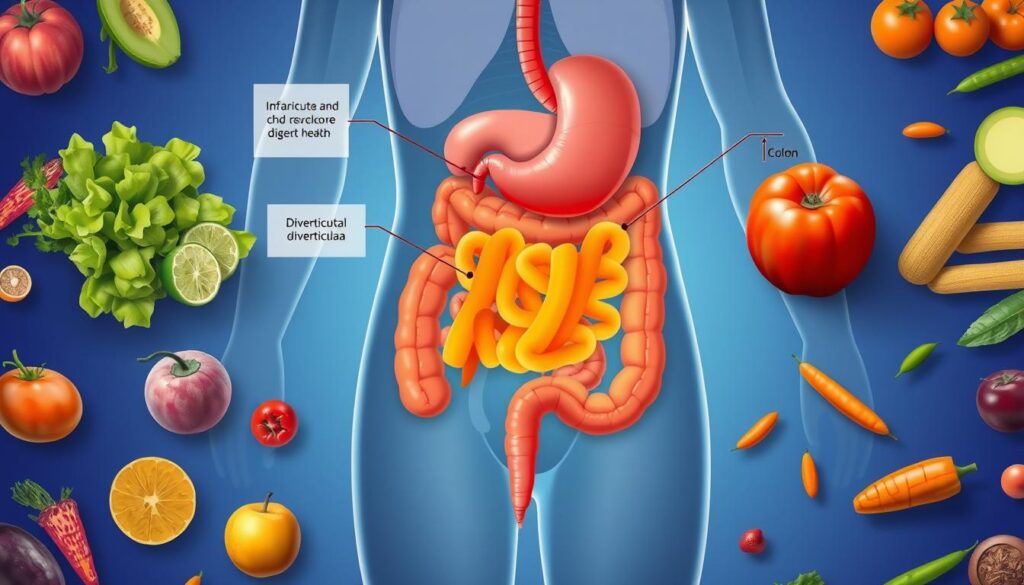
Diverticulitis is an intestinal disorder affecting digestive health. It occurs when small pouches in your colon’s wall become inflamed, causing abdominal pain1. People over 40 are more likely to develop this condition1.
Certain lifestyle factors increase your risk of diverticulitis. These include being overweight, smoking, lack of exercise, and a poor diet1. Genetics may also play a role in developing this condition1.
Untreated diverticulitis can lead to serious complications. These may include abscesses, perforation, scarring, fistulas, and strictures1. Severe cases might require hospitalization and advanced treatments1.
Key Takeaways
- Diverticulitis primarily affects individuals over 40
- Lifestyle and diet significantly influence your risk
- Genetic factors can contribute to developing the condition
- Untreated diverticulitis can lead to serious complications
- Early detection and proper management are crucial
What is Diverticulitis and Why Should You Care?
Diverticulitis is a complex gut disease affecting millions worldwide. It can cause painful inflammation in your colon. Understanding this condition helps protect your digestive health.
Your colon health is crucial. Diverticulosis occurs when small pouches form in the colon wall2. By age 80, at least half of people have these pouches2.
Defining Diverticulitis: The Basics
Diverticulitis happens when these pouches become inflamed or infected. This causes painful symptoms that disrupt daily life. Doctors aren’t sure about the exact cause3.
Understanding Diverticula vs. Diverticulitis
- Diverticulosis: Presence of pouches in the colon
- Diverticulitis: Inflammation of these pouches
- Less than 5% of people with diverticulosis develop diverticulitis4
The Prevalence of Diverticulitis in Your Life
Diverticular disease is common. Over 30% of Americans between 50-59 have diverticulosis. This rate jumps to 70% for those over 804.
“Your digestive health is a critical component of overall wellness.”
| Age Group | Diverticulosis Prevalence |
|---|---|
| 40 years old | 5% have diverticula2 |
| 50-70 years old | High-fiber diet can reduce hospital complications by 40%2 |
| Over 80 years old | 50-70% have diverticula2 |
Risk factors include age over 50, inactive lifestyle, genetics, and poor diet. Eat high-fiber foods, stay hydrated, and exercise regularly. Avoid eating too much red meat4.
Causes of Diverticulitis: What You Should Know
Diverticulitis is a complex inflammatory bowel condition. It develops through multiple interconnected factors. Understanding these causes can help you manage your diet and lifestyle better.
Your risk of diverticulitis depends on key factors affecting digestive health. Diet management plays a crucial role in prevention.
Dietary Factors Linked to Diverticulitis
Nutrition greatly influences your chances of developing diverticulitis. A low-fiber diet can raise your risk5.
Experts suggest eating 20 to 35 grams of fiber daily. This amount supports good digestive health5.
- High red meat consumption increases risk
- Low fiber intake contributes to potential complications
- Processed foods may trigger inflammatory responses
The Role of Genetics in Your Risk
Your genetic background can make you more likely to get diverticulitis. While not decisive, genes play a big part in your risk6.
| Population | Diverticular Characteristics |
|---|---|
| European Descent | Diverticula most common in sigmoid colon |
| Asian Descent | Diverticula more prevalent in first colon section |
Lifestyle Choices That Contribute to Diverticulitis
Your daily habits directly affect your digestive health. Several lifestyle factors can raise your diverticulitis risk7:
- Obesity
- Smoking
- Lack of exercise
- Heavy alcohol consumption
Regular exercise and mindful eating can significantly reduce your risk of developing this inflammatory condition.
Interesting fact: Over half of Americans over 60 will experience diverticulosis, making prevention crucial5.
Symptoms of Diverticulitis: Recognizing the Signs
Diverticulitis is a tricky gut disease that can surprise many people. Knowing its signs is key for good digestion and getting help when needed.
Common Symptoms You Might Experience
Belly pain is the main sign of diverticulitis. It often shows up in specific ways. Many adults aged 50-59 may have related symptoms8.
The pain can be:
- Sudden, intense discomfort in the lower left abdomen
- Gradually worsening pain over time
- Potential fever and chills
- Nausea or vomiting
When to Seek Medical Attention
Not all tummy troubles are serious. But some signs mean you should see a doctor right away.
Call your doctor if you have:
- Persistent abdominal pain lasting more than a few days
- High fever accompanying abdominal pain
- Significant changes in bowel habits
- Unexplained weight loss
Diagnosing Diverticulitis: What to Expect
Finding out if you have this gut disease takes a full approach. Your doctor will likely do:
| Diagnostic Test | Purpose |
|---|---|
| Physical Examination | Check for abdominal tenderness and inflammation |
| Blood Tests | Identify potential infection or inflammation markers |
| CT Scan | Visualize colon and detect diverticular changes |
“Early detection and proper diagnosis are key to managing diverticulitis effectively.” – Gastroenterology Experts
Your lifestyle can affect your chance of getting diverticulitis9. Eating well and staying active can help. Being aware of your gut health is your best defense.
Treatment Options for Diverticulitis: Finding Relief
Diverticulitis treatment varies based on its severity. Mild cases often involve rest and dietary changes. Doctors may recommend a temporary clear liquid diet for recovery10.
Medications are crucial in managing diverticulitis. Antibiotics fight infection and prevent complications10. Probiotics can support gut health during recovery.
Your doctor might suggest diet management strategies to prevent future flare-ups10. These can help maintain digestive balance long-term.
Surgery may be needed if other treatments fail. A colon resection can remove affected areas and prevent recurrence10. Your doctor will assess your case to determine the best approach11.
Prevention is key in managing diverticulitis. A high-fiber diet and regular exercise can reduce future risks10. Avoiding smoking also helps prevent complications.
Work closely with your healthcare provider. Together, you can create a personalized treatment and prevention plan. This ensures the best care for your specific needs.
FAQ
What exactly is diverticulitis?
Diverticulitis is an inflammatory condition of the colon. It occurs when small pouches in the intestinal wall become inflamed or infected. These pouches, called diverticula, are not inflamed in diverticulosis.
Who is most at risk for developing diverticulitis?
People over 50 face the highest risk. A low-fiber diet, obesity, and lack of exercise increase the likelihood. Smoking, heavy alcohol use, and certain medications also contribute to the risk.
What are the typical symptoms of diverticulitis?
The main symptoms include sudden or worsening abdominal pain, often in the lower left area. Fever, nausea, vomiting, and changes in bowel habits are common.
In some cases, particularly for people of Asian descent, the pain might be in the upper right area.
How is diverticulitis diagnosed?
Diagnosis usually involves a physical exam, blood tests, and imaging studies like CT scans. Your doctor may request urine and stool samples. Liver enzyme tests and a colonoscopy might be needed after the acute phase.
What treatment options are available for diverticulitis?
Treatment depends on severity. Mild cases may need rest, diet changes, and antibiotics. Severe cases might require hospital care and intravenous antibiotics.
In chronic situations, surgical intervention like bowel resection may be necessary.
Can diverticulitis be prevented?
You can’t completely prevent it, but you can reduce your risk. Eat a high-fiber diet, stay hydrated, and exercise regularly. Avoid smoking and consider probiotic supplements for digestive health.
When should I seek medical attention?
Seek immediate care for constant, unexplained abdominal pain with fever and bowel habit changes. Early detection and treatment can prevent serious complications.
Are there any long-term complications of diverticulitis?
Potential complications include abscesses, fistulas, peritonitis, and bowel obstruction. Proper management and following your doctor’s advice are crucial to avoid these issues.
How does diet impact diverticulitis?
Diet plays a big role. A low-fiber diet increases risk, while fiber-rich foods help prevent flare-ups. During acute episodes, your doctor might suggest a temporary liquid diet.
Can diverticulitis recur?
Yes, diverticulitis can come back. A healthy lifestyle, proper diet, and stress management help reduce recurrences. Work closely with your doctor to manage the condition effectively.
Source Links
- The Basics of Diverticulitis – https://www.webmd.com/digestive-disorders/understanding-diverticulitis-basics
- Diverticular disease and diverticulitis symptoms and treatments – https://www.nhsinform.scot/illnesses-and-conditions/stomach-liver-and-gastrointestinal-tract/diverticular-disease-and-diverticulitis/
- Diverticulitis: Care Instructions – https://myhealth.alberta.ca/Health/aftercareinformation/pages/conditions.aspx?hwid=uf7627
- Diverticulitis Causes, Symptoms, and Treatments | UPMC – https://www.upmc.com/services/digestive-disorders-center/conditions-we-treat/diverticulitis
- Diverticular Disease – https://www.hopkinsmedicine.org/health/conditions-and-diseases/diverticular-disease
- Diverticulitis – https://my.clevelandclinic.org/health/diseases/10352-diverticulitis
- Diverticulitis – Symptoms and causes – https://www.mayoclinic.org/diseases-conditions/diverticulitis/symptoms-causes/syc-20371758
- Diverticulosis | Diverticulitis | MedlinePlus – https://medlineplus.gov/diverticulosisanddiverticulitis.html
- Symptoms & Causes of Diverticular Disease – NIDDK – https://www.niddk.nih.gov/health-information/digestive-diseases/diverticulosis-diverticulitis/symptoms-causes
- Treatment for Diverticular Disease – NIDDK – https://www.niddk.nih.gov/health-information/digestive-diseases/diverticulosis-diverticulitis/treatment
- Diagnosis and Management of Acute Diverticulitis – https://www.aafp.org/pubs/afp/issues/2013/0501/p612.html

