
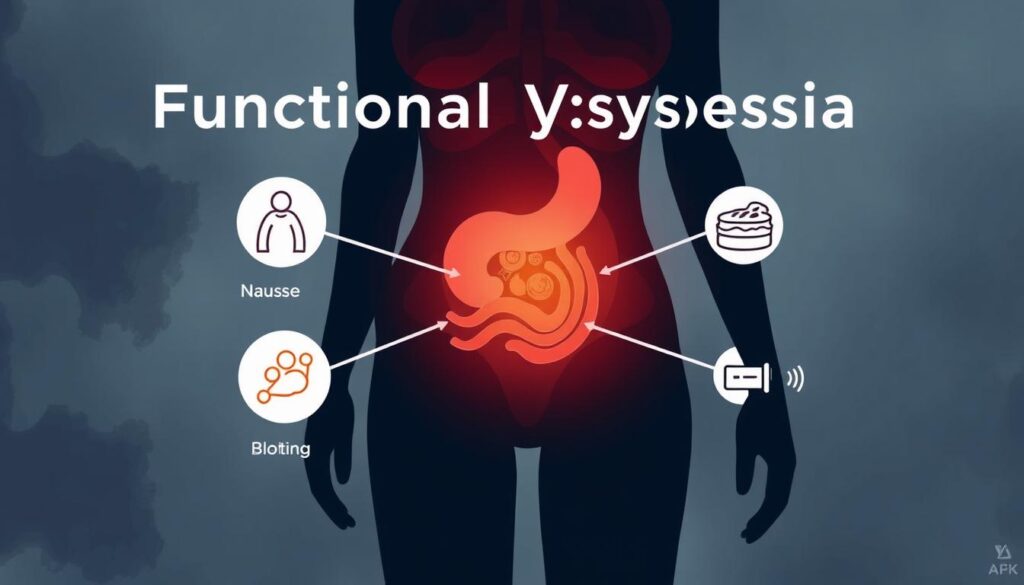
Stomach discomfort can be frustrating and overwhelming. Functional dyspepsia is a complex digestive condition affecting many people. It causes epigastric pain, bloating, and discomfort after eating, lasting for months1.
This isn’t simple indigestion. It’s an intricate disorder that can dramatically impact your life2. Functional dyspepsia causes recurring upper abdominal symptoms without a clear medical explanation.
You might feel stomach pain or get full quickly while eating1. The tricky part is that standard medical tests often don’t show it3.
Knowing your body’s signals is crucial. You may experience burning sensations, bloating, and nausea without warning. These issues can come from stress, food sensitivities, or other health conditions2.
Key Takeaways
- Functional dyspepsia involves persistent stomach discomfort lasting 3+ months
- Symptoms include epigastric pain, bloating, and early feeling of fullness
- The condition is more complex than typical indigestion
- Stress and anxiety can worsen symptoms
- Medical tests often show normal results
What is Functional Dyspepsia and Its Common Symptoms
Functional dyspepsia is a complex digestive disorder affecting millions worldwide. It causes persistent discomfort in the upper digestive tract without a clear medical cause4. This condition impacts over 20% of the population, making it a significant health concern4.
The condition manifests through various dyspeptic symptoms that can disrupt daily life. Patients often experience epigastric discomfort in the upper abdomen. This can range from mild irritation to more intense pain.
Key Signs and Symptoms to Watch For
- Persistent nausea after meals
- Burning sensation in the upper abdomen
- Early satiety (feeling full quickly)
- Bloating and stomach discomfort
- Occasional acid reflux
Types of Functional Dyspepsia
Medical experts recognize two primary types of this chronic gastric disorder:
| Type | Primary Symptoms |
|---|---|
| Epigastric Pain Syndrome (EPS) | Burning pain, persistent discomfort in upper abdomen |
| Postprandial Distress Syndrome (PDS) | Fullness, bloating after eating, early satiety |
Risk factors include being female, experiencing psychological stress, and having a history of H. pylori infection5. About 30% to 40% of people in the U.S. are affected by H. pylori. This bacteria can contribute to functional dyspepsia5.
Understanding your symptoms is the first step toward managing functional dyspepsia effectively.
Understanding the Causes of Functional Dyspepsia
Functional dyspepsia is a complex digestive condition with multiple potential triggers. Its exact causes remain unclear, but several key factors contribute to its development6.
Your risk of indigestion and abdominal pain increases with specific lifestyle and health traits. Research points to certain factors playing a significant role:
Psychological and physical factors intersect in functional dyspepsia’s appearance. Anxiety, depression, and high pain sensitivity can trigger bloating and nausea6.
Potential underlying causes include:
- Helicobacter pylori infection7
- Gastroparesis (slow stomach emptying)7
- Diet-related factors like overeating7
- Inflammatory gastritis7
“Understanding your body’s unique signals is key to managing functional dyspepsia.”
Diagnostic approaches help identify specific triggers. Your doctor might suggest breath analysis, endoscopy, or gastric emptying studies.
These tests can pinpoint the exact cause of your symptoms7. Knowing the root issue helps create an effective treatment plan.
Conclusion
Living with functional dyspepsia can be tough. But knowing your chronic gastric disorder helps you take control. This condition affects many people worldwide8.
There are ways to manage your indigestion and boost your life quality9. Your treatment should be tailored to you. It may include addressing anxiety, which is linked to functional dyspepsia8.
Lifestyle changes, diet tweaks, and stress management can help control symptoms10. Despite its complexity, functional dyspepsia isn’t deadly9. This is good news for those affected.
Medical research keeps uncovering new findings. Scientists are studying links between functional dyspepsia and other conditions. They’re exploring its overlap with irritable bowel syndrome.
New discoveries about gut microbiome and inflammation may lead to better treatments8. You’re not alone in this struggle. Work with your doctors and stay informed.
You can create a solid plan to manage functional dyspepsia. This will help you face challenges with confidence and hope.
FAQ
What exactly is functional dyspepsia?
Functional dyspepsia is a chronic condition causing recurring upper abdominal discomfort. It’s also called nonulcer dyspepsia. Symptoms include epigastric pain, bloating, early satiety, and nausea without clear organic reasons.
What are the main types of functional dyspepsia?
There are two primary types: Epigastric Pain Syndrome (EPS) and Postprandial Distress Syndrome (PDS). EPS involves upper abdominal pain and burning. PDS causes early fullness, bloating, and nausea after eating.
What causes functional dyspepsia?
The exact causes aren’t fully understood. Potential factors include impaired stomach accommodation, food sensitivities, and H. pylori infection. Visceral hypersensitivity and changes in brain-gut interactions may also contribute.
Stress, anxiety, and emotional factors can trigger or worsen symptoms. These elements play a significant role in the condition’s development.
Who is most at risk for developing functional dyspepsia?
Risk factors include anxiety, depression, past abuse, and H. pylori infection. Frequent use of NSAIDs, smoking, and being assigned female at birth also increase risk. People with sensitive nervous systems are more likely to experience this condition.
How is functional dyspepsia diagnosed?
Symptoms must be present within the last three months and persist for six months. Healthcare providers rule out other conditions through various tests. They also review the patient’s comprehensive medical history.
What are the most common symptoms of functional dyspepsia?
Common symptoms include epigastric pain, bloating, and early satiety. Loss of appetite, heartburn, and acid reflux may also occur. Nausea and occasional vomiting are reported in the upper digestive tract.
How can I manage functional dyspepsia?
Management involves medications to reduce stomach acid and improve digestive movement. Addressing underlying mental health issues is crucial. Lifestyle changes, like dietary adjustments and stress management, help control symptoms.
Working closely with healthcare providers is essential for effective symptom management. They can guide you through the treatment process.
Is functional dyspepsia a serious condition?
Functional dyspepsia can significantly impact quality of life but isn’t typically life-threatening. It can be chronic and challenging to manage. Ongoing research continues to improve understanding and potential treatment options.
Source Links
- Functional Dyspepsia: Symptoms, Diet, Treatment & Living With – https://my.clevelandclinic.org/health/diseases/22248-functional-dyspepsia
- Functional dyspepsia – Symptoms and causes – https://www.mayoclinic.org/diseases-conditions/functional-dyspepsia/symptoms-causes/syc-20375709
- Understanding Functional Dyspepsia – https://www.saintlukeskc.org/health-library/understanding-functional-dyspepsia
- Functional Dyspepsia – StatPearls – NCBI Bookshelf – https://www.ncbi.nlm.nih.gov/books/NBK554563/
- Functional Dyspepsia: Symptoms & Causes | NewYork-Presbyterian – https://www.nyp.org/digestive/functional-gastrointestinal-disorders/functional-dyspepsia
- Functional Dyspepsia: Definition, Causes, Symptoms, Diagnosis, More – https://www.healthline.com/health/functional-dyspepsia
- Functional Dyspepsia Causes and Diagnoses – https://www.nm.org/conditions-and-care-areas/gastroenterology/functional-dyspepsia/causes-and-diagnoses
- Functional dyspepsia: How to manage the burn and the bloat – https://www.ccjm.org/content/91/5/301
- Functional Dyspepsia: Advances in Diagnosis and Therapy – https://pmc.ncbi.nlm.nih.gov/articles/PMC5417776/
- Functional Dyspepsia: A Narrative Review With a Focus on Sex-Gender Differences – https://www.jnmjournal.org/journal/view.html?uid=1600&vmd=Full

