
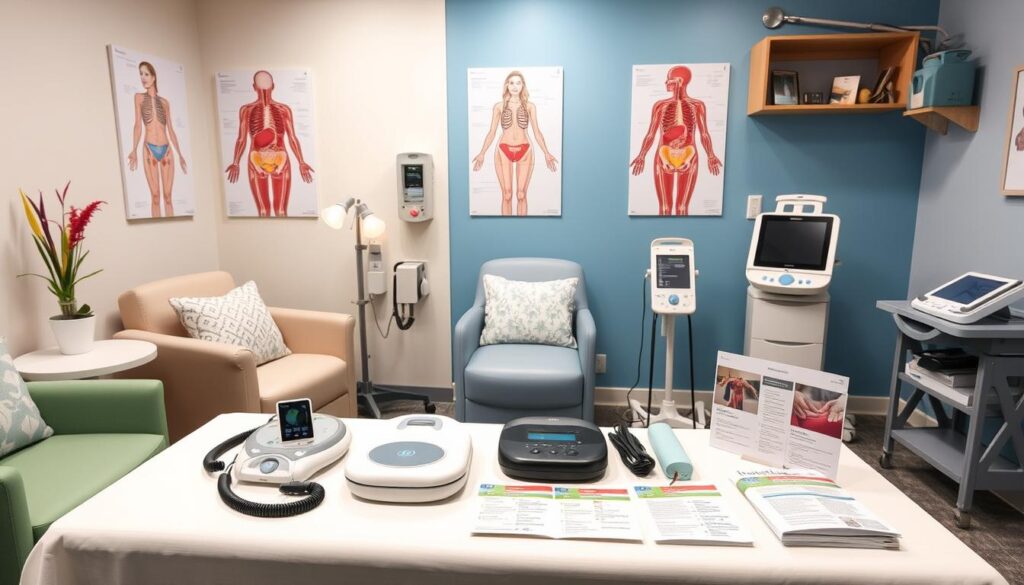
Fecal incontinence affects millions, impacting daily life and emotions. Understanding your bowel control issues is crucial for effective management. This condition is challenging, but you’re not alone1.
Treatment for fecal incontinence offers hope. Simple approaches can help you regain control and confidence. Dietary changes, targeted exercises, and medical interventions can greatly improve symptoms1.
Multiple options exist for occasional leakage or persistent issues. These range from lifestyle changes to advanced medical procedures. Your doctor can create a plan for your specific incontinence causes2.
Key Takeaways
- Fecal incontinence is a manageable condition with various treatment options
- Simple treatments can improve symptoms by up to 60%
- Personalized approaches are key to successful management
- Early intervention can significantly improve quality of life
- Multiple diagnostic and treatment methods are available
Understanding Fecal Incontinence: Causes and Risk Factors
Fecal incontinence affects many people’s pelvic health and daily life. Knowing the causes helps manage bowel control better. It allows for necessary lifestyle changes3.
Common Causes of Bowel Control Issues
Bowel control problems can stem from various medical conditions. Key causes include:
- Neurological disorders affecting nerve signals
- Muscle damage from childbirth or surgery
- Chronic digestive diseases
- Spinal cord injuries
About 1 in 12 adults experience fecal incontinence. Some groups face higher risks3.
Risk Factors and Contributing Conditions
Several factors can increase your chances of bowel control issues:
- Advanced age (particularly over 65)
- Gender (women are more susceptible)
- Chronic medical conditions
Lifestyle and medical history play crucial roles in understanding and managing fecal incontinence.
Women face higher risks due to childbirth injuries and hormonal changes. Conditions like IBD and IBS can worsen bowel control4.
Being overweight and lack of exercise may increase incontinence risks. Smoking and drinking caffeine or alcohol can also contribute4.
Recognizing these factors is the first step towards effective management and improved quality of life.
Diagnosis and Assessment Methods
Diagnosing fecal incontinence requires a thorough medical approach. Healthcare providers use various tests to understand the causes of your pelvic health issues. These tests help determine the most effective treatment strategies for fecal incontinence.
Doctors use several diagnostic tests to gain insights into your condition. These include blood tests, stool tests, and urine tests. Each test serves a specific purpose in evaluating your health.
- Blood tests to detect signs of anemia, inflammation, and infection5
- Stool tests to identify blood, infection, or inflammatory markers5
- Urine tests to screen for underlying conditions like type 2 diabetes5
Advanced techniques offer deeper insights into your pelvic health. Anorectal manometry evaluates muscle and nerve function around the anal region6. It measures anal canal pressures and sensations, with normal resting pressures typically ranging from 60 to 80 mm Hg6.
“Precise diagnostic methods are crucial in developing an effective treatment plan for fecal incontinence.” – Pelvic Health Specialists
Imaging technologies play a key role in diagnostic assessments. These tests help doctors see inside your body and identify potential issues.
| Diagnostic Imaging Test | Purpose |
|---|---|
| Endoanal Ultrasound | Identifies sphincter injuries and anatomical deficiencies6 |
| Magnetic Resonance Defecography | Evaluates rectum and pelvic organs during defecation6 |
| Fluoroscopic Defecography | Detects rectoceles and internal rectal prolapse6 |
Your doctor might ask you to keep a food and bowel diary. This can help identify triggers and patterns linked to your fecal incontinence symptoms.
Fecal Incontinence Treatment Options and Solutions
Fecal incontinence is tough, but many treatments can help you regain control. Various strategies exist to manage this condition effectively, from simple approaches to advanced medical interventions7.
Understanding available treatments is key to managing fecal incontinence. Comprehensive treatment plans often combine multiple strategies tailored to your needs.
Conservative Treatment Approaches
Conservative fecal incontinence treatment often starts with lifestyle changes:
- Dietary changes to regulate bowel movements
- Pelvic floor exercises to strengthen muscle control
- Bowel training techniques
- Over-the-counter medications for diarrhea management
Pelvic floor exercises, especially Kegel exercises, can boost muscle strength and control. These targeted movements help rebuild muscles responsible for bowel control8.
Advanced Treatment Methods
Medical interventions offer additional options when conservative approaches aren’t enough:
- Injectable bulking agents
- Electrical stimulation techniques
- Sacral nerve stimulation
- Surgical interventions
Advanced medical interventions can offer hope for those struggling with persistent fecal incontinence7.
Surgical options like sphincteroplasty or artificial anal sphincter implantation may be considered in severe cases. Your doctor can help choose the best treatment for your condition.
Fecal incontinence affects 1.5% to 18% of people7. You’re not alone in seeking help. Talking to a medical professional can help create a plan just for you.
Conclusion
Fecal incontinence affects about 2.2% of Americans over 65. But don’t worry! There are many ways to improve bowel control and boost your confidence9. Effective treatments can help you regain your quality of life10.
Lifestyle changes are key in managing symptoms. Work with your doctor to create a plan that fits you. This may include diet tweaks, pelvic exercises, or medical treatments11. Stay patient, as results can take time.
Non-surgical options often have fewer risks. They give you many strategies to try. Your active role is crucial in managing this condition.
Use protective gear and keep good hygiene. Stay updated on new treatments. Many people successfully handle this issue with proper support and care.
Remember, each person’s experience is different. There’s no one-size-fits-all answer. Be kind to yourself and seek help when needed.
With the right care and approach, you can manage symptoms well. Stay hopeful and work closely with your healthcare team. You can improve your life and regain control910.
FAQ
What is fecal incontinence?
Fecal incontinence is the inability to control bowel movements. It causes unintentional leakage of stool or gas. This condition affects about 1 in 10 people, especially women and those over 65.
Fecal incontinence can greatly impact your daily life. However, proper diagnosis and treatment can help manage it effectively.
What are the common causes of fecal incontinence?
Several factors can lead to fecal incontinence. These include chronic illnesses, injuries, and surgeries. Diarrhea, constipation, and large hemorrhoids are common culprits.
Other causes include spinal cord injuries, birth defects, and diabetes. Severe dementia, inflammatory bowel diseases, and tumors can also contribute. Childbirth injuries and rectal prolapse are additional factors to consider.
How is fecal incontinence diagnosed?
Doctors use a thorough approach to diagnose fecal incontinence. This includes a detailed medical history and physical exam. Various tests may be used to pinpoint the cause.
These tests can include anal manometry, MRI, and anorectal ultrasound. Proctography, proctosigmoidoscopy, and colonoscopy are also helpful. Keeping a food and bowel diary can reveal important patterns.
What treatment options are available?
Treatment options range from simple to advanced methods. Conservative approaches include changing your diet and doing pelvic floor exercises. Bowel training and over-the-counter medications like loperamide can also help.
More advanced treatments include biofeedback therapy and electrical stimulation. Injectable bulking agents and anal plugs are other options. In some cases, surgery like sphincteroplasty or sacral nerve stimulation may be needed.
Can fecal incontinence be prevented?
While not always preventable, you can lower your risk. Eat a healthy diet, stay hydrated, and do pelvic floor exercises. Manage underlying health conditions and maintain a healthy weight.
Regular exercise can improve bowel control. Avoiding constipation is also important for prevention.
How can I manage daily life with fecal incontinence?
Use absorbent products and practice good skin care. Establish a consistent bathroom routine and identify trigger foods. Work with your doctor to create a management plan.
Track your diet and bowel movements to better manage symptoms. These lifestyle adjustments can greatly improve your quality of life.
When should I see a doctor?
Consult a doctor if you have persistent bowel control issues. Seek help for frequent leakage or unexpected changes in bowel habits. If the condition affects your daily life, it’s time to get professional help.
Early diagnosis and treatment can prevent complications. Don’t hesitate to seek medical advice for better quality of life.
Source Links
- Treatment of Fecal Incontinence – NIDDK – https://www.niddk.nih.gov/health-information/digestive-diseases/bowel-control-problems-fecal-incontinence/treatment
- Fecal incontinence – Diagnosis and treatment – https://www.mayoclinic.org/diseases-conditions/fecal-incontinence/diagnosis-treatment/drc-20351403
- Understanding Fecal Incontinence – https://www.hopkinsmedicine.org/health/conditions-and-diseases/understanding-fecal-incontinence
- Fecal incontinence – Symptoms and causes – https://www.mayoclinic.org/diseases-conditions/fecal-incontinence/symptoms-causes/syc-20351397
- Diagnosis of Fecal Incontinence – NIDDK – https://www.niddk.nih.gov/health-information/digestive-diseases/bowel-control-problems-fecal-incontinence/diagnosis
- Diagnostic Testing for Fecal Incontinence – https://pmc.ncbi.nlm.nih.gov/articles/PMC4174193/
- Fecal Incontinence Expanded | ASCRS – https://fascrs.org/patients/diseases-and-conditions/a-z/fecal-incontinence-expanded
- Urinary and Fecal Incontinence Treatment – https://www.rwjbh.org/rwj-university-hospital-new-brunswick/treatment-care/pelvic-floor-and-incontinence-program/urinary-and-fecal-incontinence-treatment/
- Fecal Incontinence: Etiology, Evaluation, and Treatment – https://pmc.ncbi.nlm.nih.gov/articles/PMC3140335/
- New Options for the Treatment of Fecal Incontinence – https://pmc.ncbi.nlm.nih.gov/articles/PMC3096428/
- Treatments for Fecal Incontinence: Current State of the Evidence – https://effectivehealthcare.ahrq.gov/products/fecal-incontinence/clinician

