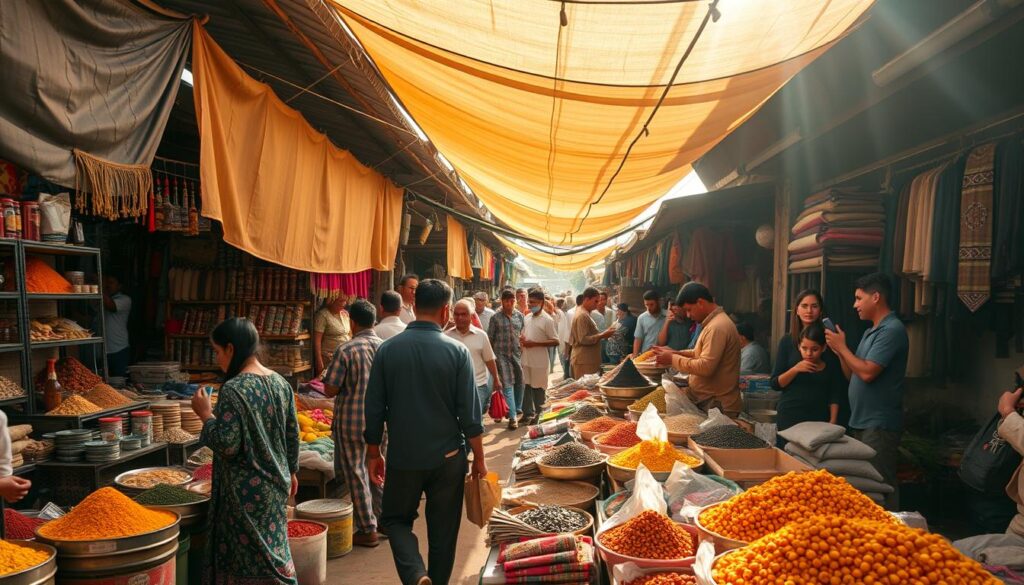
Markets and bazaars are vibrant spaces full of visual stories. Your camera can capture these cultural hubs and reveal their unique human connections. These places offer a glimpse into local economies and community life.
Markets worldwide present diverse photo opportunities. Istanbul’s Grand Bazaar has thousands of stalls1. Bangkok’s Chatuchak market boasts 15,000 vendor spaces2. Each location showcases a rich tapestry of visual narratives.
These spaces are more than just shopping destinations. They’re cultural crossroads where traditions and commerce meet. Your lens can turn ordinary market scenes into extraordinary visual experiences.
Through photography, you can tell compelling stories about local communities. You’ll capture the essence of human interactions and economic activities. These images can offer unique insights into the heart of a culture.
Key Takeaways
- Markets offer unique storytelling opportunities through photography
- Understand cultural context before shooting
- Respect vendor and customer interactions
- Focus on capturing authentic moments
- Learn local market dynamics and rhythms
- Experiment with different photographic techniques
Finding the Right Markets and Bazaars to Photograph
Markets offer a unique window into local culture and artisanal crafts. These vibrant hubs tell stories through every frame. Your camera can capture global flavors and traditions in these lively spaces.
Look for both popular spots and hidden local gems. Your photo adventure can span diverse landscapes. Explore bustling urban centers and quaint rural gathering spots.
Researching Popular Local Markets
Begin by exploring markets with rich cultural backgrounds. Here are some incredible locations to consider:
- Marrakech’s open-air bazaars, which are active daily3
- Otavalo’s market in Ecuador, most vibrant on Saturdays3
- Berlin’s weekend flea markets3
Exploring Hidden Gems in Your Area
Local markets often showcase authentic haggling traditions and unique community dynamics. Look beyond tourist spots for truly representative locations.
New York City offers some remarkable examples:
- Essex Street Market with its distinctive vendor personalities4
- Uptown Night Market in Harlem attracting 7,000 guests4
- Urban Hawker featuring diverse international cuisines4
Understanding Cultural Significance
Markets are living museums of cultural exchange. From Doha’s historic Souq Waqif5 to Istanbul’s expansive Grand Bazaar5, each tells a unique story.
“Every market has a soul, waiting to be captured through your lens.”
Your photos can turn these community spots into visual narratives. Capture the local heritage and global connections in these lively spaces.
Essential Photography Techniques for Capturing Markets
Market photography blends street scenes with cultural documentation. Mastering specific techniques brings vibrant market atmospheres to life. Pros suggest key strategies for compelling visual storytelling6.
Utilizing Natural Light for Stunning Shots
Use golden hour light to enhance market images7. Camera settings are crucial for sharp, vibrant candid shots. Consider these recommended settings:
- Shutter speed: Aim for 1/100 sec to prevent blurred images6
- ISO: Use 400 in low-light market conditions6
- Aperture: Experiment with wide settings to create depth7
Composition Tips for Dynamic Images
Focus on unique perspectives for engaging market photographs6. Try these composition techniques:
- Experiment with different angles (crouch down or shoot from above)6
- Fill the frame with colorful market stalls and products6
- Use the rule of thirds for balanced compositions7
Engaging with Vendors for Authentic Moments
Always ask for permission before taking photographs7. Engage with vendors and capture genuine interactions between customers and sellers6.
Your approach can turn an ordinary market scene into a powerful local life narrative.
The magic of market photography lies in capturing the human connection beyond mere visual details.
Editing Your Market and Bazaar Photos
Photo editing elevates raw images into compelling visual stories of bazaars and marketplaces. Color grading enhances rich textures and atmospheric details. These techniques capture the unique essence of each market8.
Choosing the right editing software is key for visual storytelling. Adobe Lightroom and Capture One offer advanced features for color and contrast adjustments. Focus on authenticity while subtly enhancing visual appeal9.
Highlight intricate details and vibrant energy that make each marketplace special. Your goal is to showcase the cultural richness of markets you’ve photographed.
For social media, create a cohesive narrative of global marketplaces. Use targeted hashtags and engaging captions to draw viewers in. Carefully edited images transform into windows of cultural exploration8.
Social media marketing connects audiences through powerful visual stories. Your market photographs become artistic expressions of diverse cultures. Share your edited work to inspire and engage viewers9.
FAQ
What makes local markets and bazaars unique for photography?
Local markets are vibrant cultural hubs offering incredible photo opportunities. They capture authentic human interactions and showcase local economies. These spaces provide insight into community life through street vendors, artisanal crafts, and global flavors.
How do I approach vendors and people for photographs?
Approach with confidence and respect. Always ask for permission using verbal communication or gestures. Smile, be friendly, and show genuine interest in their products or culture.
Many vendors are happy to be photographed if you show curiosity about their work. Take multiple shots, including posed and candid images to capture natural expressions.
What should I look for when photographing markets?
Focus on capturing both people and products. Look for colorful characters, expressive faces, and interesting details of what’s being sold. Pay attention to textures, colors, and interactions that reveal the market’s unique atmosphere.
Explore different areas of the market. Be patient and wait for spontaneous, meaningful moments to unfold.
How can I find interesting markets to photograph?
Consider both popular and lesser-known markets. Smaller towns often have central markets that offer more authentic experiences. Larger cities provide multiple options. Local food or animal markets typically provide deeper cultural insights.
Before photographing, take a walk around to understand the environment. Identify potential subjects and become familiar with the space.
What editing techniques work best for market photography?
Focus on enhancing the scene’s authenticity when editing market photos. Adjust colors, contrast, and sharpness to bring out the market’s vibrancy. Pay special attention to capturing the true colors and textures.
Create a cohesive narrative that showcases the cultural significance of the space. This approach works well when sharing on social media.
What equipment do I need for market photography?
You don’t need expensive gear to capture great market photos. A camera with good low-light performance and a versatile lens works best. Consider a zoom lens for wide shots and close-up details.
A lightweight setup is crucial. Markets can be crowded, so you’ll want to move around easily.
How do I respect local customs while photographing markets?
Research local cultural norms before visiting. Some markets may have restrictions on photography or specific etiquette. Always ask for permission, dress respectfully, and be sensitive to local traditions.
Learn a few basic phrases in the local language. This can help you connect with vendors and show genuine interest in their culture.
Source Links
- Street Photography in Istanbul | Photographing the World Ep.2 — @fabienb – https://fabienb.blog/street-photography-in-istanbul-ep-2-grand-bazaar/
- The World’s Best Markets and Bazaars: 11 Top Cities – https://www.frommers.com/slideshows/818659-the-world-s-best-markets-and-bazaars-11-top-cities
- How to Shop the 6 Best Flea Markets In the World – https://www.gq.com/story/how-to-score-at-the-worlds-greatest-markets-and-bazaars
- NYC’s Best Markets: Food & Flea Markets! | Like A Local Tours – https://www.likealocaltours.com/blog/nycs-best-markets-flea-food-markets/
- The Top 10 Street Markets, Bazaars and Souks in the World – https://www.stylehiclub.com/asia/india/bazaars-souks-fleamarkets-top-10-street-markets-world/
- How to Photograph Markets – https://digital-photography-school.com/how-to-photograph-markets/
- How to Photograph Markets: 6 Steps to Capture Vibrant Cultural Images – https://frayedpassport.com/how-to-photograph-markets-6-steps-to-vibrant-cultural-images/
- How This Entrepreneur Is Bringing The In-Person Bazaar Experience Online – https://www.forbes.com/sites/stephanieburns/2021/11/12/how-this-entrepreneur-is-bringing-the-in-person-bazaar-experience-online/
- Ultimate Bazaar: Your Roundup of all things St. Nick & Nack Gorgewide — Columbia Community Connection News Mid-Columbia Region – https://columbiacommunityconnection.com/the-dalles/time-to-get-bazaar-your-roundup-of-all-things-nick-nack-gorgewide