
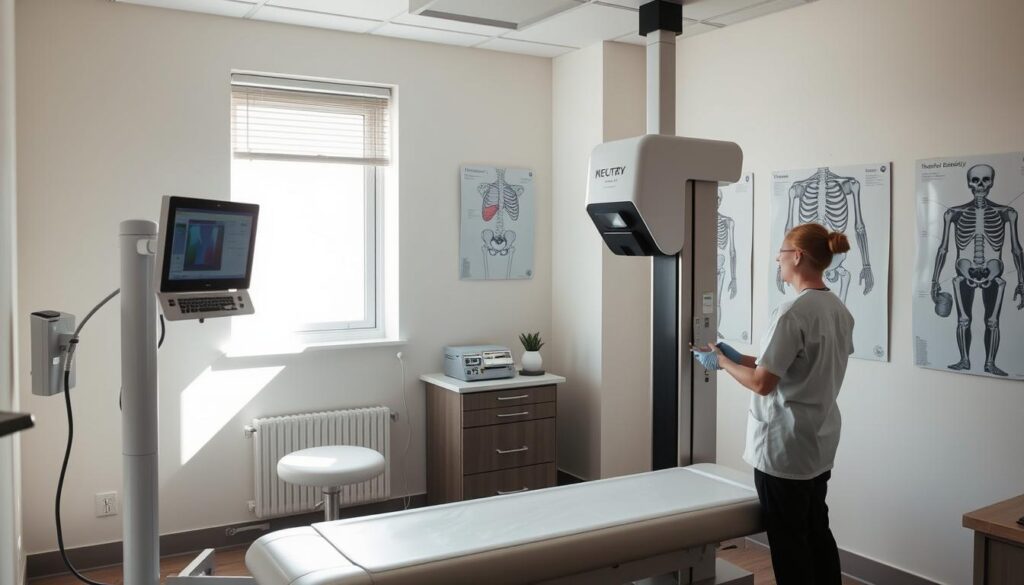
Your skeletal health is crucial. A bone density test reveals your bone strength and osteoporosis risks. This painless screening helps you understand your bone mass1.
It allows you to take proactive steps for better skeletal health. The test is quick, usually lasting 10 to 30 minutes1.
Doctors examine bones in your spine, hip, and forearm. These areas provide comprehensive insights into your overall bone health1.
Regular skeletal health monitoring becomes vital as you age. Women over 65 face higher risks of bone density loss2.
Other risk factors include low body weight and previous fractures. Your family’s medical history can also play a role2.
Key Takeaways
- Bone density tests are quick and painless diagnostic procedures
- Women over 65 are at higher risk for bone density loss
- Early detection can prevent potential fractures
- Multiple body areas can be tested for bone density
- Results help create personalized health strategies
What is a Bone Density Test and Why You Need It
Bone health is vital for preventing fractures and maintaining wellness. A Bone Mineral Density Assessment gives crucial insights into your skeletal strength. It helps identify potential risks to your bone health.
Bone density tests evaluate the strength of your bones. These exams help doctors assess your risk of osteoporosis3. They provide valuable information about your skeletal health.
How DEXA Scan Technology Works
The DEXA scan uses two low-dose X-ray beams to image your bone structure. It’s a cutting-edge Densitometry technique. This procedure offers several benefits:
- A quick, painless examination4
- Minimal radiation exposure3
- Comprehensive scanning of critical areas like spine and hips4
Key Benefits of Early Bone Mass Measurement
Early detection through a Bone Mineral Density Assessment offers many advantages:
- Identify decreased bone density before fractures occur
- Determine potential Fracture Risk Evaluation
- Monitor treatment effectiveness
Risk Factors That Indicate Testing Need
You might need a bone density test if you have these risk factors3:
| Risk Category | Specific Indicators |
|---|---|
| Age-Related | Women over 65, Men over 70 |
| Medical Conditions | Rheumatoid arthritis, Hyperthyroidism |
| Lifestyle Factors | Smoking, Excessive alcohol consumption |
Nearly 1 in 5 women and 1 in 20 men over 50 are affected by osteoporosis. Early detection is crucial for maintaining bone health3. Don’t wait to get tested.
Understanding your bone density is the first step towards preventing potential fractures and maintaining long-term skeletal health.
Interpreting Your Bone Density Test Results
Your bone densitometry results are vital for managing long-term bone health. The bone density test offers key insights into skeletal strength through T-Score Analysis5.
T-scores compare your bone mineral density to a healthy young adult’s. They help interpret bone density results.
- Normal Bone Density: T-score above -1.06
- Osteopenia (Low Bone Mass): T-score between -1.0 and -2.57
- Osteoporosis Diagnosis: T-score -2.5 or lower5
Pro Tip: Your doctor considers more than just T-scores. They look at age, medical history, and specific risk factors6.
“Understanding your bone density results is the first step in preventing potential fractures and maintaining skeletal strength.”
For younger patients, doctors might use Z-scores instead. These compare your bone density to others in your age group7.
Don’t worry if your results show osteopenia or osteoporosis. Your doctor can create a personalized treatment plan. This may include lifestyle changes, supplements, or medication6.
Conclusion
Bone density test results are crucial for effective Bone Health Management. Advanced screening helps address potential risks early on. Bone density testing offers vital insights into skeletal strength and Osteoporosis Prevention8.
Fracture risk rises after age 50. One in three women and one in five men will have a fragility fracture8. Knowing your bone mineral density helps create personalized strategies for Fracture Risk Reduction.
These strategies may include targeted exercise, diet changes, or medical treatments9. Regular monitoring and proactive care are essential for strong bones.
Genetics and age affect bone health, but you can make informed choices. Stay active, modify your lifestyle, and consult healthcare pros to protect your skeletal system10.
Bone health is a lifelong journey. Stay informed and get regular screenings. Take preventive actions to maintain strong, resilient bones as you age.
FAQ
What is a bone density test?
A bone density test measures your bone mineral content and density. It’s a painless procedure using low-dose X-rays. The test checks bone strength in your spine, hip, and forearm.
This scan helps diagnose osteoporosis and assess fracture risk. It’s also known as a DEXA scan.
Who should get a bone density test?
You might need a test if you’re a woman over 65 or a man over 70. Postmenopausal women should also consider getting tested.
Other risk factors include family history of hip fracture and long-term steroid use. Smoking, excessive alcohol, low body mass, and certain health conditions also increase risk.
How are bone density test results interpreted?
Results use T-scores to compare your bone density to a healthy young adult. A score of -1.0 or higher is normal.
Scores between -1.0 and -2.5 indicate low bone mass (osteopenia). Scores of -2.5 or lower suggest osteoporosis. Your doctor will consider these scores with other risk factors.
Is a bone density test painful?
No, the test is painless and non-invasive. It typically takes 10-30 minutes and uses minimal radiation.
You’ll lie on a padded table while a scanning arm moves over your body. This creates detailed images of your bone density.
How often should I get a bone density test?
Testing frequency depends on your individual risk factors. High-risk individuals might need testing every two years.
Those at low risk might only need testing every 10-15 years. Your doctor can provide personalized guidance based on your health profile.
What happens if my test shows low bone density?
Your doctor might recommend lifestyle changes if you have low bone density. These could include dietary modifications and supplements.
Increased exercise or prescription medications may also help improve bone health. The goal is to prevent further bone loss and reduce fracture risk.
Are there any preparation requirements for a bone density test?
Most tests require minimal preparation. Wear comfortable, loose clothing without metal buttons or zippers.
Tell your doctor about any recent imaging tests with contrast materials. These might interfere with your bone density scan.
Can men get osteoporosis?
Yes, men can develop osteoporosis, though it’s more common in women. Men over 70 should consider bone density testing.
Testosterone levels, lifestyle factors, and medical conditions can all affect male bone health. Specific risk factors may warrant earlier testing.
Source Links
- Bone density test – Mayo Clinic – https://www.mayoclinic.org/tests-procedures/bone-density-test/about/pac-20385273
- Bone Density Scan: MedlinePlus Medical Test – https://medlineplus.gov/lab-tests/bone-density-scan/
- Facts About Bone Density (DEXA Scan) – https://www.cdc.gov/radiation-health/data-research/facts-stats/dexa-scan.html
- What Does a DXA Scan Diagnose? – https://my.clevelandclinic.org/health/diagnostics/10683-dexa-dxa-scan-bone-density-test
- DEXA Scan / Bone Density Test: A Patient’s Guide | HSS – https://www.hss.edu/conditions_dxa-dexa-bone-density-test-patient-guide.asp
- How to Read Bone Density Test (BMD) Results: T-Score vs Z-Score – https://www.pockethealth.com/2023/11/13/bone-density-scan-t-score-vs-z-score/
- How to Interpret Your Bone Density Scan Results – True North Wellness – https://truenorthwellness.com.au/how-to-interpret-your-bone-density-scan-results/
- Bone Mineral Density: Clinical Relevance and Quantitative Assessment – https://pmc.ncbi.nlm.nih.gov/articles/PMC8049374/
- Draw an Informed Conclusion: Preventing Osteoporosis – https://medicine.yale.edu/news-article/draw-an-informed-conclusion-preventing-osteoporosis/
- Bone mineral density: testing for osteoporosis – https://pmc.ncbi.nlm.nih.gov/articles/PMC4917635/

