The Siege of Vicksburg was a key Union victory in the Civil War. It gave the Union control of the Mississippi River1. Located in Vicksburg, Mississippi, this city was a strategic stronghold. It was a vital prize for both sides.
The city’s location along the Mississippi River made it very important. It earned the nickname “Gibraltar of the Confederacy.”
When thinking about Vicksburg, Mississippi, in the Civil War, you might wonder why it was so important. The city’s strategic location made it a key point for controlling the Mississippi River. The Union forces, led by famous leaders, wanted to capture Vicksburg. They aimed to split the Confederacy in two2.
Key Takeaways
- The Siege of Vicksburg was a significant Union victory in the Vicksburg Civil War.
- Vicksburg, Mississippi, was a strategic stronghold located on the Mississippi River.
- The city’s capture was key to the Union’s war efforts, giving them control of the river1.
- The Union forces, led by General Ulysses S. Grant, marched 180 miles in three weeks. They won five battles during the campaign2.
- The Siege of Vicksburg lasted for 47 days. It resulted in significant casualties for both sides2.
Background of the Siege
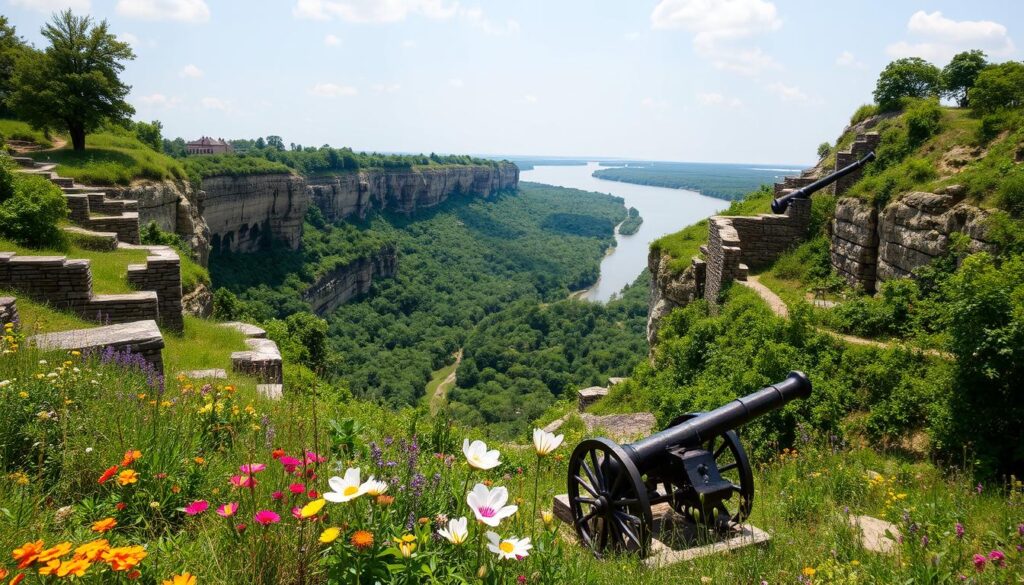
Vicksburg was the last big Confederate hold on the Mississippi River. It was called “The Gibraltar of the Confederacy” because of its strong position on high bluffs3. This spot was key for controlling river traffic, making it a major point in the Civil War.
The Strategic Importance of Vicksburg
Winning Vicksburg meant controlling the Mississippi River. This split the Confederacy in two3. The city’s strong defenses made it hard for Union forces to attack, as part of the Anaconda Plan4.
Key Players in the Conflict
General Ulysses S. Grant led the Union army of about 40,000 troops to take Vicksburg3. General John C. Pemberton, with around 30,000 soldiers, defended the city for the Confederacy3. Their decisions were key to the siege’s outcome.
Initial Conflict and Strategies
On May 26, Union forces started building thirteen approaches to Vicksburg4. They tried to storm the city but lost over 4,000 men, while the Confederates lost fewer5. Grant then decided to besiege the city, using naval power to block supplies and keep up the pressure5.
| Statistic | Details |
|---|---|
| Vicksburg Campaign Dates | 1862 – 1863 |
| Location | Mississippi, United States |
| Union Troops | 40,000 |
| Confederate Troops | 30,000 |
| Surrender Date | July 4, 1863 |
| Turning Point | American Civil War |
The Events of the Siege
The Siege of Vicksburg was a key moment in Vicksburg history. It lasted from May 18 to July 4, 1863, for 47 days. This was a critical time for the city6.
Timeline of Major Events
- May 18: Grant starts the siege, trapping Vicksburg with trenches.
- June 2: The city faces constant bombardments, making life hard for everyone.
- July 4: Confederate forces under General Pemberton give up to Grant.
Life for Soldiers and Civilians
Life in Vicksburg quickly got worse for both soldiers and civilians6. The city’s 24,000 people hid in tunnels in the hills. This made Vicksburg known as “Prairie Dog Village” to Union soldiers6.
- There was little food and medicine, causing hunger and sickness.
- The constant attacks made everyone very scared and unsure.
- Keeping spirits up was key to staying alive.
Military Tactics Employed
General Grant built 15 miles of trenches to trap the Confederate forces6. The Union’s ships kept up the pressure on the city’s defenses6. Confederate General Pemberton tried to hold out, but the Union was too strong7.
| Miltary Tactic | Description | Outcome |
|---|---|---|
| Trench Warfare | Building long trenches to surround the city. | It trapped the Confederate forces. |
| Naval Bombardment | Ships bombarded the city constantly. | This made life harder for defenders and civilians. |
| Defensive Stubbornness | Confederate efforts to keep the city. | This led to many deaths and surrender. |
Impact of the Siege
The fall of Vicksburg was a big win for the Union. It was a key moment in Vicksburg history. The Union’s victory, along with the win at Gettysburg, gave them control over the Mississippi River. This split the Confederacy and hurt their supplies8.
Short-term Consequences
After the fall, nearly 30,000 Confederate soldiers and thousands of civilians were left without food or shelter8. The city’s buildings were damaged, and food was scarce. Families had to find extreme ways to survive.
Long-term Effects on the Civil War
Controlling the Mississippi River was a big deal. It not only split the Confederate states but also broke their supply lines. This weakened their fight and helped the Union win9.
Vicksburg’s Place in American History
Today, Vicksburg is a symbol of strength and smart fighting. People staying in Vicksburg hotels can see many landmarks. These places show the city’s important role in the Civil War9.
| Aspect | Short-term Impact | Long-term Impact |
|---|---|---|
| Military | Union control of Mississippi River | Divided Confederacy, disrupted supply lines |
| Economy | Resource scarcity in Vicksburg | Weakened Confederate economy |
| Social | Displacement of soldiers and civilians | Historical legacy and commemoration |
Commemoration and Legacy
The Siege of Vicksburg is honored through memorials and events. These celebrate its historical importance.
The Vicksburg National Military Park
The Vicksburg National Military Park is the main site for remembering the siege. It has preserved battlefields, monuments, and museums. Visitors can explore key landmarks and enjoy living history presentations that bring the siege to life10.
Educational Resources and Programs
The park offers educational programs and resources. These include guided tours and interactive exhibits for all ages. Events like the Battle of Port Gibson Commemoration offer insights into the siege10.
The city of Vicksburg also hosts lectures and workshops. These engage the community and visitors in the region’s history11.
Ongoing Historical Significance
The siege’s legacy impacts both historical scholarship and public memory. Studies often mention Vicksburg’s role in the Civil War’s outcome10. The siege’s effects are shown by Vicksburg’s 81-year wait to celebrate the Fourth of July, showing its lasting impact10.
Vicksburg has also hosted important events, like Eamon de Valera’s visit in the 1920s. This visit supports the Irish Republic, showing the city’s influence on international history11.
Visitors can explore many Vicksburg attractions and activities. These focus on the Civil War, making for a meaningful and educational trip.
FAQ
What was the strategic importance of Vicksburg during the Civil War?
Vicksburg, Mississippi, was key because of its high bluffs overlooking the Mississippi River. It was called the “Gibraltar of the Confederacy.” The Union’s control over Vicksburg let them dominate the Mississippi River. This split the Confederate States and cut off their supply lines.
Who were the key military leaders in the Siege of Vicksburg?
The Siege of Vicksburg had famous leaders on both sides. Union General Ulysses S. Grant led the Union with a strong plan. Confederate General John C. Pemberton defended the city. Their decisions greatly affected the siege’s outcome.
How did Vicksburg’s geography contribute to its defense?
Vicksburg’s high bluffs made it hard for Union forces to attack. Its spot on the Mississippi River helped the Confederates with supplies and communication. This made the city a strong defense.
What were the major events during the 47-day Siege of Vicksburg?
The Siege of Vicksburg started with Union attacks and grew more intense. Grant used a blockade to block Confederate supplies. The siege included digging trenches, harsh conditions, and Union naval forces. It ended with the Confederate surrender on July 4, 1863.
How did civilians cope during the Siege of Vicksburg?
Civilians in Vicksburg faced extreme hardships, like food and medical shortages. They took refuge in caves, earning the nickname “Prairie Dog Village.” Their strength helped keep the city going during the long siege.
What were the short-term and long-term impacts of the Union victory at Vicksburg?
The Union win at Vicksburg, along with the Battle of Gettysburg, was a turning point. It gave the Union a big advantage. Long-term, it cut off the Confederacy’s supply lines, leading to their defeat. The fall of Vicksburg is a key moment in American history.
How is the Siege of Vicksburg commemorated today?
The Siege of Vicksburg is remembered at the Vicksburg National Military Park. The park has landmarks and educational resources. Visitors can see historic sites, go on tours, and learn through exhibits. The park also has reenactments and programs to keep Vicksburg’s history alive.
What can tourists do at the Vicksburg National Military Park?
At the Vicksburg National Military Park, tourists can see battlefields, monuments, and museums. There are walking trails, tours, and educational programs. The city of Vicksburg also has hotels and attractions for history lovers.
Why is Vicksburg considered a landmark in Civil War history?
Vicksburg is a key part of Civil War history because of its strategic importance. Its capture was a turning point for the Union. Today, its landmarks and sites show its lasting impact on American history.
What accommodations are available for visitors to Vicksburg?
Vicksburg has many places to stay, from budget-friendly to luxury. Visitors can find hotels near the Vicksburg National Military Park. These hotels offer amenities like free breakfast and Wi-Fi, and are close to historical sites.
What are some must-see attractions in Vicksburg for history enthusiasts?
History fans should visit the Vicksburg National Military Park. It has battlefields, monuments, and museums. Other attractions include the Old Courthouse Museum, the USS Cairo, and historic homes. These offer a deep dive into Vicksburg’s Civil War past.
Source Links
- Siege of Vicksburg – https://en.wikipedia.org/wiki/Siege_of_Vicksburg
- Battle of Vicksburg: Siege, Battlefield & Park | HISTORY – https://www.history.com/topics/american-civil-war/vicksburg-campaign
- Vicksburg Campaign | History, Significance, & Facts | Britannica – https://www.britannica.com/event/Vicksburg-Campaign
- Siege of Vicksburg (May 26-July 3) – Vicksburg National Military Park (U.S. National Park Service) – https://www.nps.gov/vick/learn/historyculture/siege.htm
- 10 Facts: The Vicksburg Campaign – https://www.battlefields.org/learn/articles/10-facts-vicksburg-campaign
- Civil War: Siege of Vicksburg – https://www.ducksters.com/history/civil_war/siege_of_vicksburg.php
- Battle of Vicksburg Timeline (June 24th, 1862 – https://www.civilwartimeline.net/vicksburg-events.php
- “No Ingress or Egress”: Refugees of the Siege of Vicksburg – https://www.battlefields.org/learn/articles/no-ingress-or-egress-refugees-siege-vicksburg
- History of Vicksburg – https://www.vicksburg.org/community/page/history-vicksburg
- 48801.120808.qxp – https://web.vicksburg.org/images/pdf/VB-SesquicentennialBooklet2013.pdf
- The Vicksburg Visit – https://www.galwaydecadeofcommemoration.org/content/people/the-vicksburg-visit